5 No-Hire Gas Stove Repairs That Stopped Me From Calling a Technician
There’s nothing more maddening than walking into your kitchen, turning the burner knob and hearing that horrible clicking sound — with no flame appearing.
Or perhaps your oven isn’t heating evenly anymore. Maybe one burner won’t light, no matter how many times you twist the knob. Whatever the problem, most people’s first impulse is to reach for the phone and call a technician.
I did the same thing. Until I didn’t.
A few months back, my gas stove began misbehaving in three different ways at once. I obtained a quote from a local appliance repair service — $150 just for showing up, not including parts or labor. And that is when I decided to take the bull by the horns and figure this out myself.
What I learned was that most common gas stove issues are astonishingly easy to resolve. No special certifications. No advanced tools. All you need is a little patience, some simple supplies and the know-how.
This article takes you through 5 gas stove repair basics that I personally used to get my stove back up and running — and saved me sending a check off to a technician. Whether your burner refuses to light, your flame looks weird or your igniter just keeps clicking, one of these fixes is probably all it needs.
Let’s get into it.
Before You Touch Anything — Safety First
I know you’re excited to jump in, but this matters.
Gas appliances can pose a real risk when they are not used properly. Before beginning any inspection or repair work on your stove, take the following crucial steps:
- Make sure all the burner knobs are turned off. Make sure no gas is flowing.
- Never attempt repairs if you smell gas. Get out of the area as soon as possible, open windows and call your gas company.
- Before you touch any igniters or electrical components, be sure to unplug the stove from its power source.
- Keep your workspace dry. Water and gas appliances do not play well together.
If at any time something seems beyond the scope of this article — especially anything that deals with gas lines, regulators and internal valves — stop what you’re doing and call a professional. These repairs address only surface-level components that any careful homeowner can tackle safely.
Fix #1 — The Burner Won’t Light (And It’s Not What You Think)
The Symptom
You turn the knob. You hear clicking. Maybe a spark flashes. But no flame comes out.
This is among the most common gas stove problems, and there’s almost always something besides the igniter at fault — usually it’s food debris blocking the burner ports.
Why This Happens
Gas burners feature small holes (ports) surrounding the burner cap. These gaps emit gas and let the flame create a circular shape. When grease, spilled food or boiled-over liquid seep into those holes, gas can’t flow properly. For the flame to engage, gas needs to flow — which doesn’t happen, even if the igniter sparks perfectly.
The Fix
You’ll need: a toothpick or thin needle, a soft brush or old toothbrush, warm soapy water and a dry cloth.
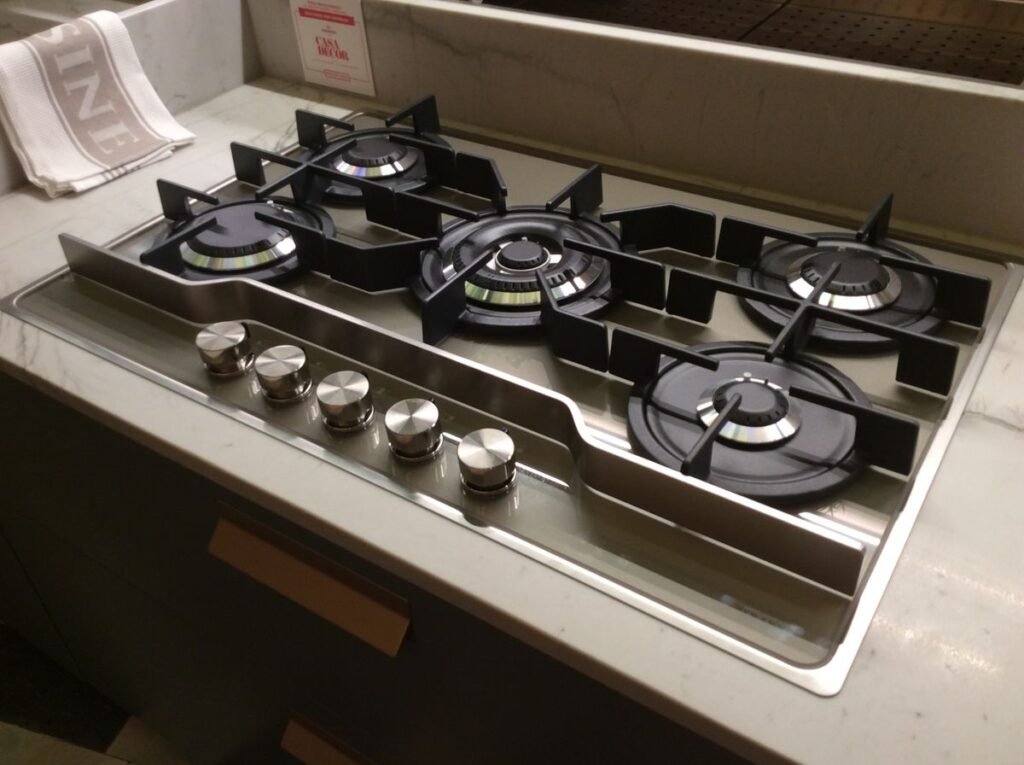
Step 1: Remove the burner grate and the burner cap. These normally just sit on top and pop right off.
Step 2: Examine the burner head — the round piece beneath the cap. You will see tiny holes on the edge. If those holes are plugged with black or brown residue, that’s your problem.
Step 3: Gently clear each hole with a toothpick. A straightened paperclip works great too.
Step 4: Clean the burner cap and head in warm soapy water. Use a soft toothbrush and scrub gently.
Step 5: Dry everything completely — and I mean everything. Even a small amount of moisture can inhibit ignition.
Step 6: Reassemble and test.
In 90% of cases, this one cleaning step solves the entire issue.
Fix #2 — The Igniter Won’t Stop Clicking (Even When the Stove Is Off)
The Symptom
Your stove clicks randomly without provocation. Or it keeps clicking even after a burner is lit. It’s annoying, and it can also draw electricity unnecessarily if left unaddressed.
Why This Happens
The igniter module in a gas stove is sensitive. If liquid spills near the burner, it can seep into the igniter and cause it to misfire continuously. The igniter assumes it needs to spark — and keeps doing so.
The Fix
This one is surprisingly easy.
Step 1: Remove the burner cap and grate for the affected burner.
Step 2: Wipe away any visible moisture around the igniter (the small white or ceramic nub near the burner base) with a dry cloth or paper towel.
Step 3: For stubborn moisture, point a hair dryer on the low setting at the igniter area for 2–3 minutes. Keep moving the dryer so you don’t overheat anything.
Step 4: Allow the stove to air out for 30–60 minutes before checking.
Step 5: If it keeps clicking after drying, make sure the burner cap is properly seated. A misaligned burner cap is another common cause of continuous clicking.
Typically, just drying the igniter resolves this issue completely.
| Problem | Most Likely Cause | DIY Fix |
|---|---|---|
| Won’t light | Clogged burner ports | Clean with toothpick + soapy water |
| Constant clicking | Moisture in igniter | Dry with cloth or hair dryer |
| Weak or uneven flame | Dirty or misaligned cap | Clean + reseat burner cap |
| Oven not heating | Faulty igniter or dirty sensor | Clean or replace igniter |
| Gas smell near burner | Loose connection or debris | Clean + check connections |
Fix #3 — Low or Fluctuating Flame That Won’t Burn Correctly
The Symptom
The burner ignites, but the flame is uneven. On one side it burns hot while the other produces little to no visible flame. Or the flame is present but low and weak even on the highest setting.
Why This Happens
An inadequate or diminished flame is nearly always down to one of two things:
- Partial blockage of the burner ports (same as Fix #1, but not fully blocked)
- A misplaced or incorrectly seated burner cap
The burner cap does more than most people realize. It’s designed to distribute gas evenly across the flame ring. If it’s even slightly askew, gas distribution is uneven — and so is your flame.
The Fix
Step 1: Shut off the burner and allow it to cool down completely.
Step 2: Remove the burner cap and check the ports again. Even partial obstructions can create uneven burning.
Step 3: Clear all ports using the toothpick method from Fix #1.
Step 4: Wash and completely dry the burner cap.
Step 5: When replacing the cap, make sure it sits completely flat and centered. Most burner caps have a notch or slot that lines up with a pin on the burner base — make sure those are aligned.
Step 6: For gas stoves with a sealed burner, ensure the cap clicks into its locked position.
Test with a low flame first. If it now burns in a clean, even circle, you’ve cracked it.
Fix #4 — The Oven Is Not Heating Properly
The Symptom
You set your oven to 375°F. You wait. But after 20 minutes, the oven is barely warm. Or it powers on but shuts off before reaching the desired temperature.
Why This Happens
Gas ovens rely on a part called an igniter to ignite the gas flowing into the oven burner. Over time, igniters weaken. A weak igniter can’t generate enough heat to open the gas valve properly, resulting in reduced or no gas flow.
This is one of the more common oven issues — and replacing an oven igniter is among the easiest gas stove repairs you can do at home.
How to Diagnose It
Set your oven to bake at around 350°F. Leave the door slightly ajar and observe the bottom (or rear, depending on your model) from a safe distance. Within 60–90 seconds you should see the igniter glowing orange-red, followed by the flame catching.
- If the igniter glows but no flame appears after 2–3 minutes — the igniter is too weak to open the valve. It needs replacement.
- If the igniter doesn’t glow at all — it’s likely broken or has an electrical problem.
The Fix
What you’ll need: A replacement igniter (locate your stove’s model number — typically on a sticker inside the oven door frame — and search for the matching part online), a screwdriver and around 20 minutes.
Step 1: Unplug the stove.
Step 2: Remove the oven racks and locate the igniter. It is usually mounted at the bottom of the oven cavity near the oven burner.
Step 3: Remove the two screws holding the igniter in place.
Step 4: Gently disconnect the wire connector. Take note of how it is attached before unplugging it.
Step 5: Install the new igniter, reconnect the wire and fasten it in place.
Step 6: Plug the stove back in, set the oven to bake and watch for the new igniter to glow brightly within 30–60 seconds. A new igniter should glow noticeably brighter than a worn one.
This repair typically costs $15–$50 in parts — a fraction of what a technician charges.
Fix #5 — A Gas Odor Near the Burner (Never Ignore This)
The Symptom
After cooking, or when you’re near the stove, you detect a faint “gassy” smell — but only around one specific burner, and only when the stove is off or at rest.
Important: If you ever smell gas strongly anywhere in your kitchen or home, leave immediately, open windows and call your gas company. That is not a DIY situation.
A faint, localized smell near a single burner, however, is usually traceable to surface-level issues.
Why This Happens
Grease and food buildup can accumulate around the burner base and in the connections where the burner sits. This debris can trap residual gas odors or produce a smell when heated. In other cases, an improperly seated burner cap creates a small pocket where unburned gas can linger near the burner surface.
The Fix
Step 1: Remove the grate, burner cap and burner head from the affected burner.
Step 2: Wipe the burner base area with a damp cloth and a mild degreaser. Pay attention to the area around the gas tube opening — the small hole in the center of the burner base where gas flows in.
Step 3: Ensure the burner head is properly seated and flush with the base.
Step 4: Replace the burner cap and make sure it sits evenly and securely.
Step 5: Briefly turn the burner on to check combustion. A clear, uniform blue flame without yellow tips is a good sign. Yellow or orange flames can indicate incomplete combustion — most commonly caused by debris or a misaligned cap.
Step 6: If the faint odor persists after cleaning and reseating, and you’re consistently seeing yellow flames, it’s time to call a technician. That may indicate a gas-to-air mixture problem that requires professional adjustment.
When a DIY Fix Is Enough (And When to Call the Pros)
Not every stove issue falls into the DIY category. Here’s a simple guide:
| Situation | DIY or Pro? |
|---|---|
| Burner ports clogged with food debris | DIY |
| Moisture causing constant clicking | DIY |
| Uneven or weak flame | DIY |
| Weak oven igniter (glows but no flame) | DIY |
| Faint localized gas smell near burner | DIY (clean + reseat) |
| Strong gas smell throughout kitchen | Call gas company immediately |
| Oven igniter doesn’t glow at all | Possibly DIY (check wiring first) |
| Gas valve issues or pressure problems | Call a professional |
| Persistent yellow/orange flames after cleaning | Call a professional |
| Any repair involving gas supply lines | Always call a professional |
Stove Maintenance Tools Every Home Cook Should Have
It’s easier to prevent these problems than to correct them. A small toolkit goes a long way.
- Soft-bristle toothbrush — for scrubbing burner heads without damaging ports
- Toothpicks or straightened paper clips — for clearing burner holes
- Mild dish soap and warm water — for routine burner cleaning
- Microfiber cloths — to dry components completely
- Flashlight — for inspecting igniters and burner bases
- Phillips and flathead screwdrivers — for replacing the igniter
- Appliance degreaser — for stubborn grease buildup around burner bases
A quick five-minute cleaning of your burners every couple of weeks can prevent everything in this article from happening in the first place.
How Often Should You Clean Your Gas Stove Burners?
According to the U.S. Consumer Product Safety Commission, regular appliance maintenance is one of the most effective ways to prevent household safety hazards. Follow this simple schedule to stay ahead of problems:
| Frequency | Task |
|---|---|
| After every use | Wipe grates and burner caps with a damp cloth |
| Weekly | Remove burner caps and check for visible debris |
| Monthly | Full soak and scrub of burner caps and heads |
| Every 6 months | Inspect igniters and check burner port clarity |
| Annually | Full oven inspection including igniter check |
Stick to this kind of routine and you’ll likely never face a surprise breakdown.
What I Learned From Skipping the Technician
Here’s the honest truth: when I first approached this, I was nervous.
Opening up a gas appliance had seemed risky and complicated. But once I actually looked at how these stoves are built, I found that the parts involved in these typical repairs are surprisingly accessible. The burner caps simply lift off. Two screws hold the igniters in place. The ports are right there on the surface.
None of the 5 fixes described here require you to touch a gas line, regulator or anything internal. All of them involve surface components that a careful homeowner can address in under an hour.
The technician quote I received? $150 just to show up. The replacement igniter? $22 on a parts website. The cleaning supplies? Already in my kitchen.
Total savings: over $200, including the labor estimate for the igniter job.
More importantly, I now understand how my stove works. That knowledge is more valuable than any repair call.
Frequently Asked Questions
Q: Is it safe to clean gas stove burners on my own? Yes, as long as the burners are fully turned off and cooled down, and the stove is unplugged before you start. Cleaning burner caps and heads is a normal at-home maintenance task that has nothing to do with gas lines.
Q: My gas stove clicks but doesn’t light. What’s wrong? That typically means there’s a clog at the burner ports, a misaligned burner cap or moisture in the igniter. All three issues are addressed in this article and can be corrected without calling a professional.
Q: How can I tell if my oven igniter is bad? If the oven doesn’t reach temperature after 3–5 minutes of glowing orange, the igniter is too weak to open the gas valve and needs to be replaced. This is a common repair that generally costs $15–$50 in parts.
Q: Can food debris actually prevent a gas burner from working? Absolutely. Even a small amount of food residue in the burner ports can restrict gas flow enough to cause poor ignition or uneven flames. Regular cleaning is the number one prevention.
Q: What does it mean if a gas stove has a yellow or orange flame? A healthy natural gas flame should be blue with a small yellow tip. Mostly yellow or orange flames suggest incomplete combustion, frequently caused by a dirty burner or an incorrect air-to-gas ratio. Clean the burner first. If yellow flames remain, call a technician.
Q: How long should a gas stove igniter last? Under normal use, most gas stove igniters last between 5 and 10 years. Spills, excessive heat exposure and inadequate cleaning can all shorten their lifespan. If the igniter glows dimly or takes longer than 90 seconds to light the oven burner, it’s probably nearing the end of its life.
Q: Should I ever attempt to repair a gas line myself? No. Gas supply lines, regulators and internal valves should only be handled by licensed professionals. The repairs described in this article pertain only to surface components — burner caps, heads and igniters — that are safe for careful owner maintenance.
Wrapping It All Up
Gas stove troubles are stressful — especially when they crop up just before dinner or on a busy weekday.
But here’s what I want you to take away from this article: virtually all the problems that send homeowners scrambling for the phone can be solved in an afternoon with basic supplies and a little patience.
The vast majority of calls gas stove technicians receive are for the 5 fundamental issues covered here: clogged burner ports, a wet igniter, weak or uneven burner flames, a failing oven igniter and a faint gas odor.
You don’t need a certification to clean a burner cap. You don’t need a specialty toolkit to replace a $22 igniter. What you need is the right information, a clear sense of safety boundaries and enough confidence to give it a try.
Next time your gas stove acts up, refer back to this guide before reaching for the phone. You’re probably closer to a working stove than you think — and your money stays right where it belongs.