Meta Description: Not sure about the basics of gas stove repair? Learn more about 6 DIY hacks that saved my stove — and could save yours as well. No plumber needed!
6 Life Saving Gas Stove Repair Basics Hacks That Saved My Stove
I still remember the morning my gas stove refused to cooperate. One burner wouldn’t light. Another made a strange clicking sound that did not end. The oven stank and something was rotten. Breakfast was shot and I was freaking.
I nearly called a repair technician on the spot. But before I did, I resolved to do some digging. What I found changed everything.
It turns out that most gas stove problems are entirely fixable at home, with no fancy tools or costly service calls required. With a little patience and knowledge, I was able to put my stove back together. And in this post, I’m going to take you through the gas stove repair basics, step-by-step, that I followed.
These six hacks are for you, whether your burner will not light, your flame looks strange, or your igniter keeps clicking.
Before You Touch Anything: Safety First
Let me be clear: gas appliances need to be respected. Each of these safety steps are non-negotiable, so only do them before you attempt any repair.
- Make sure to switch off the gas supply for the stove before opening up any components.
- Disconnect the stove from the electrical outlet (yes, gas stoves run electricity for their igniters).
- Ventilate the area — open windows and doors to remove any residual odor from gas.
- Do not use an open flame to look for a gas leak. Use soapy water instead.
- If you smell a strong odor of gas and it does not dissipate, evacuate the house immediately and call your gas company.
Now that the ground rules are established, let’s get to the good stuff.
Hack #1 — The Dirty Burner Port Solution
Why Your Burner Flame Appears Weak or Uneven
This was the first issue I had seen. One of my burners had a patchy flame — some areas burned fiercely, others hardly flickered. The culprit? Clogged burner ports.
Over time, grease and food debris — even boiled-over liquids — clog the tiny holes surrounding your burner cap. When those holes are clogged, gas does not flow evenly, and your flame suffers.
Cleaning Clogged Burner Ports
Here’s what worked for me:
- Take the burner grate off and pull up on the burner cap.
- Pull out the burner head (the piece with all the little holes).
- Let it soak in warm soapy water for 20–30 minutes.
- Stick a toothpick or a straightened paperclip through each clogged hole. Don’t use toothbrushes — the bristles break off.
- Make sure to get it rinsed well and dried fully.
- Reassemble and test.
Pro Tip: Letting it dry and not replacing burner parts when wet helps. Ports with water can halt ignition and cause uneven burning.
That one solution addressed two separate burner problems of mine. It’s one of the essential gas stove repair basics that every home cook should be aware of.
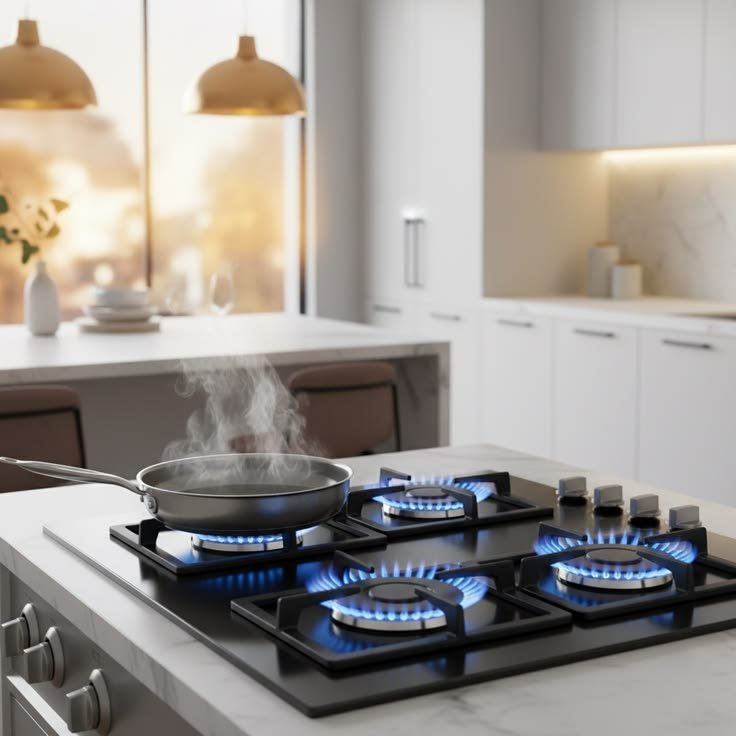
Hack #2 — No More Endless Clicking
The Most Infuriating Gas Stove Issue of All Time
You know the sound. Click. Click. Click. Your stovetop keeps sparking even if there isn’t a burner on. I almost lost my mind about this one.
This challenge usually comes down to one of three things:
| Cause | Description |
|---|---|
| Moisture in the igniter | Water from a spill or steam enters the spark module |
| Dirty igniter tip | Food residue coats the ceramic igniter |
| Misaligned burner cap | The cap sits slightly offset after cleaning |
How to Stop the Clicking
Step 1 — Dry it out. If the clicking began after cooking something that boiled over, moisture is probably to blame. Detach the burner cap and head, and allow everything to air dry for several hours. A hairdryer on a low setting can help speed things up, too.
Step 2 — Clean the tip of the igniter. That small white ceramic piece near the burner is the igniter. Around the tip, gently use a dry toothbrush or a cotton swab soaked in rubbing alcohol to clean. Never scrub hard — the ceramic is sensitive.
Step 3 — Reposition the burner cap. This is sneaky and easy to miss. If the burner cap is even a fraction off-center, it sets off continuous sparking. Be sure it’s flat and seated properly on the burner head.
One of these three fixes will, in most situations, eliminate the clicking altogether. This gas stove repair basic is one of those that seems so simple it can’t possibly work — but it does.
Hack #3 — Re-Lighting Your Pilot Light (If You Have an Older Stove)
Does Your Old Stove Have a Standing Pilot?
If your stove is from before the mid-1990s, it likely has a standing pilot light — a small flame that burns continuously and ignites the burners whenever you turn the knob.
When this pilot fails, the burners just won’t light. Not a spark, not a click, nothing at all.
How to Relight a Standing Pilot Light
- Find the pilot — it’s often beneath the cooktop. Open the top panel of your stove.
- Check for gas smell. If you smell gas strongly, wait 5 minutes for the gas to dissipate before relighting.
- Use a long lighter or lit match and hold it up to the pilot opening.
- Set the pilot knob to “Pilot” or press the reset button, while holding the flame to the opening.
- After the pilot lights, hold it for 30 seconds to allow the thermocouple to heat up.
- Release the knob. The pilot should stay lit.
If it continues to go out, the thermocouple (the safety device that senses the pilot flame) may need to be replaced. This is a cheap part and an easy DIY if you feel comfortable with basic tools.
Hack #4 — What to Do When a Burner Just Won’t Light
When One Burner Simply Won’t Work
This was the problem that kickstarted this whole process for me. One burner was completely dead. No click, no flame — nothing.
Here’s a rough diagnostic chart based on my research and experience:
| Symptom | Likely Cause | Fix |
|---|---|---|
| No click, no spark | Igniter not getting power | Check electrical connection |
| Clicking but no flame | Clogged port or wet igniter | Clean ports, dry igniter |
| Flame lights then dies | Gas flow issue or dirty cap | Clean burner, check gas valve |
| Weak yellow flame | Incomplete combustion | Clean ports, check air shutter |
The Fix That Worked for Me
The burner cap in my case had been displaced since the last time I did a deep clean. The igniter was unable to reach the burner properly.
Here’s what I did:
- Removed all the burner components.
- Cleaned everything thoroughly (see Hack #1).
- Gently repositioned the burner cap so it sat perfectly flat.
- Reconnected the igniter wire (it had come a little loose — visible once I moved the stovetop).
- Reassembled and tested.
The burner fired up instantly.
If your igniter wire is broken or completely detached, a new igniter module will cost you $15–$40 depending on the make of your stove. Most are plug-and-play.
Hack #5 — How to Handle a Stubborn Gas Smell
A Gas Smell Is Never “Normal”
Here’s the straightforward answer: if you notice a constant or strong gas smell coming from your stove, it’s not something to ignore or put off fixing. A faint smell, however, just as you turn on a burner — but before it lights — is perfectly normal. Gas must flow before it burns.
The trouble is when that smell persists after the burner has been turned on, or when you can smell gas and no burner has been running.
How to Find and Fix Small Gas Leaks
For small leaks around burner connections and valves, here’s the method I learned:
The Soapy Water Test:
- Combine dish soap with water in a small bowl.
- With a brush or sponge, apply the soapy water around all gas connections — the supply line, the valve stems behind the knobs, and the burner bases.
- Turn on the gas (but don’t light the burner).
- Watch for bubbles. Bubbles forming = gas escaping from that point.
Common causes of minor leaks and fixes:
- Loose burner base connection — gently tighten with a wrench (do not overtighten).
- Worn valve stem packing — this involves replacing the valve packing, which is a slightly more complicated DIY.
- Cracked supply hose — replace without delay. Tape or sealant cannot be used for repairs.
⚠️ Important: If the soapy water test shows multiple bubble spots or large bubbling, do not attempt to fix it yourself. Contact your gas company or a licensed technician. According to the U.S. Consumer Product Safety Commission, gas leaks should always be treated as a serious safety hazard.
Gas leaks are one of those areas of gas stove repair basics where you need to know your limits.
Hack #6 — Repairing an Oven That Doesn’t Heat Properly
When Your Oven Lies About Its Temperature
I discovered this problem when my cookies kept coming out either raw in the middle or burnt on the edges. I assumed my oven’s thermostat was malfunctioning. It turned out there were simpler explanations to investigate first.
Step-by-Step Oven Diagnostics
Check 1 — The Oven Igniter Gas ovens ignite the burner at the bottom with an igniter. If your oven takes more than 5 minutes to preheat, or doesn’t heat at all, the igniter is frequently to blame.
You can visually check the igniter:
- Remove the oven racks.
- Remove the bottom panel (typically just lifts or unscrews).
- When you turn the oven to bake, watch the igniter.
- A proper igniter turns bright orange within 30–60 seconds.
- A weak igniter glows dull red and may not fire the gas.
Replacing a gas oven igniter is a fairly straightforward DIY project. Parts typically cost $20–$60.
Check 2 — Oven Temperature Calibration Before changing anything, measure the internal temperature of your oven with a standalone oven thermometer (about $10). Put it in the center of the oven, set the oven to 350°F, and check after 20 minutes.
If it reads 325°F or 375°F instead, then it’s due for calibration.
With most modern ovens, you can calibrate the temperature via the control panel:
- Press and hold the “Bake” button for 5–8 seconds.
- Press the arrow buttons to increase or decrease the temperature.
- Confirm and save.
Refer to your owner’s manual for exact steps — each brand varies slightly.
Check 3 — The Oven Door Seal A bad or damaged door gasket allows heat to escape. When the oven is hot, run your hand slowly along the door seal. If you feel heat escaping at certain spots, then the gasket needs to be replaced.
A replacement oven door gasket typically costs $15–$30 and clips or screws in without any special tools.
Tools You Need for Basic Gas Stove Repairs
You don’t need a professional toolkit. Here’s what covered almost every repair I did:
| Tool | What It’s Used For |
|---|---|
| Flathead screwdriver | Removing panels, burner components |
| Phillips screwdriver | Securing igniter modules, panels |
| Toothpick or straightened paperclip | Unclogging burner ports |
| Soft toothbrush | Cleaning around igniter tips |
| Dish soap + water | Checking for gas leaks (soapy water test) |
| Long lighter or matches | Relighting pilot lights |
| Oven thermometer | Testing oven temperature accuracy |
| Multimeter (optional) | Testing igniter resistance |
When to Give Up and Call a Pro
There are obvious limitations to DIY gas stove repair. Here’s when to absolutely stop and call a licensed technician:
- You smell a heavy, lingering gas odor that will not dissolve.
- The gas valve itself is leaking or damaged.
- The control knobs are broken and won’t turn off.
- Your stove makes cracking or booming sounds when you ignite it.
- You’ve replaced the igniter, but the oven still doesn’t heat.
- Any repair requires the main gas line or regulator.
No DIY project is worth your safety. Knowing when to quit is also part of mastering gas stove repair basics.
DIY vs. Professional Repair: A Quick Cost Comparison
| Repair Type | DIY Cost | Professional Cost |
|---|---|---|
| Cleaning clogged burner ports | $0 | $75–$150 |
| Replacing an igniter | $20–$60 | $150–$300 |
| Replacing oven door gasket | $15–$30 | $100–$200 |
| Thermocouple replacement | $10–$25 | $100–$175 |
| Diagnosing a gas leak | $5 (soap + brush) | $75–$150 |
The savings are real. Knowing even basic DIY repairs can save you hundreds of dollars over a single year.
Common Questions About Gas Stove Repair Basics
Q1: Can I safely fix a gas stove myself? Yes — for simple repairs like cleaning burners, replacing igniters, or fixing door seals. But anything touching the gas supply line, internal valves, or ongoing gas leaks is best left to a licensed pro.
Q2: Why does my gas burner keep going out after it lights? That usually indicates that something is preventing enough gas from getting to the burner, that the flame spreader isn’t aligned properly, or that a thermocouple isn’t detecting the flame. Start by cleaning and realigning the burner components.
Q3: How can I tell if my oven igniter is bad? Watch it when you turn on the oven. A healthy igniter should glow bright orange within a minute. A failing igniter glows faint red or takes too long to ignite the gas. You can also check it with a multimeter — a reading greater than 3.5 amps usually indicates it’s time to replace it.
Q4: Can moisture really cause my igniter to keep clicking? Absolutely. It’s one of the most common causes. Spills and steam may seep into the igniter switch, causing it to misfire. Drying out the parts completely — with a towel or hairdryer set to low — usually solves it.
Q5: How frequently should I clean my gas burners? Ideally, give it a basic wipe-down after each use and do a deep clean (remove and soak the parts) once per month. If you cook frequently, every two weeks would be better.
Q6: My oven smells of gas when I turn it on — is that normal? It is normal to smell a brief, faint gas smell when you first turn the oven on. It’s just the gas flowing before ignition. If that smell lingers for more than a minute after the oven ignites, or if it’s strong, turn off the oven and ventilate the area immediately.
Q7: How long does the average gas stove last? With proper care, most gas stoves will last 15–20 years. Regular cleaning, timely small repairs, and yearly inspections can keep yours running at the high end of that range.
Wrap Up — Your Stove Doesn’t Need to Be a Mystery
Gas stoves are actually pretty simple once you know how they function. More often than not, the problem comes down to dirty parts, moisture, a misaligned component, or one that’s worn out and less expensive to replace than a pizza.
The gas stove repair basics I’ve described here saved me hundreds of dollars and the hassle of scheduling a repair appointment days later. More importantly, they gave me confidence. I now understand my stove instead of just using it.
Start with the simple stuff — clean out the burner ports, dry out the igniter, realign the cap. You’ll be amazed at just how often those little fixes resolve big issues.
And keep this in mind: stay safe, know your limits, and don’t hesitate to call a pro when the repair goes beyond basic.
Your stove has plenty more life left in it. Give it the attention it deserves.