Meta Description: Fix weak flames fast, save money and make your kitchen safe with these gas stove repair basics troubleshooting tips — no professional required for 7 simple fixes.
Troubleshooting Weak Flame On Gas Stove: 7 Basic Repairs
Is your gas stove acting up these days? Perhaps the flame looks small, uneven, or goes out on its own. One of the most common issues people have with gas stoves is a weak flame — and the good news is, in most cases you can fix it yourself.
You don’t have to be a plumber or appliance repair specialist. Most weak flame issues are surprisingly easy to fix at home — with a little patience and some key steps.
In this guide, you’ll find 7 basic gas stove troubleshooting tips that can get your burner back to full power. We will handle everything from dirty burner caps to gas pressure issues — in plain, simple language anyone can understand.
Let’s get your stove back to good as new.
Why Your Gas Stove Flame Is Weak — The Short Story
Before getting into the fixes, it’s helpful to understand why a gas flame weakens in the first place.
Your burner requires two inputs in order to operate smoothly: gas and oxygen. When either one is blocked, diminished, or out of balance, the flame falters.
Here are the top reasons why:
| Cause | How It Affects the Flame |
|---|---|
| Blocked burner ports | Gas cannot flow properly, producing uneven or small flames |
| Dirty burner cap | Prevents gas from fully covering the burner |
| Wet or misaligned burner parts | Interferes with igniting and flame height |
| Low gas pressure | Not enough gas getting to a burner |
| Blocked air intake | Reduces oxygen, weakening combustion |
| Damaged or worn igniter | Creates an inconsistent or non-existent flame |
| Bad gas valve | Restricts gas going into the burner |
Now let’s go through each fix one at a time.
Tip 1: Clean the Burner Ports — The Most Common Fix
Most people are going to want to start here. Burner ports are the little holes around the outside edge of the burner head. If food, grease, or debris clogs these holes, gas can’t escape evenly — and your flame goes weak or lopsided.
How to Clean Burner Ports
What you’ll need:
- Toothbrush or small stiff-bristle brush
- A toothpick or thin needle
- Warm soapy water
- A dry cloth
Steps:
- Turn off the stove and let it cool completely.
- Remove the burner grate (the metal rack on top).
- Lift off the burner cap (the round flat piece on top of the burner).
- Look closely at the burner head — you’ll see small holes around the ring. Those are the ports.
- Use a toothpick to carefully remove any debris from each hole. Do not use a toothbrush for this — it can push dirt deeper in.
- Wash the burner cap and head in warm soapy water.
- Rinse well and allow everything to dry thoroughly before replacing it.
- Reassemble and test the flame.
Pro Tip: Never use a metal wire or drill bit to clean burner ports. You might end up making the holes larger and worsening the problem.
Even a small amount of grease buildup can severely limit gas flow. One of the best gas stove repair basics habits you can build is clearing out your burner ports every 1–2 months.
Tip 2: Check and Reposition the Burner Cap
Many people do not understand the importance of the burner cap’s position. It sits on top of the burner head and distributes the flame evenly in a circle. If it’s even a little off-center or tilted, you’ll have a weak flame on one side — or an overall weakness.
Signs That the Burner Cap Is Out of Position
- Flame only burns on one side
- Flame is taller on one side than the other
- You hear hissing or popping when burning
How to Fix It
- Turn off the burner and let it cool.
- Remove the grate and lift off the burner cap.
- Check if the cap has any cracks or damage. If it does, it needs to be replaced.
- Place it back carefully, ensuring it sits completely flat and centered on the burner head.
- There’s usually a small notch or guide that helps you position it correctly — look for that.
- Turn the burner back on and see if the flame improved.
This fix takes less than two minutes and costs nothing. Yet it’s one of the most overlooked steps in gas stove repair basics troubleshooting.
Tip 3: Dry Out Wet Burner Parts After Cleaning
Did you just clean your stove — and now the flame is feeble? This is extremely common. Water seeping into the burner parts is a sneaky cause of weak or sputtering flames.
Moisture can become trapped inside when you wash the burner cap, head, or surrounding area. This water interferes with gas ignition and combustion, leading to a small or unstable flame.
What to Do
- After washing any burner part, always let it air dry for at least 30 minutes before putting it back.
- Optionally, you can speed up drying using a hair dryer on a low heat setting.
- Never reassemble a wet burner — even the slightest bit of moisture can cause problems.
- If your stove got wet from a spill or rain (outdoor kitchens), remove the burner components and dry them thoroughly.
This may seem overly simple, but moisture is responsible for a surprisingly large number of “mystery” weak flame problems. It’s an essential item on any gas stove troubleshooting checklist.
Tip 4: Check the Gas Supply Line and Valve
If cleaning the burner doesn’t fix things, it’s time to look further down the line — literally. The gas supply to your stove could be partially restricted.
Check the Gas Valve Behind the Stove
Most stoves have a shut-off valve on the gas line at the back. This valve regulates the flow of gas to the appliance. If it isn’t fully open, your flame will be weaker than normal.
How to check:
- Pull the stove out slightly from the wall.
- Look at the gas line — at the point where it connects to the wall, there should be a handle or knob.
- If the handle is parallel to the pipe, the valve is fully open. ✅
- If the handle is perpendicular (at a 90-degree angle) to the pipe, it’s partially or fully closed. ❌
- Turn it parallel to fully open the valve.
Other Gas Supply Problems to Watch For
| Problem | What It Looks Like | What to Do |
|---|---|---|
| Kinked gas hose | A bent or pinched flexible hose behind the stove | Straighten or replace the hose |
| Partially closed valve | Handle not parallel to pipe | Open the valve fully |
| Low neighborhood gas pressure | All burners equally weak | Call your gas provider |
| Shared appliance demand | Flame weakens when other gas appliances run | Contact a technician |
⚠️ Safety Warning: If you smell gas at any point, do not try to fix it yourself. Leave the area, ventilate the space, and call your gas company immediately.
Tip 5: Clean or Replace the Igniter
The igniter is the small ceramic tip you see close to the burner. It generates the spark that lights the gas. If the igniter is dirty or damaged, your burner may not light correctly — or it might light unevenly, causing a weak, patchy flame.
Signs of a Dirty or Faulty Igniter
- Clicking sounds that don’t result in a flame
- Flame starts on one side only
- Flame is weak right after lighting
- The igniter looks dark, stained, or cracked
How to Clean the Igniter
- Make sure the stove is completely off and unplugged (if electric ignition).
- Gently scrub the igniter tip using a dry toothbrush.
- For stubborn residue, you can slightly dampen the brush with rubbing alcohol.
- Never soak or rinse the igniter directly — moisture can damage it.
- Let it dry completely before testing.
When to Replace the Igniter
If cleaning doesn’t help and the igniter still looks cracked or broken, it needs to be replaced. This is a relatively simple DIY repair:
- Find the model number for your stove (usually found inside the door frame or on the back panel).
- Order the correct igniter replacement part online.
- Watch a brand-specific YouTube tutorial for step-by-step instructions.
Igniter problems are a frequently discussed gas stove repair basics topic — and replacing one yourself can save you $100–$200 in service fees. The U.S. Consumer Product Safety Commission also recommends regular appliance maintenance to prevent gas-related hazards at home.
Tip 6: Adjust the Air Shutter for Better Gas-to-Air Mix
This is a slightly more advanced fix, but still completely manageable as a DIY repair. Every gas burner has an air shutter — a small adjustable plate near where the gas enters the burner tube. It controls how much air mixes with the gas.
Too little air and you get a weak, yellow, or orange flame. If too much air gets in, the flame lifts off the burner or keeps going out.
The Ideal Flame Color
| Flame Color | What It Means |
|---|---|
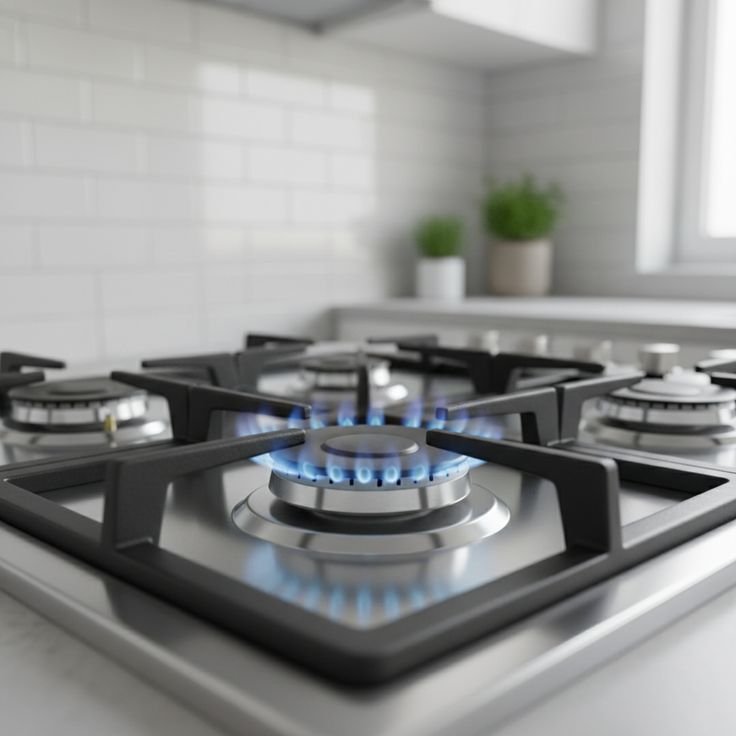
| Blue with small yellow tip | Perfect — correct air/gas mix ✅ |
| Entirely yellow or orange | Too little air — adjust shutter open |
| Flame lifts off or blows out | Too much air — adjust shutter closed |
| Very small and weak blue | Possible clog or low gas pressure |
How to Adjust the Air Shutter
- Turn the burner on and observe the flame color.
- Locate the air shutter — it’s usually toward the front of the burner tube, under or behind the cooktop.
- Loosen the small screw that holds the shutter in place.
- Slowly open or close the shutter while watching the flame.
- Stop when the flame turns a steady blue with a small yellow tip at the top.
- Tighten the screw to lock the shutter in position.
This adjustment can make a dramatic difference in flame strength and efficiency. It’s one of those gas stove repair basics troubleshooting tricks that most people never hear about.
Tip 7: Check for a Faulty or Worn-Out Gas Valve on the Burner
Each individual burner has its own internal gas valve — separate from the main supply valve. This valve opens when you turn the knob. Over time, it can wear out, get sticky, or fail to open fully — which results in a permanently weak flame no matter what else you fix.
Signs of a Failing Burner Valve
- The flame is consistently weak on just one burner (even after cleaning)
- The burner knob feels stiff or hard to turn
- The flame doesn’t increase much even on the highest setting
- You’ve tried all other fixes and nothing has worked
What You Can Do
First, make sure the knob and valve stem are clean. Sometimes grease and debris build up around the knob shaft and prevent the valve from opening fully.
- Remove the knob by pulling it straight off.
- Wash the knob and valve stem in warm soapy water.
- Dry thoroughly and reassemble.
- Test the flame again.
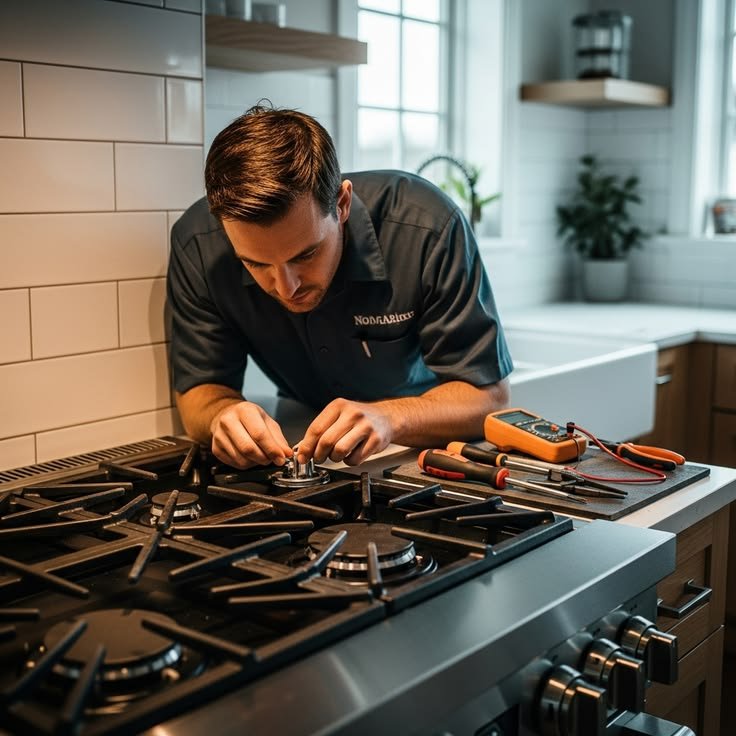
If the valve itself is mechanically worn or damaged, replacement is the best option. A gas valve replacement is best handled by a licensed technician if you’re not comfortable with gas appliance repairs. However, if you’re handy and have experience, you can order the part and follow manufacturer-specific guides.
Quick-Reference Troubleshooting Chart
Here’s a handy summary of all 7 tips to help you diagnose and fix your weak flame faster:
| Problem | Likely Cause | Fix |
|---|---|---|
| Flame is uneven or low on one side | Clogged burner ports | Clean with toothpick + warm water |
| Flame is weak on one half | Misaligned burner cap | Reposition the cap correctly |
| Flame sputters after cleaning | Moisture in burner parts | Dry parts fully before reassembling |
| All burners have weak flames | Gas supply issue | Check supply valve; call gas company |
| Stove clicks but flame is patchy | Dirty or cracked igniter | Clean or replace the igniter |
| Yellow/orange flame | Poor air-to-gas mix | Adjust the air shutter |
| One burner always weak, others fine | Worn burner valve | Clean valve stem or replace valve |
How to Prevent Weak Flames in the Future
Fixing the problem is great — but keeping it from coming back is even better. Here are a few simple habits that will keep your burners running strong:
- Wipe down burner caps and grates weekly to prevent grease buildup.
- Remove and clean burner heads monthly — more often if you cook every day.
- Always let burner parts dry fully after washing before placing them back.
- Avoid cooking on very high heat constantly — it accelerates wear on valve seals.
- Check your gas supply valve position every few months.
- Schedule a professional stove checkup once a year for a deeper inspection.
Gas stove repair basics revolve around small, regular maintenance tasks. They save you money, extend the life of your appliance, and keep your kitchen safe.
When to Call a Professional
Most weak flame issues are DIY-friendly. But there are times when calling in a pro is the smartest move.
Call a technician if:
- You smell gas anywhere near the stove
- The gas supply line looks damaged or corroded
- Multiple appliances in your home have low gas pressure
- You’ve tried all the troubleshooting tips and nothing works
- You are not confident replacing the burner valve or gas regulator
A licensed appliance repair technician can also run a full diagnostic on your stove to catch hidden issues before they become serious. The average repair call costs $75–$200, but it can prevent much more expensive damage — or a safety hazard.
FAQs: Gas Stove Repair Basics Troubleshooting
Q1: Why is the flame on my gas stove yellow instead of blue? A yellow or orange flame usually means there’s not enough oxygen mixing with the gas. This is often caused by a blocked air shutter or dirty burner ports. Use Tips 1 and 6 above to fix it.
Q2: Is a weak gas flame dangerous? Yes, it can be. A weak or incomplete flame may produce more carbon monoxide than a healthy blue flame. If you notice a persistent yellow flame or smell gas, ventilate the area and call a professional.
Q3: How often should I clean my gas burners? For everyday home cooking, clean burner caps and grates at least once a week. Do a thorough cleaning of the burner heads and ports once a month.
Q4: My burner clicks but won’t light — what’s wrong? It generally means the igniter is wet, dirty, or faulty. Dry it out first (if you recently cleaned the stove), then gently clean it. If it still doesn’t work, the igniter may need to be replaced.
Q5: One burner is weak but all others are fine. What does that mean? If only one burner is affected, the problem is almost always localized — a clogged port, misaligned cap, dirty igniter, or worn valve on that specific burner. Start with cleaning and realignment before considering a valve replacement.
Q6: Is it safe to clean gas burner parts with water? Yes, but you must let them dry completely before putting them back. Water in the burner ports or igniter area will cause sputtering, weak flames, or failure to ignite.
Q7: How do I know if my gas pressure is low? If all burners on your stove are weak at the same time — and cleaning doesn’t help — low gas pressure is likely the cause. This can happen due to high demand in your neighborhood, a supply issue, or a problem with your regulator. Call your gas provider to check.
Q8: Can I use a toothbrush to clean burner ports? Yes, but only for the exterior of burner caps and heads. For the actual ports (holes), use a toothpick or thin needle. A toothbrush can push debris deeper into the holes instead of removing it.
Conclusion: Small Fixes, Big Results
A weak gas flame doesn’t have to mean an expensive repair bill or a trip to the appliance store. As you’ve seen, the answer is most often something simple — a dirty burner cap, an out-of-position part, a clogged port, or a slightly closed gas valve.
By working through these 7 gas stove repair basics troubleshooting tips, you can diagnose and fix the problem in under an hour using tools you likely already have at home.
Start with the simplest fixes first — cleaning and repositioning. Then move on to checking the gas supply, igniter, air shutter, and valve if needed. Follow the maintenance tips to keep things running smoothly going forward.
Your stove does a lot of hard work. A little regular attention is all it takes to keep that flame burning strong.
Always prioritize safety. When in doubt about any gas-related repair, consult a licensed technician.