Meta Description: Save time and money with these gas stove repair essentials! Learn the clicking igniters fixes you can do at home — no technician needed.
8 Pro Tips for Fixing a Clicking Gas Stove Igniter
Is your gas stove clicking incessantly — even when no burner is on? That annoying noise can drive anyone crazy. The good news is that the majority of clicking igniter issues are simple home repairs. You don’t have to be a plumber or an appliance technician.
This guide outlines 8 clever gas stove repair fundamentals that stop the clicking and get your stove back in good working order. All these solutions are simple, safe, and beginner-friendly.
Let’s get into it.
Why Is Your Gas Stove Clicking to Begin With?
It helps to know why this occurs before diving into repairs. The igniter on your gas stove makes an electric spark that ignites the burner. When that system fails, the spark keeps firing when it shouldn’t.
Here are the biggest culprits:
| Cause | How Common |
|---|---|
| Food or moisture around the igniter | Very Common |
| Misaligned burner cap | Common |
| Defective igniter switch | Moderate |
| Damaged wiring | Less Common |
| Control knob issues | Less Common |
More often than not, the fix is simple. Most clicking igniter problems are caused by moisture and debris.
What You Should Have Before Starting
Safety comes first. Do these things before working on your stove:
- Turn off all burner knobs completely
- Disconnect the stove from the wall socket
- Allow the burners to cool before you touch anything
- Have a dry cloth around to clean as you go
You don’t need fancy tools to do most of these repairs. A soft cloth, a toothbrush, warm water, and a screwdriver will take care of most issues.
Solution 1 — Soak Up Any Wetness Near the Igniter
This is the most common reason for a clicking gas stove. Water from spills, boiling pots, or even cleaning the stove can get stuck near the igniter. The sparking doesn’t stop when the igniter is wet.
How to Fix It
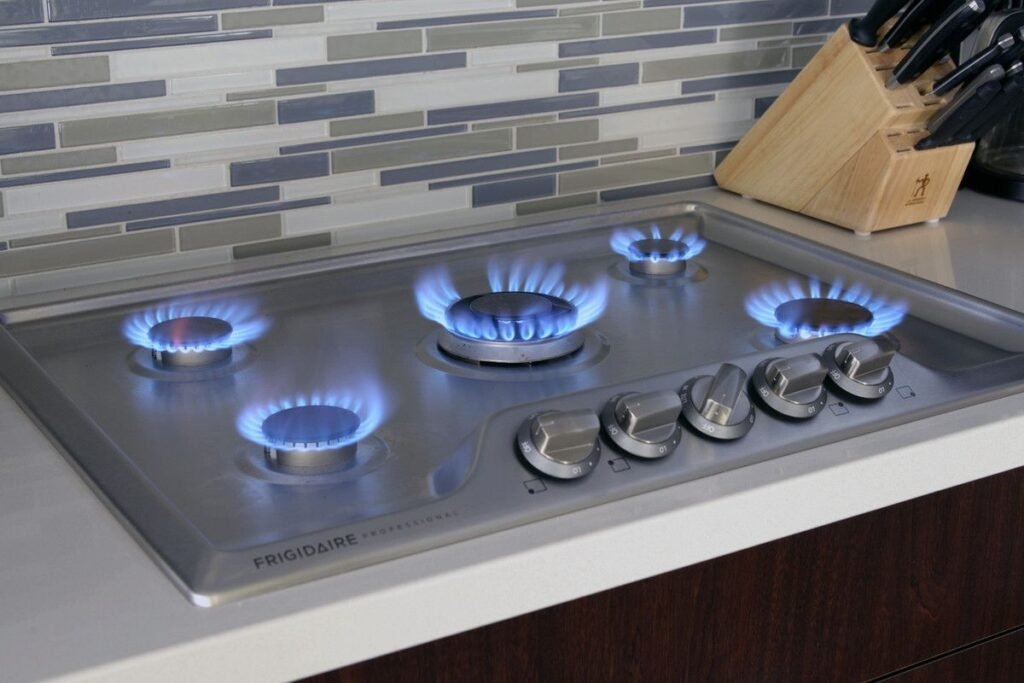
Begin by taking away the burner grate. Remove the burner cap — the round piece that goes on top. Examine the igniter — that’s the little white or ceramic tip that sticks up alongside the burner.
If it appears moist or damp, that’s your issue.
Blot it dry with a dry cloth. Then allow the stove to air dry for 30 to 60 minutes. For quicker results, use a hairdryer on low heat. Hold it 6 inches from the igniter and dry the area for a few minutes.
When everything is dry, plug the stove back in and test the burner. In many cases, that step alone completely ends the clicking.
Pro Tip: After cleaning your stove, leave the burner caps off for 20–30 minutes so everything can dry out before you cook again.
Solution 2 — Clean Off Food and Grease From the Igniter
Even if moisture isn’t the problem, food buildup comes in a close second. Old grease, sauce, pasta water, and food particles can create a coating on the igniter that causes it to misfire or continuously spark.
The Proper Way to Clean the Igniter
You’ll want a soft toothbrush, some dish soap, and warm water. Avoid steel wool or abrasive cleaners — they will scratch and damage the igniter tip.
Step-by-step cleaning process:
- Take off the burner grate and cap
- Wet the toothbrush with warm, soapy water
- Scrub around the base of the igniter
- Gently clean the igniter tip — do not scrub hard
- Wipe the area with a clean damp cloth
- Let everything dry completely before putting it back together
Once everything is dry and back in place, plug the stove back in and test. A clean igniter fires consistently and prevents unwanted sparks.
Solution 3 — Reposition the Burner Cap
A lot of people are surprised by this one. A burner cap that’s ever so slightly off-center can lead to relentless clicking. The ignition system of the stove detects that the cap is misaligned and continues to try to generate a spark.
Spotting a Misaligned Cap
Keep an eye on the burner caps on your stove. Each one should sit flat and level, centered over the burner base. If one is a bit crooked or off to the side, that’s probably your problem.
How to fix it:
- Remove the burner grate
- Lift off the burner cap
- Gently set it back down, ensuring that the slots or notches align with the burner base
- Gently press it so that it sits flat and level
That’s it. No tools required. Plug the stove back in and the clicking should stop.
This is one of the quickest gas stove repair basics you can do in less than two minutes. For more detailed repair guides and troubleshooting tips, visit Gas Stove Repair Basics — a helpful resource for DIY stove fixes.
Solution 4 — Check and Clean the Burner Ports
Burner ports are the tiny holes around the outer ring of the burner head. They allow gas to flow through to the flame. When they get clogged with food residue, the gas flow becomes uneven. This creates ignition issues, such as incessant clicking.
How to Clean Clogged Burner Ports
Take off the burner grate, cap, and the burner head itself. Look at those little holes around the edge. If you find dark spots, buildup, or blockage in that area, those ports need cleaning.
Cleaning method:
- Use a straight pin, toothpick, or small needle
- Gently poke into each blocked port to loosen the debris
- Blow through the ports or use canned air to clear them
- Soak the burner head in warm soapy water for about 20 minutes
- Rinse thoroughly and dry fully before replacing
Never use a toothpick if there is any chance it would break off inside the port. A metal pin or an unfolded paper clip works best.
Solution 5 — Check and Replace the Igniter Switch
If cleaning didn’t do the trick, the problem could be deeper — inside the igniter switch itself. There is a switch for each burner that activates the spark. If this switch becomes worn out or damaged, it can fire continuously.
Signs of a Bad Igniter Switch
- One specific burner clicks but others don’t
- The clicking persists even when the knob is set to “off”
- The spark is weak or occurs at the wrong time
What to Do
First, identify which burner is clicking. Try gently pushing the switch behind the knob — if it feels sticky or loose, consider replacing it.
An igniter switch replacement is a mid-level repair. You can order replacement parts online by looking up your stove’s model number (usually on a label inside the door or on the back of the stove). Parts from brands like Whirlpool, GE, and Samsung are often available for less than $20.
According to the U.S. Consumer Product Safety Commission, keeping gas appliance components in good working order is essential for home safety — which makes timely igniter switch replacement a smart move.
If you have some experience with basic appliance repairs, this is a fairly easy DIY fix. If not, it’s entirely reasonable to call a technician for this step.
Solution 6 — Check the Igniter Wiring
Another reason your stove keeps clicking is loose or damaged wiring. Small wires connect the igniter to the control module. If any of these wires are burned, frayed, or disconnected, the spark system goes haywire.
How to Check the Wiring Safely
Always unplug the stove before doing this.
Pull the stove away from the wall. Take off the back panel (you’ll need a Phillips screwdriver). Check the wires going to the igniter module. Look for:
- Burned or discolored wires
- Loose wire connectors
- Chewed wires (yes, mice do this)
- Frayed or cracked insulation
If a wire just pulled out of its connector, you might be able to press it back in place. If the wire itself is burned or broken, replace it or call a technician.
Safety Note: Never do any wiring work while the stove is plugged in. Even though igniters run on low voltage, the stove is part of your home’s electrical system and needs to be de-energized first.
Solution 7 — Clean or Replace the Control Knob
Over time, control knobs can fail. When you turn on the burner, the knob sends a signal to the igniter. If grease or debris accumulates inside the knob’s workings, it can cause the igniter to fire at the wrong times or leave it stuck in the “on” position.
Cleaning a Gunky Control Knob
Pull the knob straight off the stem — most come off without needing tools. Check behind the knob and around the stem area for grease buildup.
Cleaning steps:
- Wash the knob in warm soapy water
- Use a cotton swab to clean inside the knob opening
- Wipe the stem on the stove with a damp cloth
- Let everything dry before reattaching
If the knob is wobbly or the stem itself is broken, a replacement knob is typically inexpensive — around $10 to $25 depending on the brand.
Solution 8 — Reset the Stove’s Electrical System
Sometimes it isn’t a mechanical issue with the igniter at all. It’s electrical. A power surge or minor fault in the stove’s control board can cause the igniter to keep clicking.
The Simple Reset Method
This is the easiest fix in the book and often overlooked:
- Set all knobs to the “off” position
- Disconnect the stove from the wall
- Wait a full 5 minutes
- Plug it back in
This hard reset clears electrical errors in the control module. It’s like rebooting your computer when it’s misbehaving. It won’t solve every issue, but it’s always worth trying before anything else.
If the clicking comes back within a few hours after resetting, you likely have a mechanical problem — like a dirty igniter or defective switch — and one of the earlier solutions will be needed.
Quick Overview: All 8 Solutions at a Glance
| Solution | Difficulty | Time Required | Tools Needed |
|---|---|---|---|
| Dry out moisture | Easy | 30–60 min | Cloth, hairdryer |
| Clean food/grease | Easy | 20 min | Toothbrush, soap |
| Realign burner cap | Easy | 2 min | None |
| Clear burner ports | Easy–Moderate | 30 min | Pin, canned air |
| Replace igniter switch | Moderate | 45–60 min | Screwdriver, new part |
| Check wiring | Moderate | 30–45 min | Screwdriver |
| Clean/replace knob | Easy | 15 min | Soap, cotton swab |
| Reset electrical system | Easy | 5 min | None |
When to Call a Professional
The majority of clicking igniter problems can be fixed at home. But there are times when calling a licensed appliance repair technician is the smarter call.
Call a pro if:
- You smell gas near the stove at any point
- Clicking continues after applying all 8 fixes
- You spot burn marks on the wiring or control panel
- The stove is under warranty (DIY repairs may void it)
- You’re uncomfortable working with wiring
A professional fix for an igniter problem generally runs $100 to $250, depending on the part and labor in your area. That’s still far less than the cost of buying a new stove.
Preventing Future Clicking Igniter Issues
A bit of upkeep pays big dividends. Here are habits that will keep your gas stove in good shape:
- Clean the stove after every use — don’t let spills linger
- Remove burner caps and dry them once a week if you cook often
- Clean burner ports monthly with a pin or toothpick
- Never spray water directly on the burner area
- Use lids on pots to minimize splatter near the igniters
Following these straightforward steps can keep the most common igniter problems from ever starting.
Frequently Asked Questions About Gas Stove Clicking Igniters
Q: My gas stove continues to click even after I turned it off. Why? A: The most common problem is moisture near the igniter. Try drying the area with a cloth or hairdryer. Make sure the burner cap is sitting flat and centered as well.
Q: Is a clicking gas stove hazardous? A: A clicking igniter on its own is generally not dangerous. If it’s clicking and you smell gas, however, turn off all burners at once, ventilate the room, and call your gas company.
Q: Is it okay to spray WD-40 on my igniter? A: No. Never spray WD-40 or any oil-based product around the igniter. It can worsen the problem and create a fire risk. Use only dry cleaning methods.
Q: How long do gas stove igniters last? A: A well-maintained igniter should last 10 to 15 years or longer. Frequent moisture exposure and lack of cleaning are the main reasons for early failure.
Q: My stove clicks only on one burner. What does that mean? A: That typically indicates an issue specific to that burner — a dirty igniter, misaligned cap, or failing igniter switch. Begin with cleaning and realignment before replacing any parts.
Q: Can I install an igniter myself? A: Yes, in most cases. It involves removing the burner head, unhooking the old igniter, and snapping in a new one. Make sure you have the correct replacement part for your stove model.
Q: Where can I find the model number of my stove? A: Look for a sticker inside the oven door frame, on the back of the stove, or inside a drawer under the oven. It’s often printed on a silver or white sticker.
Wrapping It Up
A clicking igniter is one of the most common — and fixable — issues with a gas stove. The eight gas stove repair fundamentals covered in this guide address every key cause — whether it’s moisture, food buildup, wiring issues, or igniter switch failures.
Try the simplest fixes first. Dry out the igniter. Clean the area. Realign the burner cap. In most cases, these three steps alone will solve the problem.
If that doesn’t work, move on to the more in-depth fixes. In nearly every instance, you can solve the problem without spending a lot of money or calling a repair service.
Your stove is built to last. With a bit of attention — and the right information — you can keep it running quietly and reliably for years.