Understanding Gas Stove Issues: A Practical Guide for Homeowners
Gas stoves are a staple in many kitchens, offering quick heat and precise control that electric models often can’t match. But like any appliance, they can act up from time to time. Maybe the burner won’t light, or the flame is uneven, or there’s a strange smell that makes you pause. Before you panic and call a repair service—which can cost a pretty penny—there are some basic troubleshooting steps you can try yourself. These aren’t complicated fixes that require tools or expertise; they’re simple checks that anyone with a bit of patience can handle. The key is to approach it safely, because gas is involved, and you don’t want to risk any accidents.
I’ve had my share of stove troubles over the years. Living in an old apartment, my gas stove would sometimes decide to go on strike right when I was in the middle of cooking dinner. It taught me that most problems are minor and fixable without professional help. In this article, we’ll walk through nine easy troubleshooting steps for common gas stove issues. I’ll explain each one in detail, why it might be happening, and how to address it. Remember, if you smell gas or suspect a leak, stop everything, open windows, and call your gas company or a professional immediately. Safety always comes first.
Step 1: Verify the Gas Supply is On and Flowing Properly
The most basic thing to check when your gas stove isn’t working is whether the gas is actually reaching it. It sounds obvious, but you’d be surprised how often this is the culprit. Maybe someone accidentally turned off the valve behind the stove, or there’s an issue with the main supply line.
Start by locating the gas shut-off valve. For most stoves, it’s behind the unit, connected to the flexible gas line. Gently pull the stove away from the wall if needed—ask for help if it’s heavy—and look for a lever or knob. It should be in the “on” position, parallel to the pipe. If it’s perpendicular, turn it so it’s aligned. But do this carefully; if it’s stiff, don’t force it, as you might damage the valve.
Next, check if other gas appliances in your home are working, like a water heater or furnace. If they’re fine, the issue is likely isolated to the stove. If nothing’s working, it could be a broader supply problem—perhaps a bill wasn’t paid, or there’s maintenance in your area. Contact your utility provider in that case.
Why does this happen? Sometimes during cleaning or moving furniture, the valve gets bumped. Or in older homes, sediment in the lines can cause partial blockages, reducing flow. To prevent it, make a habit of checking the valve periodically, especially after any kitchen work.
I remember once, after a family gathering, my stove wouldn’t light. Turns out, my nephew had played around back there and shut it off. A quick flip, and we were back in business. This step alone solves a lot of mysteries without any hassle.
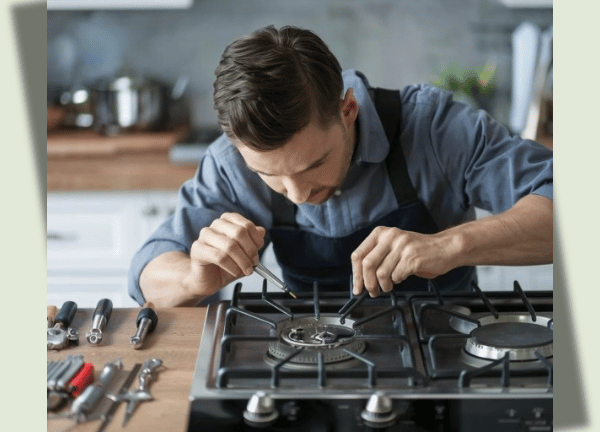
Expanding on this, consider the type of gas supply. If you’re on natural gas, the pressure is usually consistent, but propane tanks for rural homes can run low. Check the tank gauge if applicable; anything below 20% might cause weak flames. Refill as needed, but again, if you’re unsure, get help.
Also, listen for the hissing sound when you turn on a burner. If you hear it but no flame, the gas is flowing, pointing to ignition issues—which we’ll cover next. If no hiss, the supply is the problem.
In terms of tools, you don’t need any here. Just your eyes and ears. But wear gloves if pulling the stove out to avoid scratches or dirt.
This step is foundational because without gas, nothing else matters. Spend a few minutes here before moving on.
Step 2: Inspect and Clean the Igniter for Proper Spark
If the gas is on but the burner won’t light, the igniter might be the issue. Modern gas stoves use electric igniters that create a spark to light the gas. Over time, they can get dirty or wear out.
First, turn the burner knob to the “light” position and listen for clicking. That’s the igniter trying to spark. If you hear clicking but no flame, the igniter might be weak or obstructed.
To clean it, turn off the gas and power to the stove (unplug it if electric-assisted). Remove the burner caps and grates. The igniter is a small ceramic piece with a metal tip near the burner. Wipe it gently with a soft cloth or cotton swab dipped in rubbing alcohol. Avoid water, as it can cause shorts.
If there’s no clicking at all, check if the stove is plugged in—some models need electricity for the igniter. Also, test other burners; if only one fails, it’s likely that specific igniter.
Common causes include food spills or grease buildup, which insulate the spark. In humid kitchens, moisture can corrode it too.
A friend of mine had this problem after a spaghetti sauce boil-over. Cleaning the igniter fixed it in minutes. If cleaning doesn’t help, you might need a replacement, but that’s for a pro.
For manual lighting as a temporary fix, use a long match or lighter, but only if you’re comfortable and the area is ventilated. Hold it near the burner while turning on the gas low.
Preventatively, keep the stove top clean after each use. A quick wipe prevents buildup.
This step highlights how maintenance can extend appliance life. Igniters are durable but not invincible.
Step 3: Clear Debris from Burner Ports and Caps
Burners have tiny holes called ports where gas exits. If they’re clogged, the flame will be weak, uneven, or nonexistent.
Begin by removing the burner caps and heads. Soak them in warm soapy water for 15-20 minutes. Use a soft brush or toothpick to gently clear any visible clogs in the ports. Don’t use metal wires, as they can enlarge the holes and cause uneven burning.
Dry everything thoroughly before reassembling. Test by lighting the burner—flames should be blue and steady. Yellow tips indicate incomplete combustion, often from dirt.
Why clogs happen: Spills, crumbs, even dust. In busy kitchens, it’s inevitable.
I once fixed a uneven flame by poking out a bit of dried rice from a port. Simple, but effective.
If the burner head is warped or damaged, that’s beyond basic troubleshooting—note it for professional repair.
For sealed burners, cleaning is similar but ensure seals are intact to prevent leaks.
This step can restore efficiency, saving gas and improving cooking.
Step 4: Check for Blockages in the Gas Lines or Orifices
Beyond the burners, gas lines inside the stove can get obstructed, though this is rarer for DIY checks.
Without disassembling, you can inspect visible parts. Turn off gas, remove burners, and look into the orifices (small nozzles under burners) for debris. Use compressed air or a soft brush to clear.
If you suspect a deeper blockage, like from insects or rust, don’t probe—call a tech.
Causes include poor installation or aging pipes. In areas with hard water, mineral buildup can occur.
A story: An old stove in a vacation home had spider webs in the lines after winter storage. Blowing them out fixed it.
Always reassemble carefully to avoid misalignment.
This step bridges surface issues to internal ones, but stay surface-level for safety.
Step 5: Test the Control Knobs and Valves for Functionality
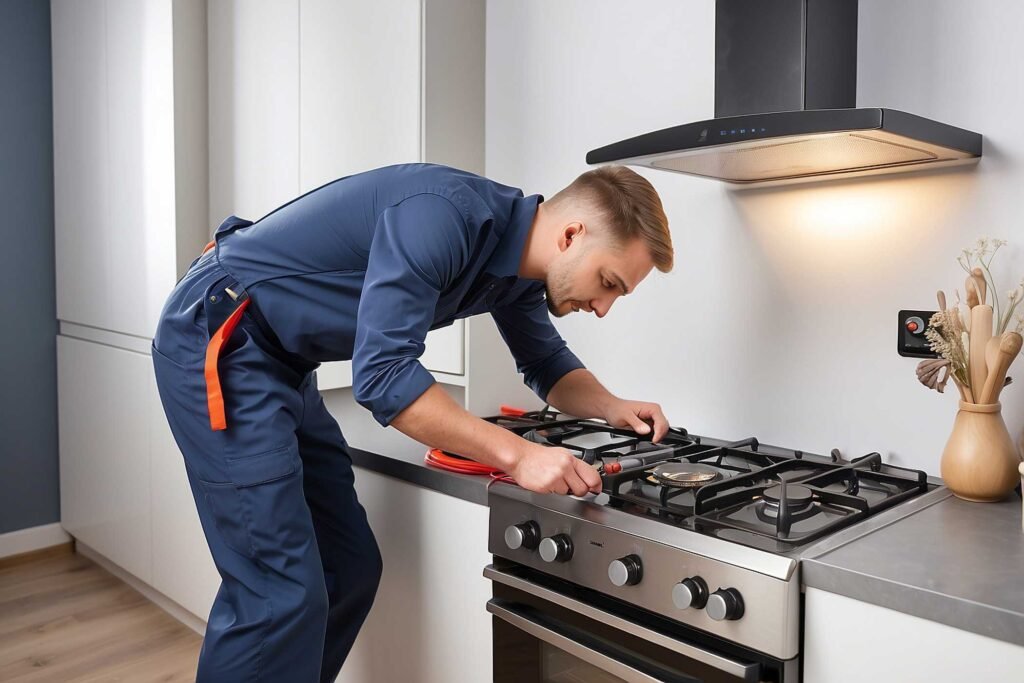
Knobs control gas flow and ignition. If sticky or loose, they might not work right.
Turn each knob through its range. It should move smoothly. If stuck, clean around the base with a damp cloth—grease builds up.
If a knob spins freely without engaging, the stem might be broken—replaceable, but check manual.
For electronic controls, reset by unplugging for a minute.
Issues arise from wear or spills seeping in.
My kitchen knob once got jammed from syrup spill. Cleaning freed it.
This ensures user interface works, often overlooked.
Step 6: Examine the Thermocouple or Flame Sensor
In pilot-light stoves, the thermocouple senses flame and keeps gas flowing. If faulty, gas shuts off.
Locate it near the pilot— a copper tube. Clean the tip with fine sandpaper if sooty.
For electronic, it’s similar but sensor-based.
If pilot won’t stay lit, this is likely.
Causes: Dirt or bending.
Gently straighten if bent, but carefully.
A relative’s oven pilot issue was fixed this way.
Vital for safety, as it prevents gas buildup.
Step 7: Inspect the Oven Door Seal and Hinges
For oven problems, check the gasket around the door. If torn, heat escapes, affecting performance.
Press along the seal for gaps. Clean with baking soda paste if dirty.
Hinges should close door firmly. Lubricate with food-grade oil if squeaky.
Issues from age or slamming.
Fixed my uneven baking by replacing a worn seal—easy clip-on.
Improves efficiency too.
Step 8: Reset Electronic Controls or Circuit Breakers
Many stoves have digital panels. If glitching, unplug for 5 minutes to reset.
Check home breaker if no power.
Software glitches or surges cause this.
Happened after a storm—reset fixed clock and ignition.
Simple but effective for modern models.
Step 9: Safely Check for Minor Gas Leaks
Last, but crucially, check for leaks if you suspect but don’t smell strongly.
Mix soap water, apply to connections. Bubbles mean leak—tighten or call pro.
Never use flame to check!
Causes: Loose fittings.
Did this after moving stove—no issues.
If any doubt, professional.
Wrapping Up: Knowing When to Stop and Call for Help
These nine steps cover most common gas stove woes, from supply to sensors. By trying them, you can often fix things quickly and cheaply. But if problems persist, or involve major disassembly, wiring, or persistent smells, it’s time for a certified technician. Regular cleaning and gentle use prevent many issues.
In my experience, troubleshooting builds confidence in handling home appliances. Stay safe, and happy cooking!