
4 Honest Gas Stove Repair Basics Lessons I Learned Fixing My Stove
Gas stoves are one of those appliances we rarely think about until something goes wrong. One day everything works perfectly, and the next morning you try to make tea and the burner refuses to ignite.
That exact situation happened to me.
My gas stove suddenly stopped working properly. One burner wouldn’t ignite, another produced a weak flame, and the igniter clicked endlessly. Instead of immediately calling a technician, I decided to investigate the problem myself.
What followed was a surprisingly educational experience.
I didn’t become a professional technician overnight, but I did learn several practical gas stove repair basics that saved me money, time, and frustration.
In this article, I’ll share the four most important lessons I learned while fixing my gas stove, along with practical tips, repair steps, and maintenance tricks anyone can follow.
Lesson 1: Most Gas Stove Problems Are Caused by Dirt, Not Damage
When my stove stopped igniting properly, I immediately assumed something was broken.
I imagined expensive parts needing replacement.
But the truth was much simpler.
The burner holes were clogged with grease and food debris.
Gas stoves operate through small burner ports that distribute gas evenly around the burner head. If even a few of those holes become blocked, the flame becomes weak or uneven.
Sometimes the burner won’t ignite at all.
Signs Your Burner Is Dirty
| Symptom | Possible Cause |
|---|---|
| Weak flame | Burner ports clogged |
| Uneven flame | Food debris blocking holes |
| Yellow flame | Incomplete gas combustion |
| Clicking igniter but no flame | Gas not reaching burner evenly |
What I Did to Fix It
Cleaning the burner took less than 20 minutes.
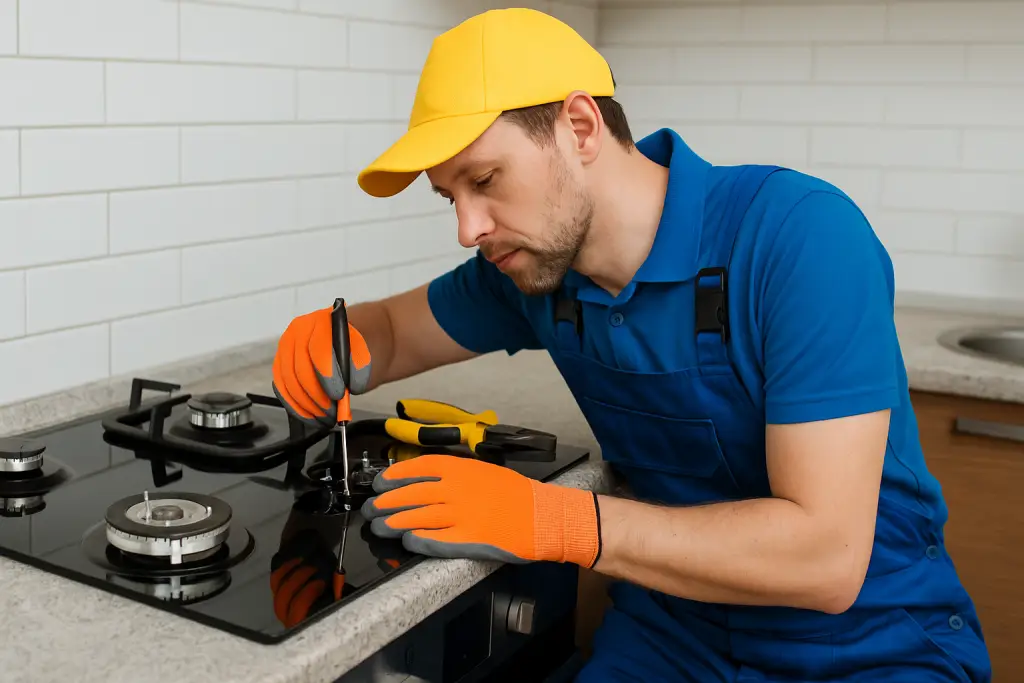
Steps I followed:
- Turn off gas supply
- Remove burner cap
- Lift burner head
- Soak parts in warm soapy water
- Clean burner holes using a pin
- Dry everything completely
- Reassemble the burner
After cleaning, the flame became strong again.
Simple Burner Cleaning Chart
| Cleaning Method | Effectiveness | Difficulty |
|---|---|---|
| Warm soapy water | High | Easy |
| Baking soda paste | Medium | Easy |
| Vinegar soak | High | Easy |
| Needle or pin cleaning | Very High | Moderate |
The biggest lesson?
Never assume a stove is broken until you’ve cleaned it properly.
Lesson 2: Ignition Problems Are Usually Moisture Related
Another problem I encountered was the constant clicking sound.
The igniter kept clicking even when the burner was off.
At first I thought the ignition switch was broken.
But the real problem was moisture inside the igniter system.
This often happens after:
- Deep cleaning
- Boiling water spilling over
- Washing burners
- High kitchen humidity
How Gas Stove Igniters Work
A gas stove igniter produces a spark that lights the gas coming from the burner.
If moisture blocks the spark path, ignition becomes unreliable.
Signs of Moisture in the Igniter
| Symptom | What It Means |
|---|---|
| Continuous clicking | Moisture in ignition system |
| Weak spark | Wet electrode |
| Delayed ignition | Spark not strong enough |
My Fix
I tried something surprisingly simple.
I left the stove off for a few hours and used a hair dryer to dry the igniter area.
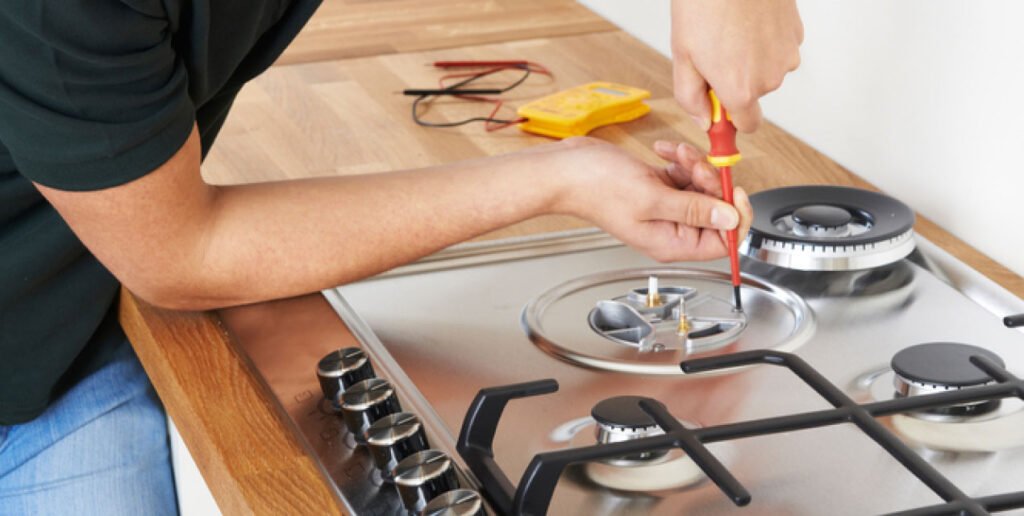
Steps I used:
- Turn off gas supply
- Remove burner cap
- Dry electrode using cloth
- Blow warm air with hair dryer
- Wait 15 minutes before testing
The clicking stopped immediately.
Igniter Troubleshooting Chart
| Problem | Quick Fix |
|---|---|
| Moisture | Dry with cloth or hair dryer |
| Grease buildup | Clean with alcohol wipe |
| Loose connection | Tighten ignition wire |
| Damaged electrode | Replace igniter |
The lesson here was clear:
Not every electrical issue means a component is broken. Sometimes it just needs to dry.
Lesson 3: Weak Flame Usually Means Gas Flow Problems
One of my burners produced a very small flame.
At first I thought the burner was faulty.
But after some inspection, I discovered the issue was restricted gas flow.
Gas stoves rely on smooth gas delivery through small valves and tubes. Even a tiny blockage can reduce flame strength.
Causes of Weak Flame
| Cause | Description |
|---|---|
| Grease buildup | Blocks gas ports |
| Partially closed valve | Restricts gas flow |
| Dirty regulator | Reduces gas pressure |
| Bent burner tube | Interrupts gas flow |
Testing Gas Flow
I used a simple test.
I compared the flames of all burners.
If one burner is significantly weaker, the issue is likely local to that burner.
If all burners are weak, the problem might be:
- Gas regulator
- Gas supply
- Cylinder pressure
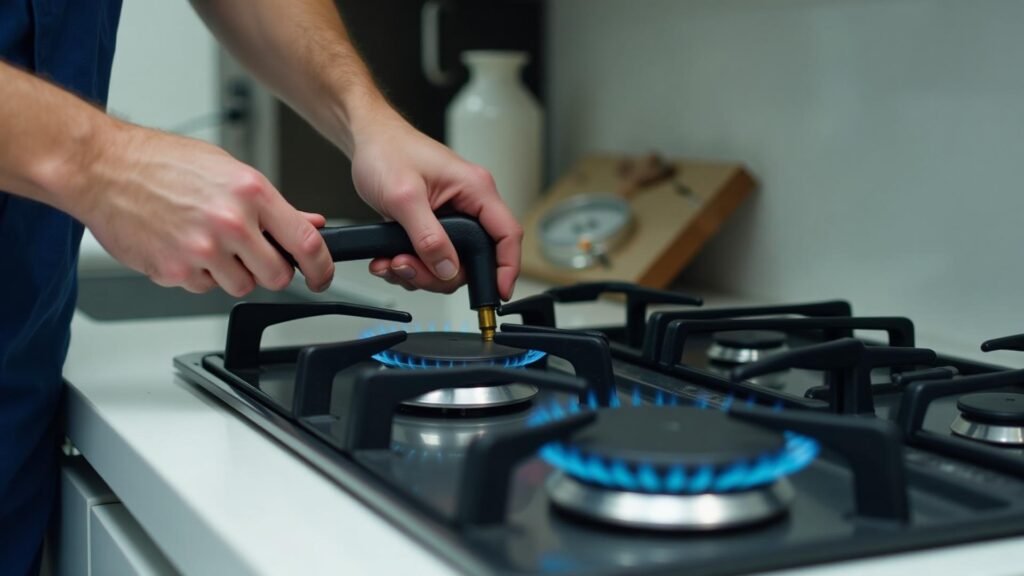
Flame Color Chart
| Flame Color | Meaning |
|---|---|
| Blue | Normal combustion |
| Yellow | Dirty burner |
| Orange | Dust particles |
| Red | Gas mixture problem |
After cleaning the burner ports again and adjusting the air shutter slightly, the flame became stable.
Lesson 4: Preventive Maintenance Saves More Money Than Repairs
The biggest lesson I learned wasn’t about fixing the stove.
It was about preventing future problems.
Most gas stove failures occur because maintenance is ignored.
After repairing my stove, I created a simple monthly maintenance routine.
My Monthly Gas Stove Maintenance Routine
| Task | Frequency |
|---|---|
| Burner cleaning | Monthly |
| Igniter wipe | Monthly |
| Gas leak check | Every 2 months |
| Deep cleaning | Every 3 months |
| Hose inspection | Every 6 months |
Gas Leak Testing Method
A simple soap test works well.
Steps:
- Mix soap and water
- Apply solution to gas pipe joints
- Turn gas on
- Watch for bubbles
If bubbles appear, there is a gas leak.
Never ignore this issue.
Essential Gas Stove Repair Tools
During my repair attempts, I realized that having a few basic tools makes troubleshooting easier.
Basic Tool Kit
| Tool | Purpose |
|---|---|
| Needle or pin | Cleaning burner holes |
| Screwdriver | Removing stove parts |
| Soft brush | Cleaning debris |
| Microfiber cloth | Drying components |
| Soap solution | Leak testing |
These tools are inexpensive but extremely useful.
Gas Stove Troubleshooting Guide
Here’s a quick reference chart that summarizes common gas stove problems.
Gas Stove Problem Chart
| Problem | Most Likely Cause | Quick Solution |
|---|---|---|
| Burner won’t ignite | Dirty burner | Clean burner holes |
| Continuous clicking | Moisture | Dry igniter |
| Weak flame | Gas restriction | Clean burner tube |
| Yellow flame | Poor combustion | Clean burner ports |
| Gas smell | Leak | Perform soap test |
Safety Tips When Repairing Gas Stoves
Repairing gas appliances requires basic safety awareness.
Important Safety Rules
- Always turn off gas supply before repairs.
- Never use open flames to check leaks.
- Ensure good kitchen ventilation.
- Avoid forcing parts during disassembly.
- Call a professional for major gas line issues.
Risk Level Chart
| Repair Task | Difficulty | Risk |
|---|---|---|
| Burner cleaning | Easy | Low |
| Igniter drying | Easy | Low |
| Burner replacement | Moderate | Medium |
| Gas valve repair | Hard | High |
If the repair involves gas valves or regulators, professional help is recommended.
What I Would Do Differently Next Time
After fixing my stove, I realized I made a few mistakes during the process.
Mistakes I Made
| Mistake | What I Learned |
|---|---|
| Assuming the stove was broken | Always check cleaning first |
| Ignoring maintenance | Prevention saves effort |
| Not drying burners properly | Moisture causes ignition failure |
| Overlooking simple tests | Basic checks reveal most problems |
Fixing appliances often requires patience more than technical expertise.
When You Should Call a Professional
DIY repairs work well for basic issues, but some problems require trained technicians.
Situations That Need Professional Help
- Gas leaks
- Broken gas valves
- Cracked gas lines
- Ignition module failure
- Regulator damage
Attempting complex gas repairs without experience can be dangerous.
Long-Term Gas Stove Care Guide
To avoid future problems, I now follow a simple care system.
Weekly Care
| Task |
|---|
| Wipe stove surface |
| Clean food spills |
| Check flame color |
Monthly Care
| Task |
|---|
| Remove burners |
| Clean burner ports |
| Inspect igniters |
Yearly Care
| Task |
|---|
| Replace gas hose if worn |
| Check regulator pressure |
| Professional inspection |
Final Thoughts
Fixing my gas stove turned out to be a valuable learning experience.
What started as a frustrating kitchen problem became an opportunity to understand how gas stoves actually work.
The four biggest lessons I learned were:
- Dirt causes most burner problems.
- Igniter issues often come from moisture.
- Weak flames usually mean restricted gas flow.
- Preventive maintenance prevents costly repairs.
Gas stoves are surprisingly simple appliances once you understand their basic components.
A little knowledge and regular cleaning can extend their lifespan by many years.
Frequently Asked Questions (FAQs)
1. Why does my gas stove burner click but not light?
This usually happens due to moisture around the igniter or clogged burner holes. Cleaning and drying the burner area often solves the problem.
2. Is a yellow gas flame dangerous?
A yellow flame indicates incomplete combustion, often caused by dirty burners. It should be cleaned immediately to restore proper blue flames.
3. How often should I clean my gas stove burners?
Burners should be cleaned at least once a month to prevent clogs and uneven flames.
4. Can I repair a gas stove myself?
Basic repairs such as burner cleaning and igniter drying can be done safely. However, gas valve or regulator repairs should be handled by professionals.
5. Why is my gas stove flame very low?
Low flames usually occur due to blocked burner ports, restricted gas flow, or a partially closed gas valve.
6. What is the safest way to check for a gas leak?
Use a soap and water solution on gas pipe connections. If bubbles appear when gas is turned on, there is a leak that needs immediate attention.

