
8 Smart Gas Stove Repair Basics Safety Tips That Protect Your Family
Gas stoves are one of those everyday appliances most of us don’t think about until something goes wrong. We turn the knob, hear the click, see the flame, and start cooking. Simple, right?
But behind that small blue flame is a system involving gas pressure, ignition, air flow, metal components, and safety controls. If something in that system fails, the results can range from annoying (burners that won’t light) to dangerous (gas leaks or fire hazards).
I learned this the hard way after dealing with several stove issues at home. Over time, I realized that understanding a few basic repair and safety principles can protect your home and your family.
This guide walks through 8 smart gas stove repair safety tips that homeowners can follow to prevent accidents, reduce repair costs, and keep their kitchen running safely.
These tips are based on practical experience and common stove repair scenarios that occur in many homes.
Why Gas Stove Safety Matters More Than Most People Think
Before diving into the repair tips, it helps to understand the potential risks associated with gas stoves.
Gas appliances use natural gas or LPG (liquefied petroleum gas). Both fuels are efficient, but they can become dangerous if mishandled.
Common risks include:
- Gas leaks
- Fire hazards
- Carbon monoxide exposure
- Burner flare-ups
- Faulty ignition sparks
- Overheating components
Many of these problems start small but grow worse when ignored.
Common Gas Stove Issues and Their Risk Levels
| Problem | Possible Cause | Risk Level | Immediate Action |
|---|---|---|---|
| Burner won’t light | Clogged burner holes | Low | Clean burner |
| Clicking sound continuously | Faulty ignition switch | Medium | Disconnect power |
| Yellow flame | Improper air mixture | Medium | Adjust air shutter |
| Gas smell | Gas leak | High | Shut off gas immediately |
| Uneven flame | Burner blockage | Low | Clean burner ports |
| Flame going out | Thermocouple issue | Medium | Inspect safety sensor |
Even simple issues like food debris in burner holes can affect flame stability and lead to incomplete combustion.
Tip 1: Always Turn Off the Gas Supply Before Any Repair
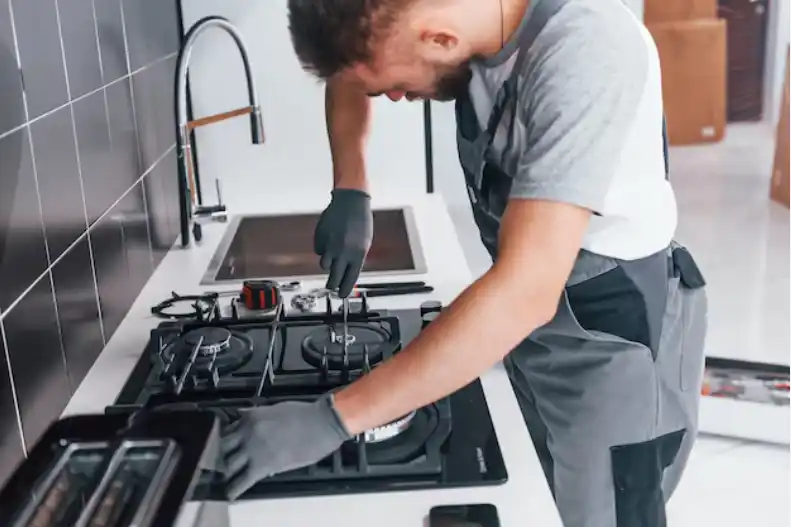
This may sound obvious, but many small stove accidents happen because people forget to shut off the gas before working on the appliance.
Even if you’re just removing a burner cap or cleaning the igniter, the gas supply should always be turned off first.
Why This Matters
Gas lines stay pressurized even when the stove is not in use. If a knob accidentally turns while you’re working, gas can flow out without ignition.
That creates a dangerous buildup.
Safe Repair Preparation Checklist
| Step | Action |
|---|---|
| Step 1 | Turn off burner knobs |
| Step 2 | Shut off the gas valve |
| Step 3 | Unplug the stove if electric ignition |
| Step 4 | Wait 2–3 minutes before opening parts |
| Step 5 | Ensure good ventilation |
Following this simple preparation routine dramatically reduces repair risks.
Tip 2: Learn the Difference Between a Healthy Flame and a Dangerous One
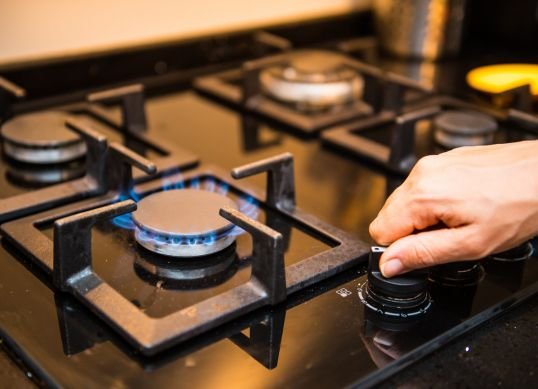
One of the easiest ways to detect stove problems is by observing the flame color.
A properly working gas stove produces a steady blue flame.
Anything else usually indicates a problem.
Gas Flame Color Meaning
| Flame Color | What It Means | Safety Concern |
|---|---|---|
| Blue | Proper combustion | Safe |
| Yellow | Incomplete combustion | Carbon monoxide risk |
| Orange | Dust or debris in burner | Needs cleaning |
| Red | Fuel mixture issue | Possible burner damage |
A yellow flame is especially dangerous, because it indicates incomplete burning of gas, which may release carbon monoxide.
This is why regular burner cleaning is critical.
Tip 3: Keep Burner Ports Clean to Prevent Gas Build-Up
Burner ports are the tiny holes around the burner head where flames appear.
Over time, grease, food particles, and oil can clog them.
When this happens, gas cannot escape evenly, causing:
- Uneven flames
- Flame flare-ups
- Delayed ignition
Simple Burner Cleaning Process
| Tool | Purpose |
|---|---|
| Toothpick | Clear small burner holes |
| Soft brush | Remove grease |
| Warm soapy water | Clean burner cap |
| Dry cloth | Prevent moisture rust |
Never use sharp metal objects because they can damage the burner holes.
A damaged burner can cause uneven gas distribution.
Tip 4: Check for Gas Leaks Using the Soap Test
One of the safest and simplest methods to detect gas leaks is the soap bubble test.
Professional technicians use similar techniques.
How the Soap Test Works
- Mix dish soap with water.
- Apply it to gas connections.
- Turn on the gas slightly.
- Watch for bubbles forming.
If bubbles appear, there is a leak.
Leak Detection Guide
| Observation | Meaning |
|---|---|
| No bubbles | No leak |
| Slow bubbles | Minor leak |
| Rapid bubbles | Major leak |
If you detect a leak:
- Turn off the gas immediately
- Ventilate the area
- Call a professional technician
Never use a match or flame to test for gas leaks.
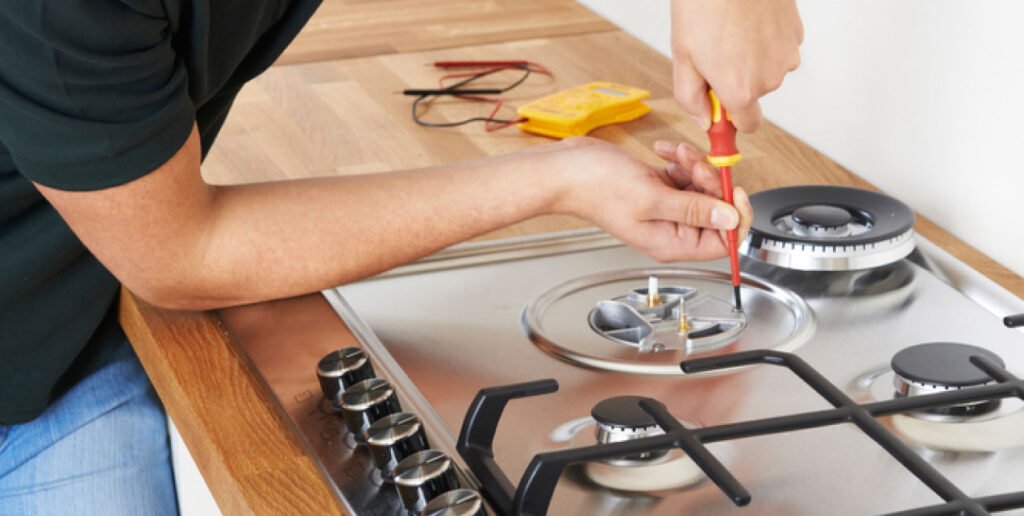
Tip 5: Inspect Ignition Systems Regularly
Most modern gas stoves use electric spark ignition.
If the ignition system fails, the stove may:
- Keep clicking
- Fail to ignite
- Produce weak sparks
Components of a Gas Stove Ignition System
| Component | Function |
|---|---|
| Igniter electrode | Produces spark |
| Spark module | Generates electric pulse |
| Ignition switch | Activates spark |
| Wiring harness | Connects components |
Food spills often cause ignition problems.
A dirty igniter may prevent proper sparking.
Cleaning the igniter gently with alcohol can often fix the issue.
Tip 6: Never Ignore the Smell of Gas
Gas companies intentionally add odorants to gas to make leaks detectable.
The smell is often compared to rotten eggs.
If you smell gas:
Emergency Safety Steps
- Turn off the gas supply.
- Open windows immediately.
- Avoid electrical switches.
- Do not light flames.
- Leave the house if smell is strong.
Gas Leak Response Priority Chart
| Situation | Action |
|---|---|
| Mild smell near stove | Check connections |
| Strong smell in kitchen | Shut off gas |
| Gas smell throughout house | Evacuate immediately |
Gas leaks are rare but extremely dangerous if ignored.
Tip 7: Replace Damaged Gas Hoses Immediately
Flexible gas hoses connect the stove to the gas supply line.
These hoses wear out over time.
Common problems include:
- Cracks
- Dry rot
- Loose fittings
Gas Hose Lifespan Guide
| Hose Type | Average Lifespan |
|---|---|
| Rubber hose | 3–5 years |
| Stainless braided hose | 10+ years |
| PVC gas hose | 5–8 years |
If you notice cracks or stiffness, replace the hose immediately.
A failing hose is one of the most common causes of kitchen gas leaks.
Tip 8: Install a Carbon Monoxide Detector Near the Kitchen
Many people think carbon monoxide detectors are only needed near heaters.
But gas stoves can also produce carbon monoxide if combustion is incomplete.
A detector acts as a final layer of protection.
Carbon Monoxide Exposure Symptoms
| Symptom | Severity |
|---|---|
| Headache | Early warning |
| Dizziness | Moderate exposure |
| Nausea | Dangerous |
| Confusion | Emergency |
| Loss of consciousness | Life-threatening |
Installing a detector can literally save lives.
Monthly Gas Stove Safety Maintenance Checklist
Routine checks prevent most stove issues.
Monthly Inspection Table
| Task | Time Required |
|---|---|
| Clean burner heads | 10 minutes |
| Check ignition spark | 2 minutes |
| Inspect gas hose | 3 minutes |
| Wipe grease buildup | 5 minutes |
| Check flame color | 1 minute |
Total time: around 20 minutes per month
That small effort can prevent expensive repairs.
Warning Signs Your Gas Stove Needs Immediate Repair
Watch for these symptoms:
- Strong gas smell
- Burners lighting slowly
- Clicking without ignition
- Uneven flames
- Flame turning yellow
- Stove overheating
Ignoring these signs can lead to bigger problems later.
Basic Gas Stove Parts Diagram (Conceptual)
Gas Supply
   │
Gas Hose
   │
Gas Valve
   │
Burner Tube
   │
Burner Head
   │
Igniter Electrode
   │
Flame Output
Understanding this basic flow helps when troubleshooting stove problems.
When DIY Repairs Are Safe — and When They Are Not
Not every repair should be attempted at home.
Safe DIY Repairs
| Repair | Difficulty |
|---|---|
| Cleaning burners | Easy |
| Clearing ignition debris | Easy |
| Replacing burner caps | Easy |
Repairs Best Left to Professionals
| Repair | Risk Level |
|---|---|
| Gas valve replacement | High |
| Internal gas pipe repair | High |
| Ignition module replacement | Medium |
Knowing the difference prevents accidents.
Final Thoughts
Gas stoves are incredibly reliable appliances, but they demand respect and basic maintenance.
Following these 8 smart safety tips dramatically reduces risks:
- Turn off gas before repairs
- Monitor flame color
- Keep burners clean
- Use soap tests for leaks
- Maintain ignition systems
- Take gas smells seriously
- Replace worn gas hoses
- Install carbon monoxide detectors
A few minutes of preventive care can protect your home, your kitchen, and most importantly your family.
Safety always starts with awareness.
Frequently Asked Questions (FAQs)
1. How often should I clean my gas stove burners?
Burners should be cleaned at least once every 2–4 weeks, especially if you cook frequently. Regular cleaning prevents clogged ports and uneven flames.
2. Is a yellow gas flame dangerous?
Yes. A yellow flame usually indicates incomplete combustion, which may produce carbon monoxide. The burner should be cleaned or adjusted immediately.
3. Can I repair a gas stove ignition problem myself?
Minor ignition problems like dirt on the electrode can often be cleaned safely. However, if the spark module or wiring is faulty, a technician should handle the repair.
4. How long does a gas stove typically last?
A well-maintained gas stove usually lasts 10–15 years, sometimes longer with proper care.
5. What should I do if my stove smells like gas?
Turn off the gas supply immediately, ventilate the area, and avoid using electrical switches. If the smell is strong, leave the house and contact emergency services or a gas technician.
6. Are gas stoves safe for indoor kitchens?
Yes, when properly installed and maintained. Adequate ventilation, regular maintenance, and carbon monoxide detectors make gas stoves safe for everyday use.

