
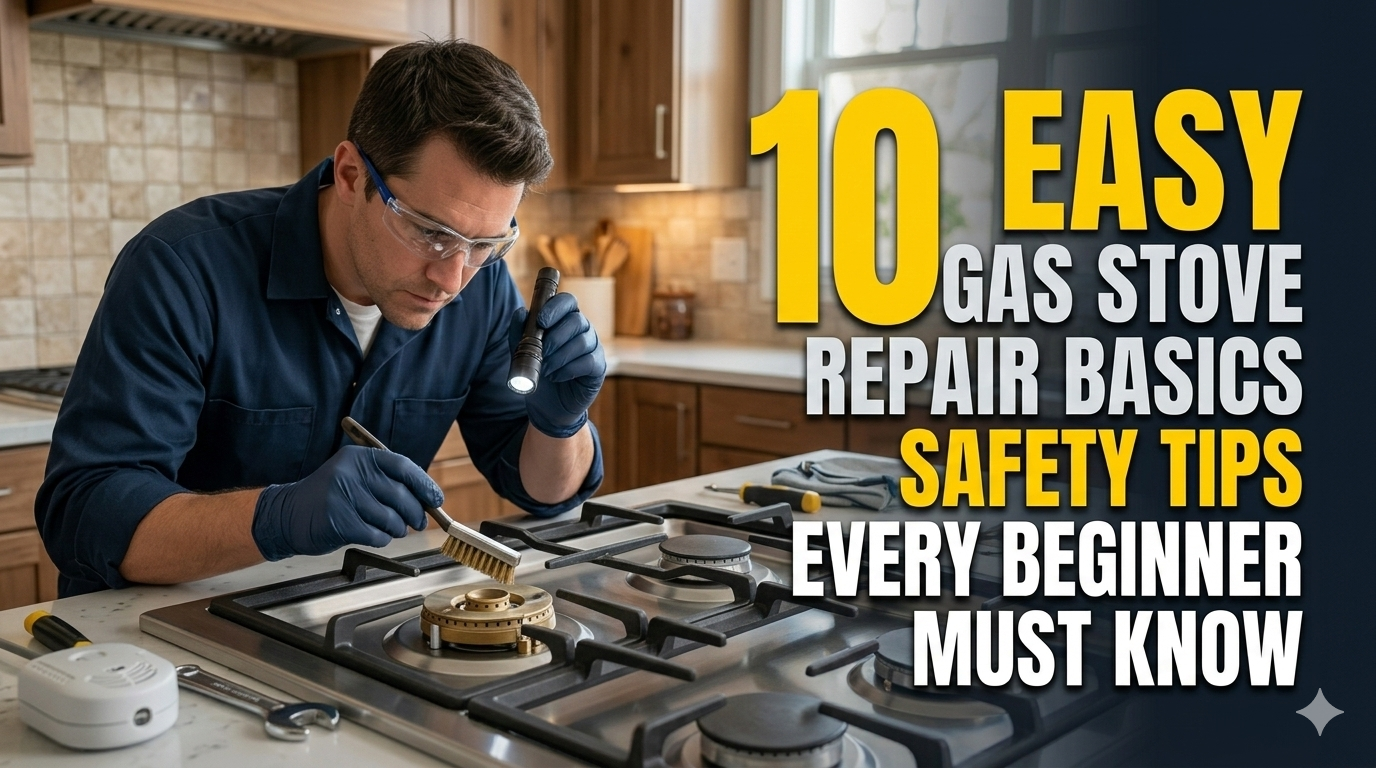
Meta Description: Gas stove repair basics safety tips every beginner must know — discover 10 simple and essential steps on how to safely as well as confidently fix common issues at home.
Top 10 Basic Gas Stove Repair Safety Tips You Should Know As A Beginner
Gas stoves are among the most utilized appliances in any household. They warm your food quickly, provide good heat control, and last for years. But like any appliance, they can have issues.
Maybe your burner won’t light. Perhaps you smell gas when your stove isn’t on. Or maybe the flame appears yellow, not blue. These problems can seem scary — particularly if you’ve never handled a gas appliance before.
The good news? Most basic gas stove issues can be handled at home. You don’t have to be a professional technician. You only require the right information, the right tools, and above all — the proper safety practices.
This guide discusses 10 must-know gas stove repair basics safety tips for a beginner before doing anything else. Use these tips to operate safely, sidestep expensive mistakes, and make minor repairs with real confidence.
Let’s get started.
Gas Stove Repairs: Why Safety Is Our Top Priority
Before we get into the tips, let’s be clear about one thing: gas stoves are not like fixing a leaky sink.
Gas is flammable. Just one small mistake — such as forgetting to shut off the gas supply — can cause a fire, an explosion, or carbon monoxide poisoning. These are not small risks.
That being said, there are a lot of repairs that are completely doable for beginners at home. Preparation and awareness are the difference between safe and dangerous. Applying these safety tips each time will significantly reduce your risk.
Tip 1 — Always Turn Off the Gas Before You Begin
This is Rule Number One. No exceptions.
Any time you interact with your gas stove — whether that’s removing a burner cap, inspecting a valve, or cleaning a clogged port — turn off the gas supply first.
How to Do It
- Locate the gas shut-off valve behind or below your stove.
- Turn it perpendicular to the gas line to stop the flow.
- If you don’t know which valve goes to the stove, turn off the main gas supply to your house.
Turn it off, then wait at least 5 minutes. This allows time for any gas remaining in the line to clear. Do not skip this step — even if you believe it will take “one second.”
Tip 2 — Open Windows and Ensure Adequate Room Ventilation
Gas can remain in the air even after you’ve cut off the supply. If your stove has been leaking — even a little — there may be gas trapped in the kitchen.
Working in a poorly ventilated room with trapped gas is hazardous. One spark can ignite it.
Before Any Repair Work
- Open all windows and doors in your kitchen.
- Use your kitchen exhaust fan if you have one.
- Ensure the area stays ventilated during the entire repair process.
- Do not use an open flame or lighter to “check” for gas — use soapy water instead (more on that in Tip 4).
Good airflow is a basic safety step that is often overlooked by beginners. Don’t be one of them.
Tip 3 — Familiarize Yourself With the Smell of Gas — And What to Do About It
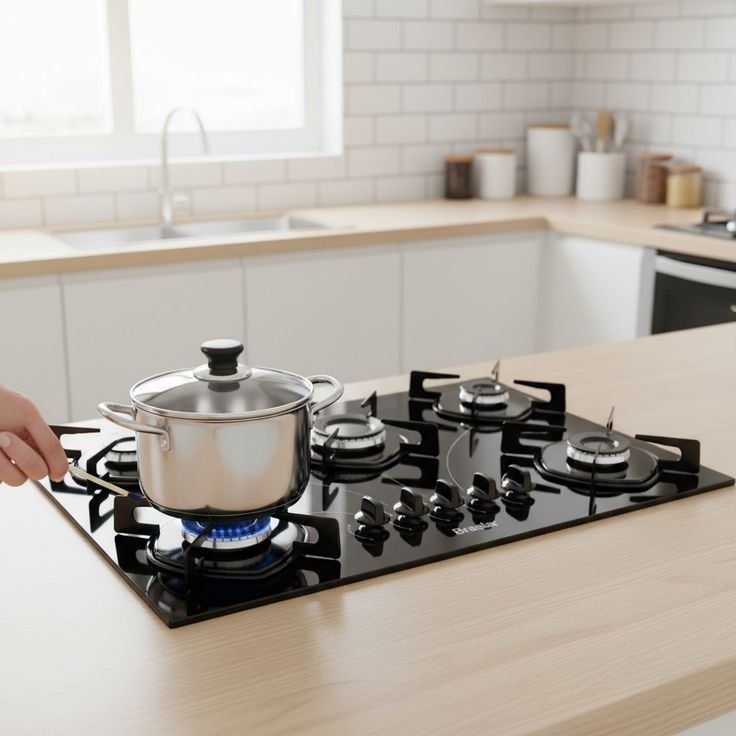
Natural gas is actually odorless. Gas companies add a chemical called mercaptan to it so that people can smell it. It has an odor of rotten eggs or sulfur.
If you smell this odor strongly — especially before you begin any repair — stop immediately.
What to Do If You Smell Gas
| Situation | Action |
|---|---|
| A mild smell near the burner | Turn off the gas, ventilate, and check the burner |
| A strong smell in the kitchen | Get out immediately |
| The smell won’t go away or gets stronger | Call your gas supplier or 911 |
| You hear a hissing sound | Evacuate and call for help |
A strong gas smell is not a DIY repair situation. It’s an emergency. Do not turn on lights, use your phone inside the house, or attempt to locate the leak yourself. Get out and call professionals.
Tip 4 — Detect Gas Leaks Using the Soapy Water Trick
This is possibly the most useful gas stove repair basics safety tip you will ever learn.
It is possible to detect a small gas leak around a connection, valve, or burner without any special equipment.
Here’s How the Soapy Water Test Works
- In a small bowl, combine dish soap and water.
- Briefly turn the gas supply back on.
- Brush or apply the soapy water to the suspected area.
- Watch for bubbles.
If bubbles appear and expand, gas is escaping from that location. That’s your leak spot.
Once found, turn off the gas immediately. If the leak is at a connection you can tighten, do so carefully. If it’s at a valve or within the stove body, call a professional.
Tip 5 — Never Use Water on a Gas Fire
This one catches many beginners by surprise.
If a gas fire erupts near your stove, pouring water on it is the wrong move. Water can spread the fire, cause steam burns, and complicate things quickly.
What to Use Instead
- A fire extinguisher rated for Class B fires (flammable gas and liquids)
- A metal lid placed over a burning pan to cut off oxygen
- Baking soda for small stovetop grease fires
- Turn off the gas supply as quickly as possible
Every kitchen should have a Class B/C fire extinguisher mounted nearby. It costs less than $30 and could save your life.
Tip 6 — Clean the Burner Ports: It’s Easier Than You Think
One of the most common gas stove problems is a burner that won’t light properly or produces a weak, uneven flame. The culprit? Clogged burner ports.
Burner ports are the tiny holes surrounding the burner head. Over time, they can become clogged with food debris, grease, and rust.
How to Safely Clean Burner Ports
- Turn off the gas and ensure the stove is completely cool.
- Remove the burner cap and burner head.
- Use a toothpick or straightened paper clip to clear each port hole.
- Do NOT use toothpicks that might splinter off inside the port.
- Rinse with warm water and dry thoroughly before reassembling.
- Never use a drill bit or metal tool that could enlarge the ports.
That simple cleaning can return a burner to full function in less than 15 minutes.
Common Gas Stove Troubles and Their Repairs
Here is a quick reference chart for the issues beginners encounter most often:
| Problem | Likely Cause | DIY Fix |
|---|---|---|
| Burner does not light | Clogged ports or wet igniter | Clean ports, dry igniter |
| Yellow or orange flame | Incomplete combustion | Adjust air shutter, clean burner |
| Clicking sound but no flame | Debris on igniter | Clean igniter with dry brush |
| Gas smell when off | Faulty valve or connection | Soapy water test, call pro if needed |
| Weak flame | Partially blocked ports | Clean burner ports |
| Burner lights unevenly | Misaligned burner cap | Realign the burner cap properly |
Tip 7 — Check the Igniter Before You Jump to Conclusions
When a burner doesn’t light, most people fear the worst. But more often than not, it’s a wet or dirty igniter.
The igniter is the small ceramic piece that produces the spark. It sits next to each burner. It can become coated with grease or food residue following spills or heavy use.
How to Clean the Igniter
- Disconnect the gas and unplug the stove from the electrical outlet.
- Use a dry toothbrush to gently scrub the igniter.
- If it is very dirty, use a cotton swab lightly moistened with rubbing alcohol.
- Allow it to dry completely — at least 30 minutes — before testing.
Never apply water directly to the igniter. Moisture is what causes most igniter problems in the first place.
When to Replace Instead of Clean
If the igniter is cracked, heavily corroded, or fails to spark after cleaning, you’ll need a replacement. Replacement igniters are inexpensive (generally $10–$25) and readily available online.
Tip 8 — Know the Blue Flame Rule
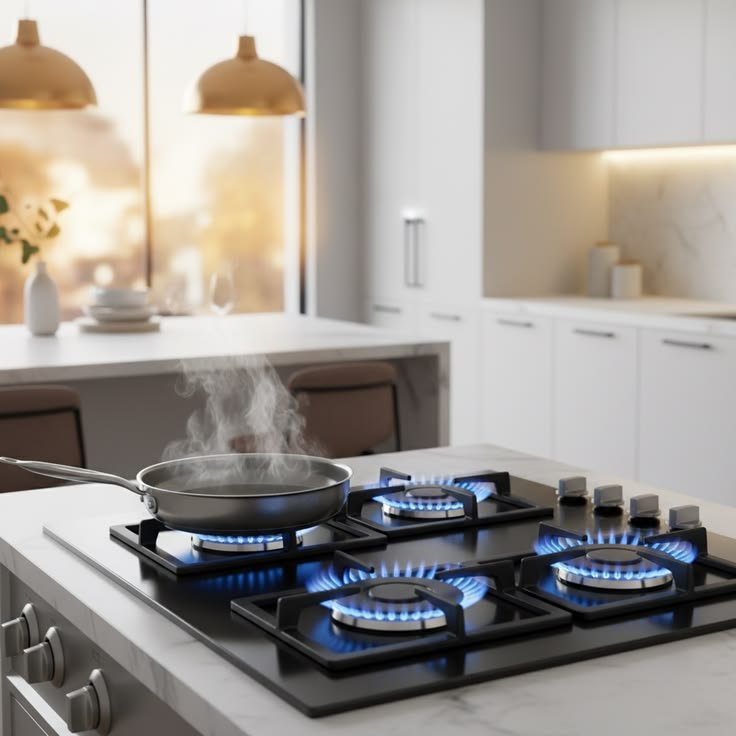
A healthy gas flame is blue — with perhaps a tiny yellow tip. That blue color tells you the gas is burning completely and efficiently.
If your flame is mostly yellow, orange, or red, something is wrong.
What Different Flame Colors Mean
| Flame Color | What It Means |
|---|---|
| Blue | Normal — clean, complete combustion |
| Blue with tiny yellow tip | Normal — slight variation |
| Yellow/Orange | Incomplete combustion — possible carbon monoxide risk |
| Red | Serious problem — call a professional |
| Flickering/Uneven | Clogged ports or gas pressure issue |
A yellow flame produces more carbon monoxide — an invisible, odorless gas that can have serious health effects. If your stove consistently burns yellow, do not ignore it.
Cleaning the burner and adjusting the air shutter (the small opening near the burner tube) often fixes this. If not, call a technician. According to the U.S. Consumer Product Safety Commission, carbon monoxide from gas appliances is one of the leading causes of accidental poisoning indoors — making flame color awareness absolutely essential.
Tip 9 — Never Neglect a Carbon Monoxide Warning
Carbon monoxide (CO) is known as the “silent killer” for a very good reason. You can’t see it. You can’t smell it. And it builds up fast in poorly ventilated spaces.
A faulty gas stove — particularly one with yellow flames — can produce dangerous levels of CO.
Symptoms of CO Exposure
- Headache
- Dizziness
- Nausea
- Confusion
- Shortness of breath
These symptoms worsen the longer you’re exposed. CO can be fatal at high enough levels.
What Every Kitchen Should Have
Every home with a gas stove should have a carbon monoxide detector installed in or near the kitchen. These devices are available at any hardware store in the $20–$50 price range.
If your CO detector alarms, evacuate everyone immediately and call emergency services. Do not return until authorities confirm it’s safe.
Tip 10 — Know When to Bring in the Pros
Knowing your limits may be the most underrated of all gas stove repair basics safety tips.
Some repairs are great for beginners. Cleaning burner caps, replacing igniters, adjusting flame settings — these are relatively low-risk tasks that simply require patience and care.
But some repairs are strictly for licensed professionals.
Call a Pro If You Notice Any of These
- The gas smell doesn’t go away after ventilating
- You hear hissing near the gas line
- The main gas valve is damaged or corroded
- Flames keep going out on their own
- The stove has visible damage to internal wiring or gas tubing
- Your CO detector keeps triggering
It is highly dangerous to attempt to repair a gas regulator, replace internal gas tubing, or fix a gas valve yourself. The potential consequences — gas explosions, fires, CO poisoning — are far worse than the cost of a service call.
A licensed appliance repair technician typically charges $75–$150 for a service visit. That’s a small price compared to the dangers of DIY mistakes on gas components.
Before Every Repair: A Quick Safety Checklist
Use this checklist before starting any gas stove repair:
- ✅ Gas supply turned off
- ✅ Stove unplugged from the wall
- ✅ Windows and doors open
- ✅ Kitchen exhaust fan on
- ✅ No open flames in the room
- ✅ Fire extinguisher nearby
- ✅ CO detector installed and working
- ✅ Soapy water solution prepared for leak check
- ✅ Repair is feasible for a beginner
- ✅ Phone charged and ready for emergencies
Print this out and tape it to your fridge. It takes 2 minutes to go through and might prevent a serious accident.
Beginner Must-Have Tools for Gas Stove Repair
You don’t need a full workshop for basic gas stove repairs. Here’s what to keep on hand:
| Tool | Purpose |
|---|---|
| Adjustable wrench | Tightening/loosening gas connections |
| Toothbrush (dry) | Cleaning igniters and burner surfaces |
| Toothpicks or paper clips | Clearing clogged burner ports |
| Dish soap + water | Soapy water leak test |
| Rubbing alcohol + cotton swabs | Deep cleaning igniters |
| Flashlight | Inspecting hard-to-see areas |
| Screwdrivers (flat + Phillips) | Removing panels and components |
| Class B fire extinguisher | Emergency fire response |
Everything on this list runs under $50 at most hardware stores. Having them ready before you start makes repairs faster and safer.
Commonly Asked Questions About Gas Stove Repair Safety
Q: Can a beginner really repair a gas stove at home? Yes — but not for every issue. Cleaning burner ports, replacing igniters, and correcting misaligned burner caps are all safe beginner jobs. Anything involving gas valves, internal tubing, or strong gas smells requires a professional.
Q: How can I tell if my gas stove is leaking? The easiest method is the soapy water test described in Tip 4. You can also rely on your nose — a rotten egg or sulfur odor is a strong sign of a gas leak. CO detectors won’t detect natural gas, so a dedicated gas leak detector is also worth having.
Q: Is it safe to use a gas stove with a yellow flame? Not long-term. A yellow flame indicates incomplete combustion and possible carbon monoxide production. Clean the burners and check the air shutter. If the flame remains yellow, call a technician.
Q: What would cause a gas burner to keep clicking even when lit? This typically means the igniter is wet or dirty. Food particles can get into the igniter mechanism and cause it to keep sparking. Clean and dry the igniter carefully, and the clicking should stop.
Q: How often should I clean my gas stove burners? Wiping it down after each use keeps major buildup at bay. A deeper cleaning — removing and washing burner caps and heads — should be done every 1–3 months depending on how much you cook.
Q: Do I need a carbon monoxide detector if I have a gas stove? Absolutely. Every home with a gas appliance should have at least one CO detector. Place it near the kitchen but not directly above the stove, where cooking steam could trigger false alarms.
Q: Can I replace a gas stove igniter myself? Yes. Igniters are among the easiest parts to replace. Turn off the gas and unplug the stove, remove the old igniter (typically held by a single screw), and snap in the new one. Match the part number to your stove model before buying.
Q: What’s the difference between a gas leak and the normal gas smell when lighting the stove? A brief, faint whiff of gas when you first light a burner is normal — that’s just the moment before ignition. A smell that lingers, gets stronger, or appears when the stove is completely off is a sign of a leak.
Wrapping It Up — Stay Safe, Be Smart
Gas stoves are reliable, efficient, and built to last. But they demand respect.
The gas stove repair basics safety tips in this guide are not complicated. They’re common sense habits that anyone can develop with a little practice. Turn off the gas. Ventilate the room. Know your limits. Keep a fire extinguisher nearby. Watch your flame color. Install a CO detector.
These steps take minutes to follow and can prevent accidents that happen in seconds.
The best home repair person isn’t the one who does the most — it’s the one who knows what not to do. When something is outside your skill level, calling a professional isn’t a defeat. It’s the smart move.
Use this guide as your jumping-off point. Save the checklist. Grab the right tools. And tackle every repair with care, patience, and the proper safety mindset.
You can do this — just make sure to do it safely.

