
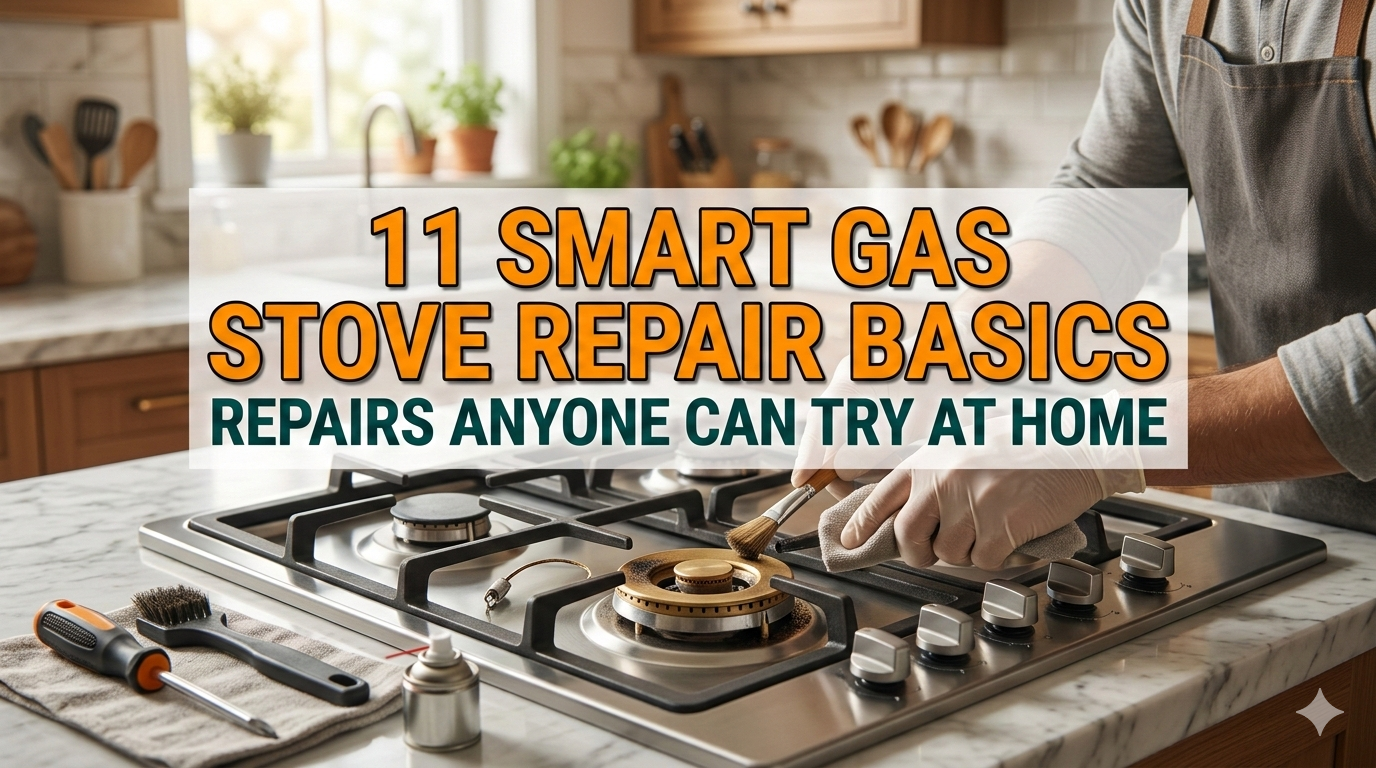
11 Basics of Smart Gas Stove Repair Anyone Can Try at Home
Meta Description: Learn how to save a gas stove repair in this post. Here’s 11 smart, beginner-friendly repairs you can make safely at home to have your stove up and running again fast.
Your gas stove stops working just before dinner. The burner won’t light. The flame is orange rather than blue. Or the stove keeps clicking even after you’ve turned it off.
Frustrating? Absolutely.
But here’s the good news — those many gas stove problems are surprisingly simple to repair. You don’t have to be a plumber or appliance technician. With just a few simple tools and a little patience, many common problems can be tackled yourself, saving you gas and repair bills — which can run into the hundreds.
In this guide, we cover 11 gas stove repair skills that real homeowners embrace each day. Each repair is described simply, step by step, so that if you’ve never opened up an appliance panel before you’ll feel confident trying it yourself.
Let’s get into it.
Before You Touch Anything — Safety First
No guide for gas appliance repair is complete without this section. Gas stoves involve open flames and natural gas lines. Just one slip-up can create a dangerous situation.
Always do this every time:
- Shut the gas supply valve before conducting any internal repair
- Unplug the stove from the electrical outlet (yes, gas stoves run on electricity to ignite them)
- Never check for gas leaks with an open flame — use soapy water
- If you smell gas, ventilate the room. Get out of the house, open your windows, and call your gas provider
- Always have a fire extinguisher handy when doing any repair involving the stove
Once you’re confident it’s safe to proceed, you’re good to go.
Fix #1: Clean a Clogged Burner Port
The most common gas stove problem — and the easiest to fix.
What’s Happening
When food, grease or debris clogs the small holes (called ports) surrounding the burner head, gas can’t flow evenly. The result? Weak flames, patchy burning or a burner that simply won’t light.
How to Fix It
- Let the stove cool completely
- Remove the burner grate and lift off the burner cap
- Pull up the burner head — it usually lifts right off
- Use a toothpick, straightened paper clip or similar tool to clear each port
- Wash the burner with warm soapy water
- Allow to dry completely before replacing (moisture creates ignition issues)
- Reassemble and test
Pro tip: Never use a metal-bristled toothbrush on the burner — it can scratch and widen the ports over time.
Fix #2: The Burner That Won’t Stop Clicking
You’ve turned the knob to “off,” but the stove keeps clicking. That’s annoying — and it usually means moisture is to blame.
Why It Clicks Nonstop
The igniter is wet. This happens when liquid gets into the igniter module (from a boil-over or cleaning), causing a persistent electrical arc even when you aren’t activating it.
The Simple Solution
- Remove the burner cap and grate
- Blot the visible moisture with a dry cloth or paper towel
- Air dry the area — or use a hair dryer on low to speed things up
- Reassemble and test
If the clicking doesn’t stop once everything is dry, the igniter switch itself may be worn out and need replacing — but moisture is responsible in most cases.
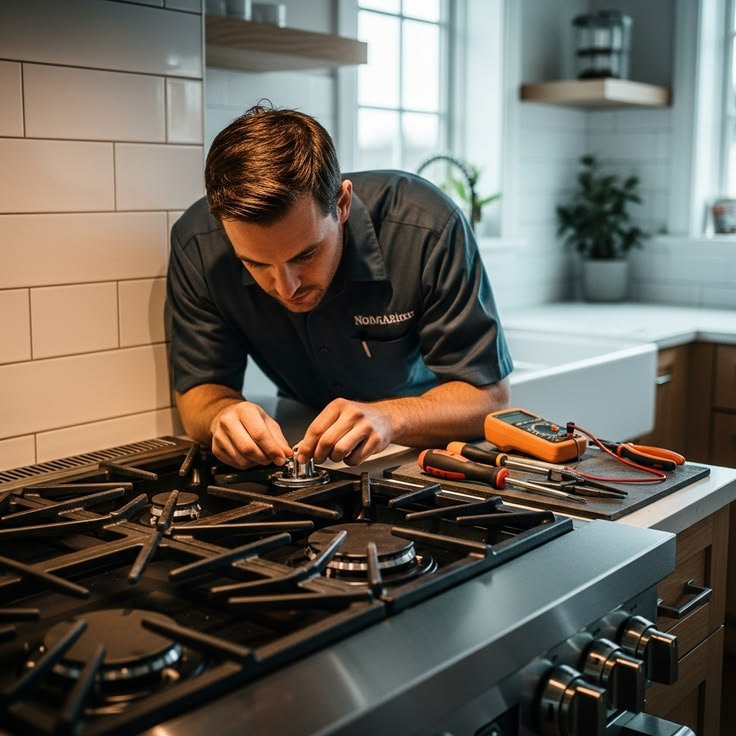
Fix #3: Replace a Faulty Igniter
If your burner won’t spark at all (and it’s not clogged), the igniter may be faulty. For a deeper look at common ignition issues, visit Gas Stove Repair Basics — a helpful resource for diagnosing and fixing igniter problems step by step.
Signs the Igniter Needs Replacement
| Symptom | Likely Cause |
|---|---|
| No click sound when you turn the knob | Igniter not receiving power |
| Clicks but no flame | Clogged port or wet igniter |
| Spark occurs far from burner | Misaligned or cracked igniter tip |
| One burner never sparks | Individual igniter has failed |
How to Replace It
- Find the model number for your stove (usually inside the door frame or on the back panel)
- Buy a replacement igniter online — they typically run $10–$30
- Unplug the stove
- Remove the burner grate and cap
- Locate the igniter module beneath the cooktop (you may need to lift the cooktop panel)
- Unplug the old igniter wire and snap in the new one
- Reassemble and test
Most igniters simply plug in — no special wiring skills needed.
Fix #4: Fix a Weak or Uneven Flame
A healthy gas burner flame should be blue with a small inner cone. If it’s yellow, orange or uneven, something needs attention.
What Each Flame Color Means
- 🔵 Blue flame = Perfect. Clean combustion, proper gas/air mix
- 🟡 Yellow or orange flame = Too much carbon, too little airflow
- 🔴 Red flame = Rust, dust or chemicals in the air
- Weak flame = Low gas pressure or clogged ports
How to Adjust the Air Shutter
Most burners have a small air shutter near the bottom of the burner tube that controls how much air mixes with the gas.
- Locate the shutter — it looks like a small sliding sleeve near the burner valve
- Loosen the screw that holds it in place
- Adjust it slightly open or closed
- Light the burner and observe how the flame changes
- When the flame is even and blue, tighten the screw
This adjustment takes just a few minutes and can make a noticeable difference in cooking performance.
Fix #5: Get a Burner to Light When It Won’t
No click, no spark, no flame — work through this checklist before assuming the worst.
Quick Diagnostic Checklist
- ✅ Is the gas supply valve fully open?
- ✅ Is the stove plugged in?
- ✅ Is the burner cap placed correctly (not upside down or tilted)?
- ✅ Are the burner ports blocked?
- ✅ Is the igniter wet or dirty?
Most “dead burner” situations come down to a misplaced burner cap. People often put the cap back at an angle after cleaning without realising it. If the cap isn’t sitting flat and centred, the burner won’t light.
Seat the cap correctly first — it fixes the problem more often than you’d think.
Fix #6: Address a Gas Smell Without a Flame
Smelling gas when the stove isn’t on is a serious warning sign. A faint odour just as you’re turning on a burner (before it ignites) is normal — that’s unburned gas escaping for a second.
When to Act Immediately
If the smell of gas is strong, persistent or occurs when nothing is on:
- Do not turn any switches on or off
- Do not use your phone inside the house
- Open all windows and doors
- Leave the house immediately
- From outside, call your gas company’s emergency number
Gas Detector Check (For Faint, Intermittent Smells)
If the smell is very faint and only noticed near the stove, you can inspect connections yourself:
- Mix a thick lather of dish soap and water
- Brush it around the gas line connections and valves
- Watch for bubbles forming — that indicates a slow leak
- If bubbles appear, tighten the connection slightly or call a technician
Never ignore a gas smell. When in doubt, get out.
Fix #7: Clean or Replace Burner Caps and Heads
A common repair that can make a significant performance difference.
The Problem With Grimy Burner Parts
Burner caps sit atop the burner head and help distribute the flame evenly in a circle. When they’re caked with grease and carbon buildup, the flame pattern becomes uneven — and food cooks inconsistently.
Cleaning Method
- Remove the grates, caps and burner heads
- Soak all parts in hot water with a few drops of dish soap for 20–30 minutes
- Scrub with a non-abrasive sponge
- For tough buildup, make a paste of baking soda and white vinegar
- Rinse thoroughly and air dry completely
- Reassemble only when fully dry
If a cap is cracked, chipped or warped, replace it. Replacement caps are inexpensive (typically under $20) and easy to find by searching your stove’s model number.
Fix #8: A Stove Knob That Turns but Won’t Engage
Knobs wear out over time. If yours rotates but doesn’t adjust the flame — or feels loose and wobbly — it’s an easy repair.
Common Knob Issues and Solutions
| Problem | Solution |
|---|---|
| Knob spins freely | The D-shaped shaft inside is stripped — replace the knob |
| Knob feels stiff | Clean behind it — hardened grease around the valve stem |
| Knob pops off easily | Retention clip is worn — replace the knob |
| Knob markings are faded | Replace with an exact model match |
How to Replace a Stove Knob
- Pull the old knob straight off the valve stem (no tools needed in most cases)
- Note the shape of the stem — typically D-shaped or round with one flat side
- Purchase the correct replacement knob for your stove model
- Press the new knob onto the stem until it clicks or sits flush
- Test all settings
Knobs typically cost $5–$15 each and take less than two minutes to replace.
Fix #9: Level a Wobbly Grate
It sounds minor — but a shaky grate can spill pots, cause uneven cooking and become a safety hazard.
How to Fix It
Most grates rest on small rubber feet at each corner. Over time, those feet fall off or wear down.
- Flip the grate upside down
- Check the rubber feet — are any missing or worn?
- Replace them with universal rubber appliance feet from any hardware store
- If the feet look fine but the grate still wobbles, check the burner cap underneath — it may be misaligned
You can also place a sheet of paper under each corner to identify which foot is shorter, then raise it slightly with a small rubber pad.
Fix #10: Reset a Tripped Safety Valve
Some gas stoves include a flame failure device (FFD) — a thermocouple that cuts off gas flow when the flame goes out. It’s a great safety feature, but it can sometimes be overly sensitive.
Symptoms of an FFD Issue
- Flame lights for a few seconds, then goes out
- You have to hold the knob down for several seconds before the flame stays lit
- One particular burner keeps shutting off on its own
What to Do
- Light the burner
- Hold the knob down for 10–15 seconds after ignition — this heats the thermocouple enough to signal that a flame is present
- Release slowly
- If the flame holds, the thermocouple just needed time to warm up
If holding the knob doesn’t help, the thermocouple is likely dirty or failing. Clean it gently with fine steel wool, or replace it — they cost around $10–$20 and are straightforward to swap out.
Fix #11: Address a Stuck Oven Igniter (Gas Ranges)
If you have a gas range (stove and oven in one unit), the oven burner can have its own ignition issues.
Most Common Oven Ignition Problems
The igniter glows but the oven doesn’t heat up This is the most frequent oven problem on gas ranges. The igniter is running, but it doesn’t have enough power to open the gas valve.
- A healthy oven igniter draws 3.2–3.6 amps
- A weak igniter draws less — it glows but fails to open the valve
- The fix: Replace the igniter (parts typically cost $25–$60)
It takes a very long time to preheat Same culprit — a weakened igniter. It does open the valve, but takes far longer than it should.
No glow, no heat Confirm the oven is receiving power and try a different setting. If the igniter doesn’t glow at all, it has completely failed and needs to be replaced.
Oven Igniter Replacement Steps
- Unplug the stove and turn off the gas
- Remove the oven racks and floor panel (usually held in by a couple of screws)
- Locate the igniter — it’s attached to the burner at the back
- Unplug the wire harness (it disconnects like a phone charger connector)
- Unscrew the old igniter
- Install the new one and reconnect the wire
- Replace the panel and test
How Much Can You Save With These Repairs?
| Repair | DIY Cost | Professional Cost | Savings |
|---|---|---|---|
| Clean clogged burner | $0 | $80–$120 | $80–$120 |
| Replace igniter | $10–$30 | $100–$200 | $70–$170 |
| Replace knob | $5–$15 | $60–$100 | $45–$85 |
| Clean burner caps | $0–$5 | $70–$110 | $65–$110 |
| Replace thermocouple | $10–$20 | $100–$150 | $80–$140 |
| Replace oven igniter | $25–$60 | $150–$250 | $90–$190 |
Doing even two or three of these repairs yourself can save you $200–$400 in a year.
When to Call a Professional
DIY repairs are great — but they have limits. Call a licensed technician if:
- You smell strong gas and the smell persists after ventilation
- A burner keeps sparking and won’t stop even after drying
- The gas line itself appears damaged or corroded
- The stove is under warranty (DIY repairs can void it)
- You’ve tried everything and the issue persists
- Any repair requires disconnecting or reconnecting gas supply lines
According to the U.S. Consumer Product Safety Commission, gas line work should always be left to licensed professionals — it is not a job for DIYers.
FAQs About Gas Stove Repair
Q: Can I safely fix a gas stove on my own? Yes — for surface-level fixes such as cleaning burners, replacing igniters or swapping out knobs. Call a professional for anything involving the gas supply line.
Q: Why does my gas stove click when it’s turned off? Almost always moisture. Wipe the igniter area dry and the clicking should stop. If it doesn’t, the igniter switch itself may be worn out.
Q: How do I find my stove’s model number? Look inside the oven door frame, on the back panel or under a lift-out cooktop. It’s usually printed on a silver sticker.
Q: My burner flame is yellow. Is that dangerous? A yellow flame indicates incomplete combustion, which can produce more carbon monoxide. Clean the ports or adjust the air shutter. Don’t ignore it.
Q: What is the life expectancy of a gas stove? A gas stove can last 15–20 years with proper maintenance. Consistent cleaning and prompt small repairs greatly extend its lifespan.
Q: Is it safe to use my gas stove if the burner cap is cracked? No. A cracked cap disrupts the flame pattern and is a fire hazard. Replace it before using that burner again.
Q: What’s the difference between a burner cap and a burner head? The burner head is the metal part with the port holes. The burner cap sits on top of it and helps shape the flame spread. Both must be clean and correctly positioned.
Wrapping It All Up
Gas stove problems don’t always require a repair technician and a triple-digit bill. The most common issues — clogged ports, clicking igniters, yellow flames, wobbly knobs, weak oven heat — are entirely fixable with a few basic tools and some know-how.
The 11 repairs in this guide cover the issues homeowners encounter most often. Start with the simplest solution (cleaning), work through the list methodically, and you’ll resolve most problems before ever paying for a service call.
Be safe, take your time and don’t be afraid to dig in. A well-maintained gas stove performs better and lasts longer — and delivers consistent results every time you cook.
And if something is beyond your comfort zone — call in the pros. That’s the smart move too.

