

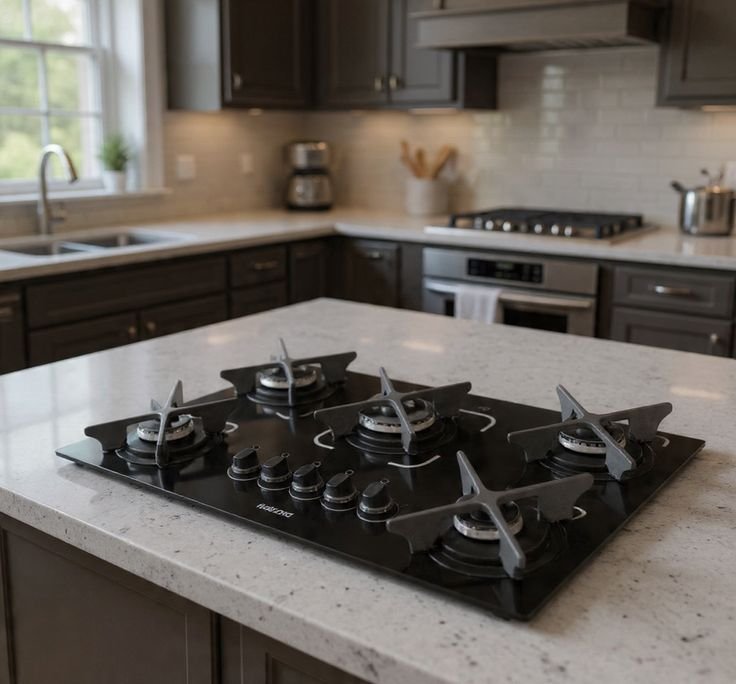
Last Tuesday, I was in the middle of making biryani — the rice was soaking, the masala was ready — and my front burner just… clicked. And clicked. And clicked. No flame. I stood there pressing the ignition button like it owed me money, and nothing happened.
If you’ve been there, you know the frustration. Gas stoves are incredibly reliable 99% of the time, but when something goes wrong, it usually happens at the worst possible moment. The good news? Most common gas stove problems are surprisingly fixable without calling a technician. I’ve learned this the hard way over the years, and I want to save you the same trouble.
Here are 9 real, practical troubleshooting tips I’ve actually used — no fluff, no overly technical nonsense.
1. Burner Won’t Light? Start With the Obvious First
I know this sounds almost too simple, but the first time my burner refused to light, I spent 20 minutes checking everything before realizing the burner cap was slightly off-center. One small nudge and it lit immediately.
Before you do anything else, check these basics:
- Is the burner cap sitting flat and centered?
- Is there food debris clogging the igniter tip?
- Did you recently clean the stove and accidentally get the igniter wet?
If you cleaned the stove recently, moisture is almost always the culprit. The igniter electrode gets damp and can’t produce a spark properly. The fix? Just let it dry out. You can speed things up with a hairdryer on low heat for 30-60 seconds, keeping it about 6 inches away.
Also, try lighting it manually with a long lighter while turning the knob. If it lights that way, your igniter is the problem, not the gas supply.
2. Clicking Igniter That Won’t Stop? Here’s What’s Actually Happening
This one drives people crazy — that constant click click click even when the burner isn’t on. I had this happen for two days straight before I figured it out.
The most common causes:
| Cause | How to Check | Fix |
|---|---|---|
| Wet igniter | Touch the area near the electrode | Dry with a cloth or hairdryer |
| Food spill under burner cap | Remove cap and look | Clean thoroughly |
| Loose burner cap | Wiggle the cap | Reseat properly |
| Faulty igniter switch | Happens after pressing too hard | May need replacement |
The solution that worked for me was removing the burner grate and cap, wiping everything down with a dry cloth, and then using a toothpick to clear the tiny holes around the burner head. After that, no more clicking.
If the clicking continues even after cleaning and drying, the igniter switch itself might be worn out. At that point, it’s a $10-$20 part you can find online — most are push-fit replacements that don’t require any wiring knowledge.
3. Weak or Uneven Flame? Don’t Ignore This One
A weak flame is something people tend to live with for way too long — I did for almost three months before fixing it. The flame would barely heat my pan, and one side of the ring was always stronger than the other.
The main culprits for a weak or uneven flame are clogged burner ports.
Those tiny holes around the burner head get blocked by grease, boiled-over liquid, and food residue over time. The fix is satisfying once you do it:
- Let the stove cool completely
- Remove the burner grate, cap, and burner head
- Use a thin sewing needle or a straightened paper clip to clear each port hole
- Rinse with warm water and dish soap, then dry completely
- Reassemble and test
Do NOT use a toothpick — it can break and get stuck inside the ports, making things worse. A needle or thin wire works much better.
You might also want to check out some gas stove repair basics troubleshooting steps that go deeper into diagnosing flame problems if the needle trick doesn’t fully solve it.
4. Yellow or Orange Flame Instead of Blue? This Is a Warning Sign
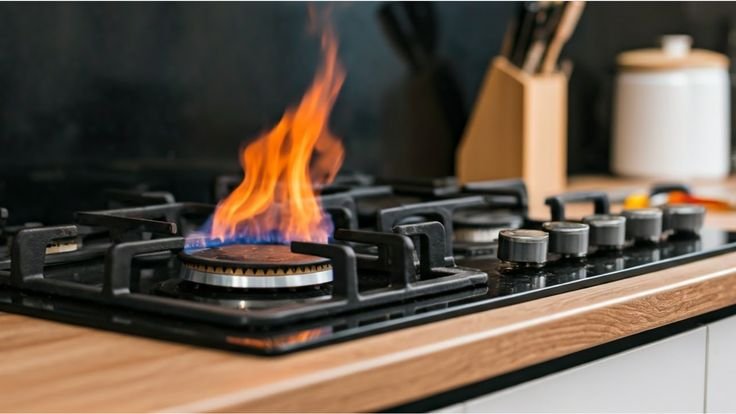
A healthy gas flame should be mostly blue with a small yellow tip at most. If you’re seeing a predominantly yellow or orange flame, something is off — and it’s worth taking seriously.
What yellow flame usually means:
- Incomplete combustion (gas isn’t mixing with enough air)
- Clogged burner ports (same issue as above)
- Incorrect air-to-gas ratio in the burner
- In rare cases, a gas supply issue
The burner port cleaning method from tip #3 usually fixes this. But if you’ve cleaned the ports and the flame is still yellow, your burner’s air shutter might need adjustment. This is a small sliding valve (usually near where the burner tube meets the knob assembly) that controls how much air mixes with the gas.
Slide it open a little more, test the flame, and adjust until you see that clean blue color. Go slowly — small adjustments make a big difference.
If the flame stays yellow even after all this, it might be worth having your gas pressure checked. This isn’t a DIY job — call your gas company for that one.
5. Burner Flame Going Out On Its Own? The Thermocouple Might Be to Blame
This one stumped me for a while. The burner would light fine, I’d release the knob, and — poof — it would go out within 5-10 seconds. I’d try again, same thing.
Most gas stoves have a safety device called a thermocouple (sometimes called a flame failure device). It detects whether there’s actually a flame present and cuts the gas if there isn’t. When it gets dirty or worn out, it can incorrectly sense “no flame” even when one is there.
Quick fix to try first: Hold the knob down for 10-15 seconds after lighting instead of releasing it immediately. This gives the thermocouple time to heat up and register the flame.
If that doesn’t work, the thermocouple may need cleaning or replacement. Cleaning it is simple — turn off the gas completely, let everything cool, and gently rub the thermocouple tip with fine steel wool or a dry cloth to remove any oxidation or buildup.
Replacement thermocouples are inexpensive (usually under $15) and the swap-out process is fairly straightforward on most stoves.
6. Gas Smell Without a Visible Leak? Don’t Panic, But Do Act Fast
Smelling gas is never something to brush off. I had a faint gas smell near my stove once that turned out to be nothing more than a slightly loose connection at the back — but it still needed fixing immediately.
If you smell gas:
- Don’t flip any light switches or use any electrical device
- Don’t light any flame
- Open windows and doors to ventilate
- Turn off the gas supply valve (usually behind or below the stove)
- Leave the house and call your gas company from outside
Once professionals confirm there’s no serious leak, a mild residual smell might just be from a burner knob left slightly open. Always make sure all knobs are fully in the “OFF” position when you’re done cooking.
For a deeper look at how to keep your kitchen safe, these gas stove safety ideas that prevent accidents are worth bookmarking — some of them I genuinely hadn’t thought about until I read them.
7. Knob Is Hard to Turn or Stuck? Here’s a 5-Minute Fix
Over time, grease and food residue can work their way around the knob shaft and make it stiff or sticky. I had one knob on my stove that I literally needed two hands to turn — embarrassing, but totally fixable.
What to do:
- Pull the knob straight off (most are just push-fit)
- Soak it in warm, soapy water for 10-15 minutes
- Use an old toothbrush to scrub around the inside opening and exterior
- Dry completely before reattaching
- Apply a tiny amount of food-safe silicone grease around the shaft
Do NOT use WD-40 or cooking oil. WD-40 attracts more dust and debris, and cooking oil can go rancid and make things worse.
If the knob shaft itself (on the stove body) is stiff, there may be debris around the base. A few cotton swabs dipped in warm soapy water can clean around it carefully.
8. Burner Grates Are Wobbly or Uneven? Quick Balance Check
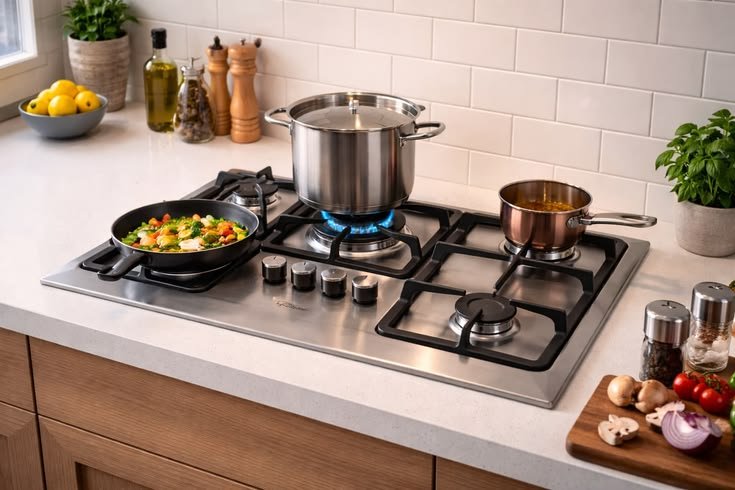
This seems minor, but wobbly grates are actually a safety issue — pots can tip, spills happen, and it puts uneven stress on the burner below. I learned this the not-so-fun way when a full pot of soup nearly toppled.
Most grate wobble comes from:
- Warping due to heat exposure over time
- One leg sitting on a residue buildup
- The grate being a slightly wrong fit after replacement
Check this: Place the grate on a flat countertop. If it rocks on the counter too, it’s warped and needs replacing. If it’s flat on the counter but wobbly on the stove, there’s likely residue under one of the burner support points.
Clean the stovetop surface thoroughly around the burner, removing any hardened spills with a plastic scraper and warm water. Never use metal scrapers on the cooktop surface.
Regular cleaning is the best prevention here — it’s one of those gas stove maintenance habits that takes five minutes a week but saves you a lot of trouble later.
9. Stove Works But One Burner Is Always Weaker Than the Others?
This is super common and usually comes down to one of two things: a partially clogged burner or a slightly misaligned burner cap.
Quick diagnosis table:
| Symptom | Most Likely Cause | Fix |
|---|---|---|
| Flame is low but consistent | Clogged ports | Clean with needle |
| Flame flickers constantly | Loose or misaligned cap | Reseat the cap |
| Flame only weak at high setting | Gas pressure issue | Call gas company |
| Flame strong at center, weak at edges | Uneven port clogging | Full port cleaning needed |
Start with reseating the burner cap — it takes 10 seconds and sometimes that’s genuinely all it needs. Then move to the port cleaning if the problem persists.
One thing I’ve noticed: burners near the back of the stove tend to get dirtier faster because of splatter patterns during cooking. Cleaning them every 2-3 weeks instead of waiting for visible problems makes a real difference.
A Few Mistakes I Made That You Should Skip
These are the “I wish someone had told me” moments from my own troubleshooting experiences:
- Using too much water when cleaning the igniter area. Moisture is the enemy of igniters. Use a barely damp cloth or dry cloth only.
- Reassembling before parts were fully dry. I rushed this twice and both times the burner wouldn’t light until I dried everything again properly.
- Ignoring a small gas smell because it was faint. Even faint smells need attention. Don’t normalize it.
- Buying cheap replacement parts from unknown sellers. For gas stove parts, always stick to brand-matched components or reputable suppliers. Off-brand thermocouples in particular can be unreliable.
- Forcing a stuck knob. I snapped one once by turning it too hard. The proper fix is always to remove and soak first.
Maintenance Schedule Worth Following
If you want to avoid most of these problems entirely, a simple routine goes a long way:
| Frequency | Task |
|---|---|
| After every use | Wipe down burner grates and surface |
| Weekly | Check burner caps are properly seated |
| Monthly | Clean burner ports with a needle |
| Every 3 months | Deep clean knobs, grates, and burner heads |
| Annually | Check all gas connections for any looseness |
None of these take long. The port cleaning is probably the most involved, and even that’s a 20-minute job once you’ve done it a couple of times.
Gas stoves are genuinely one of the most dependable appliances in the kitchen — they just need a little attention now and then. Most of the problems I’ve covered here have simple, inexpensive fixes that don’t require any professional help. The key is catching things early before a slightly clogged port becomes a completely dead burner, or a damp igniter becomes a costly replacement.
If you want to go deeper on keeping everything running smoothly, this guide on proven gas stove repair basics fixes that actually work has some great techniques that I’ve personally found helpful — especially for the more stubborn burner issues.
Take care of your stove and it’ll take care of your cooking.

