

6 smart gas stove repair basics troubleshooting lessons from my experience
There is something oddly humbling about a gas stove that refuses to cooperate. It doesn’t beep like modern appliances or throw error codes with helpful instructions. It simply sits there, silent or stubborn, reminding you that even the most familiar tools in your home have their own logic. Over the years, I’ve had my fair share of frustrating encounters with gas stoves—burners that wouldn’t ignite, flames that behaved unpredictably, and strange smells that made me second-guess everything. What began as a necessity to fix small issues gradually turned into a set of practical lessons I now rely on.
This isn’t a technical manual. It’s a collection of lived experiences—small victories, mistakes, and insights that came from actually dealing with problems rather than reading about them. If you’ve ever stood in your kitchen wondering why your stove suddenly stopped working the way it should, you’ll likely find something useful here.
lesson one: the flame tells a story if you’re willing to watch it
The first time I realized how much information a flame carries was during a particularly confusing situation. One burner on my stove had started producing a weak, uneven flame. At first, I assumed it was a gas supply issue, something serious and beyond my control. But after a bit of observation, I noticed something interesting: the flame wasn’t just weak—it was also flickering irregularly and leaning to one side.
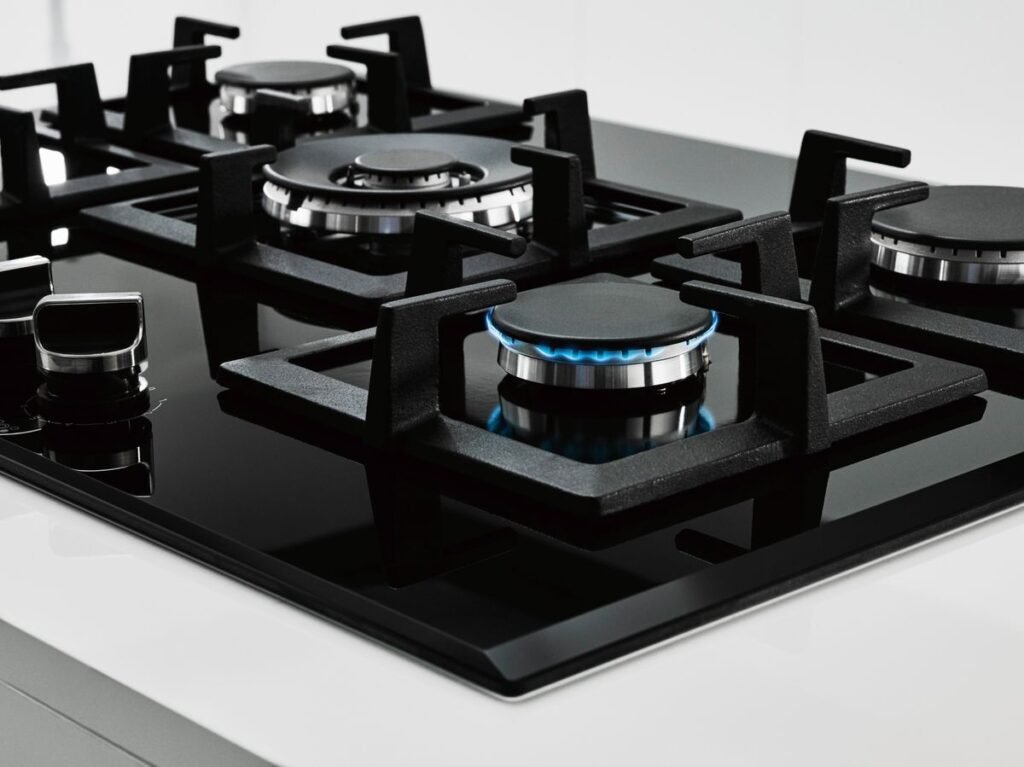
That detail mattered. A healthy gas flame should be steady and mostly blue. When it turns yellow or orange, or when it flickers excessively, it often means incomplete combustion. In my case, the issue turned out to be something much simpler than I had feared: clogged burner ports.
Grease, dust, and food particles had gradually built up over time, partially blocking the tiny holes through which gas flows. The uneven flame was simply the stove’s way of saying, “I’m trying, but something’s in the way.”
Cleaning those ports was surprisingly straightforward. I used a thin needle to gently clear the holes and wiped the burner with a damp cloth after removing it. When I reassembled everything and turned the knob again, the difference was immediate. The flame returned to a steady blue, almost as if the stove was relieved.
Since then, I’ve made it a habit to observe before reacting. The flame is not just heat—it’s feedback.

lesson two: ignition problems are often about patience, not panic
Few things are more irritating than turning the knob and hearing that familiar clicking sound… without any flame appearing. It’s easy to assume something is broken when the ignition system doesn’t work instantly. I’ve been there, convinced I’d need to call a technician, only to discover that the problem was surprisingly minor.
One of the most common reasons for ignition failure is moisture. It sounds almost too simple, but water can interfere with the spark needed to ignite the gas. This can happen after cleaning the stove or even from spills that weren’t properly dried.
I learned this lesson after cleaning my stove thoroughly one evening. Everything looked spotless, but when I tried to cook the next morning, none of the burners would light. The clicking was there, but no ignition. I initially thought I had damaged something during cleaning.
Instead of rushing into disassembling the stove, I decided to wait. I let it sit for a few hours, giving any trapped moisture time to evaporate. When I tried again later, the burners lit up without any issue.
That experience taught me something important: not every problem requires immediate action. Sometimes, stepping back and allowing time to resolve minor issues can save you from unnecessary work.
lesson three: the smell of gas demands respect, not guesswork
There’s a distinct smell associated with gas, and once you recognize it, you don’t forget it. It’s intentionally added as a safety feature, and it’s not something to ignore or casually investigate.
I remember a moment when I caught a faint gas smell in the kitchen late at night. It wasn’t overpowering, but it was noticeable enough to make me uneasy. My first instinct was to check the burners, all of which appeared to be off. For a moment, I considered brushing it off as nothing.
But that would have been a mistake.
Instead, I turned off the main gas supply and opened all the windows to ventilate the space. Only after ensuring proper airflow did I start looking more closely. Eventually, I found the issue: one of the knobs hadn’t fully returned to the “off” position. It was just slightly open—enough to allow gas to escape without producing a visible flame.
That small oversight could have led to something far more serious.
From that day on, I developed a simple rule: if you smell gas, don’t troubleshoot casually. Act first to ensure safety—turn off the supply, ventilate the area, and only then investigate the cause. Some problems aren’t meant to be solved in a hurry.
lesson four: not all noises are problems, but some are warnings
Gas stoves aren’t completely silent. There’s the clicking of the igniter, the soft hiss of gas, and the gentle sound of flame. Over time, you get used to these sounds, and they fade into the background.
But occasionally, a new or unusual noise appears, and that’s when it’s worth paying attention.
I once noticed a low whistling sound coming from one of the burners. It wasn’t loud, but it was different from anything I had heard before. At first, I ignored it, assuming it was just a minor variation.
But the sound persisted, and curiosity eventually got the better of me.
After removing the burner and inspecting it closely, I found that it wasn’t sitting properly on its base. A slight misalignment had created a gap, causing the gas to flow unevenly and produce that whistling noise.
Once I repositioned the burner correctly, the sound disappeared.
That experience reinforced an idea I’ve come to rely on: familiar appliances have familiar patterns. When something deviates from those patterns, it’s often a sign worth investigating. Not every noise is a problem, but ignoring them altogether isn’t wise either.
lesson five: regular cleaning prevents more than it fixes
It’s easy to think of cleaning as a cosmetic task—something you do to keep your kitchen looking presentable. But with gas stoves, cleaning is also a form of maintenance.
Many of the issues I’ve encountered over time—weak flames, uneven heating, ignition problems—have had one thing in common: buildup. Grease, food residue, and dust don’t just sit on the surface; they find their way into small spaces where they can interfere with the stove’s operation.
There was a period when I neglected regular cleaning, assuming it wasn’t urgent. Over time, I started noticing minor issues that gradually became more frequent. Burners took longer to ignite, flames looked less consistent, and the overall performance declined.
When I finally took the time to clean the stove thoroughly—removing burners, wiping surfaces, clearing ports—the improvement was immediate. It wasn’t just about appearance; the stove functioned better.
Now, I treat cleaning as part of the repair process rather than something separate. A clean stove is less likely to develop problems in the first place.
lesson six: understanding the basics gives you confidence
Perhaps the most valuable lesson I’ve learned isn’t about a specific problem or solution. It’s about the confidence that comes from understanding how something works, even at a basic level.
A gas stove isn’t overly complex. At its core, it involves gas flow, ignition, and combustion. When you break it down into these components, troubleshooting becomes less intimidating.
If there’s no flame, you can ask: is gas reaching the burner? Is the igniter working? Is something blocking the flow?
If the flame looks unusual, you can consider: is the burner clean? Is the air-to-gas ratio off? Is there a blockage?
This way of thinking turns a vague problem into a series of manageable questions.
I’ve found that even a small amount of knowledge can make a big difference. It reduces the urge to panic and replaces it with a sense of control. You don’t need to be an expert to handle basic issues—you just need to be observant and methodical.
bringing it all together
Looking back, each of these lessons came from a moment of uncertainty. None of them were planned or learned in a classroom. They were the result of paying attention, making mistakes, and taking the time to understand what was happening.
Gas stove problems rarely appear out of nowhere. They usually build up gradually, offering small hints along the way. A slight change in flame color, a delayed ignition, an unfamiliar sound—these are all signals waiting to be noticed.
The key is to approach these situations with a balance of curiosity and caution. Not every issue requires a professional, but not every issue should be handled casually either.
By observing patterns, maintaining cleanliness, and understanding the basics, you can handle many common problems without unnecessary stress. And when something does fall outside your comfort zone, you’ll be better equipped to recognize it and seek help.
In the end, troubleshooting isn’t just about fixing things. It’s about learning how to listen—to the subtle cues your appliances give you—and responding in a way that keeps your home safe and functional.
frequently asked questions
- why is my gas stove flame yellow instead of blue
A yellow flame usually indicates incomplete combustion. This often happens بسبب clogged burner ports or an improper air-to-gas ratio. Cleaning the burner and ensuring proper airflow typically resolves the issue. - what should i do if my gas stove won’t ignite
Start by checking for simple causes like moisture, dirt, or food debris around the igniter. Make sure the burner is properly aligned. If the clicking sound is present but there’s no flame, try lighting it with a match carefully. If the problem continues, further inspection may be needed. - is it safe to use a gas stove that smells like gas
No. If you smell gas, turn off the main supply immediately and ventilate the area. Do not attempt to light the stove or use electrical switches. Identify the source only after ensuring safety, or call a professional if needed. - how often should i clean my gas stove burners
A light cleaning should be done weekly, especially if you cook frequently. A deeper cleaning—removing burners and clearing ports—can be done once a month to maintain proper performance. - why does my gas stove make a clicking sound continuously
Continuous clicking usually indicates moisture or dirt affecting the ignition system. It can also happen if the igniter switch is stuck. Drying and cleaning the area often helps, but persistent issues may require repair. - can i fix most gas stove problems myself
Many minor issues like clogged burners, misalignment, or moisture-related ignition problems can be handled at home. However, anything involving gas leaks, internal components, or persistent malfunctions should be addressed by a professional to ensure safety.

