
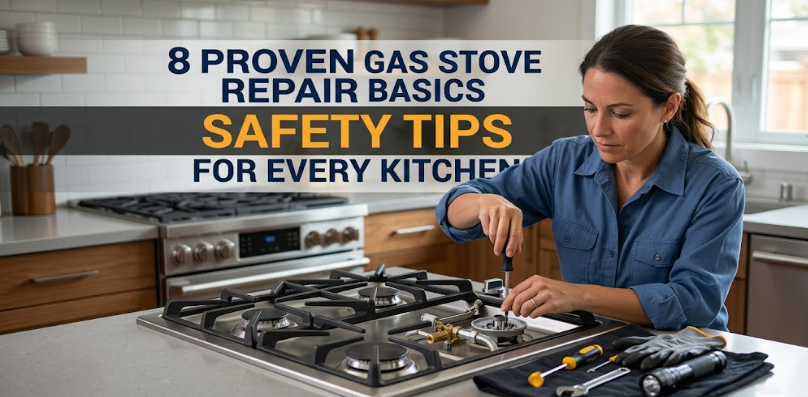
8 Proven Gas Stove Repair Basics Safety Tips for Every Kitchen
There is something quietly dependable about a gas stove. It sits in the corner of your kitchen, often unnoticed until something goes wrong—a weak flame, a clicking sound that won’t stop, or worse, the faint but unmistakable smell of gas. Unlike many modern appliances that feel disposable, a gas stove invites repair rather than replacement. But with that invitation comes responsibility. Gas is efficient, powerful, and reliable, but it is also unforgiving when handled carelessly.
This guide is not just a checklist of tips. It is a blend of practical advice, real-world scenarios, small habits, and awareness that together create a safer kitchen. Whether you are someone who fixes things yourself or someone who simply wants to understand how things work, these eight proven safety tips will help you approach gas stove repair with confidence and caution.
understanding your stove before touching anything
Before attempting any repair, the most important step is not picking up a tool—it is observation. Every gas stove has its own personality. Some burners ignite instantly, while others take a second longer. Some produce a steady blue flame, while others fluctuate slightly depending on gas pressure.
Take time to notice what “normal” looks like in your kitchen. When something changes, you will detect it early. A yellow flame instead of blue, soot buildup on cookware, or a delayed ignition can all be early signs of a problem.
Many accidents happen not because of complex failures, but because small warning signs were ignored. Familiarity with your stove is your first layer of safety.
turning off the gas supply completely
It may sound obvious, but it is often overlooked in a hurry. Before you begin any repair, always shut off the gas supply. Not just the knob on the stove—the main gas valve.
There is a difference between stopping the flow temporarily and ensuring there is no chance of leakage. Even a slight release of gas in an enclosed kitchen can accumulate quickly.
After turning off the gas, wait a few minutes. Let any residual gas disperse. Open windows, allow airflow, and create a safe environment before you proceed.
Some people rely on smell alone to detect gas, but that is not enough. By the time you smell it strongly, it may already be at a risky level. Prevention starts with eliminating the source entirely.

keeping the workspace ventilated
Ventilation is not just for comfort—it is a safety measure. When working on a gas stove, ensure that your kitchen is well ventilated. Open windows, turn on exhaust fans, and avoid working in a closed space.
Gas leaks are not always dramatic. Sometimes they are subtle, slow, and silent. Good airflow reduces the risk of accumulation and helps disperse any escaping gas quickly.
Even during routine cleaning or minor adjustments, ventilation matters. It creates a margin of safety that you may not realize you need until it is too late.
using the right tools, not improvised ones
One of the most common mistakes in home repairs is improvisation. A knife instead of a screwdriver, pliers instead of a proper wrench—these shortcuts can damage components or create unsafe conditions.
Gas stoves have delicate parts: burners, valves, igniters, and connectors. Using the wrong tool can strip threads, loosen fittings incorrectly, or crack components.
Investing in a basic toolkit designed for household repairs is not expensive, but it makes a significant difference. It ensures that when you tighten or loosen something, you are doing it correctly.
Precision matters. A slightly loose connection can lead to leaks, while overtightening can damage seals. The right tools help you strike that balance.
checking for leaks the safe way
After any repair involving gas connections, checking for leaks is essential. But how you check matters just as much as the check itself.
Never use a flame to test for leaks. It might seem like a quick method, but it is extremely dangerous. Instead, use a simple soap solution. Mix water with a small amount of dish soap and apply it to the connection points.
If bubbles form, you have a leak. It is a simple, effective, and safe method that has been used for decades.
Take your time during this step. Check every connection you touched. Even if you are confident in your work, verification is part of responsible repair.
understanding flame color and behavior
A healthy gas flame is typically blue. This indicates complete combustion and efficient burning. If you notice yellow or orange flames, it may signal incomplete combustion.
This is not just a performance issue—it is a safety concern. Incomplete combustion can produce carbon monoxide, an invisible and dangerous gas.
Other signs to watch for include uneven flames, flickering, or flames that lift off the burner. These can indicate clogged burner ports, incorrect gas pressure, or misaligned components.
Cleaning the burner ports gently with a soft brush or a pin can often resolve minor issues. However, persistent problems may require professional attention.
Recognizing these visual cues helps you address issues early, before they escalate into something more serious.
keeping ignition systems clean and dry
Modern gas stoves often use electric ignition systems. These systems rely on small components that can be affected by moisture, grease, and debris.
If your stove keeps clicking without igniting, or if it struggles to spark, the issue may be as simple as dirt buildup. Cleaning the ignition area carefully can restore proper function.
Always ensure the stove is completely dry before attempting to use it again. Moisture can interfere with the spark and create inconsistent ignition.
Avoid using excessive water when cleaning. A damp cloth is usually sufficient. Pay attention to the small gaps where grease tends to accumulate.
Regular maintenance of the ignition system reduces the likelihood of sudden failures and keeps your stove reliable.
knowing when not to repair it yourself
Perhaps the most important safety tip is recognizing your limits. Not every issue is suitable for a DIY repair.
If you encounter persistent gas leaks, damaged valves, or complex internal problems, it is best to call a professional. Attempting to fix something beyond your skill level can make the situation worse.
There is no shame in seeking help. In fact, it is a sign of responsibility. Gas systems are not forgiving, and mistakes can have serious consequences.
A good rule of thumb is this: if the repair involves internal gas lines or components you do not fully understand, step back and consult an expert.
Your safety, and the safety of those around you, is more important than saving time or money.
building a routine of maintenance
Safety is not just about reacting to problems—it is about preventing them. Establishing a routine of maintenance can extend the life of your stove and reduce the likelihood of unexpected issues.
Clean burners regularly. Check connections periodically. Observe flame behavior. These small habits take only a few minutes but make a significant difference over time.
Think of it as part of your kitchen routine, just like cleaning countertops or washing dishes. Consistency is key.
A well-maintained stove is not only safer but also more efficient. It uses gas more effectively, cooks more evenly, and performs reliably.
the human side of kitchen safety
Behind every safety tip is a story. Someone who ignored a small leak. Someone who used the wrong tool. Someone who thought “it will be fine.”
Safety is not just technical—it is human. It is about habits, awareness, and the willingness to pause and think before acting.
In many households, the kitchen is a shared space. Children, family members, and guests all interact with it. Ensuring that your stove is safe is not just about you—it is about everyone who steps into that space.
Taking a few extra minutes to follow proper safety practices can prevent accidents that might otherwise have lasting consequences.
practical checklist you can follow anytime
Here is a simple routine you can adopt whenever you need to inspect or repair your gas stove:
Turn off the main gas supply
Open windows and ensure ventilation
Gather proper tools
Inspect visually before touching anything
Perform the repair carefully
Check all connections with soap solution
Test the stove and observe the flame
Clean the area and restore normal setup
This checklist is not complicated, but it reinforces good habits. Over time, it becomes second nature.
common mistakes people make
Rushing through repairs is one of the most common mistakes. People often try to fix issues quickly, especially when they need to cook.
Another mistake is ignoring small warning signs. A weak flame or occasional smell might seem minor, but these can indicate underlying problems.
Using excessive force is also a frequent issue. Gas stove components are not designed to be forced into place.
Lastly, skipping the leak test is surprisingly common. People assume that if everything looks fine, it must be fine. This assumption can be dangerous.
Being aware of these mistakes helps you avoid them.
how small actions prevent big problems
It is easy to underestimate the impact of small actions. Tightening a connection properly, cleaning a burner, or checking for leaks may seem minor.
But these actions add up. They create layers of safety that protect you and your home.
Think of safety as a chain. Each good practice is a link. The stronger the chain, the less likely it is to break.
Neglecting even one link can weaken the entire system.
why consistency matters more than expertise
You do not need to be an expert to maintain a safe gas stove. What matters more is consistency.
Regular checks, careful handling, and attention to detail go a long way. Even simple knowledge, applied consistently, can prevent most common issues.
Expertise is valuable, but habits are powerful. Building the right habits ensures that safety becomes part of your routine, not an afterthought.
a final reflection on safety and responsibility
Repairing a gas stove is not just a technical task. It is an act of responsibility. It requires patience, awareness, and respect for the system you are working with.
When you approach it with the right mindset, it becomes less about fixing a problem and more about maintaining a safe environment.
Every time you turn on your stove, you are relying on a system that, when handled correctly, serves you well. Treat it with care, and it will continue to do so.
frequently asked questions
- how often should I check my gas stove for leaks
It is a good practice to check for leaks every time you perform a repair or notice any unusual smell. Even without issues, a periodic check every few months adds an extra layer of safety. - what should I do if I smell gas in my kitchen
Turn off the gas supply immediately, open windows for ventilation, avoid using electrical switches, and leave the area if the smell is strong. Contact a professional before using the stove again. - can I clean burner holes with a needle or pin
Yes, but do it gently. A thin pin can help clear clogged holes, but avoid enlarging them or damaging the burner. - why is my gas flame yellow instead of blue
A yellow flame usually indicates incomplete combustion, which can be caused by clogged burners or improper air-to-gas ratio. Cleaning the burner often resolves this. - is it safe to repair a gas stove without professional help
Simple maintenance tasks are generally safe if you follow proper precautions. However, complex issues involving gas lines or internal components should be handled by professionals. - what tools do I need for basic gas stove repair
A basic toolkit including screwdrivers, a wrench, pliers, and a soap solution for leak testing is usually sufficient for minor repairs and maintenance.
By approaching gas stove repair with care, patience, and awareness, you turn a potentially risky task into a manageable and safe routine. Over time, these practices become habits, and those habits become your strongest line of defense in the kitchen.

