


9 proven gas stove repair basics maintenance hacks that save money
A gas stove rarely complains loudly before it starts costing you money. It whispers first. A weak flame here, a faint gas smell there, a burner that takes a few extra seconds to light. Most people ignore those signs because life is busy, meals need to be cooked, and the stove still “works.” But that quiet neglect is exactly how small issues turn into expensive repairs or full replacements.
I learned this the hard way. A minor clog that could have been cleaned in ten minutes ended up damaging a burner assembly and cost more than I care to admit. Since then, I’ve paid close attention to the basics—not complicated technical repairs, but simple, repeatable habits that keep a stove running efficiently. Over time, these habits turn into real savings.
This article is not just a list of tips. It’s a practical, lived-in approach to maintaining a gas stove, written the way someone would explain it after years of trial, mistakes, and gradual improvement. Each section reflects a maintenance hack that, when applied consistently, prevents bigger problems.
hack 1: clean the burner ports like you actually mean it
Burner ports are those tiny holes where the flame comes out. When they’re clean, the flame burns blue and evenly. When they’re clogged, the flame becomes uneven, yellow, or weak.
Most people wipe the top surface and think that’s enough. It isn’t.
Food spills, oil, and even fine dust settle into those holes over time. It’s slow, almost invisible, but it changes how gas flows. That uneven flow wastes fuel and forces you to cook longer, which quietly increases your gas bill.
The fix is simple but requires intention. Remove the burner caps and rings. Take a soft brush or even an old toothbrush and gently scrub the ports. For stubborn clogs, a thin pin or needle works—but use it carefully, just enough to clear the blockage without widening the hole.
Do this once every couple of weeks if you cook daily. It takes less than fifteen minutes and keeps the flame strong, which means faster cooking and less wasted gas.
hack 2: check the flame color before you ignore it
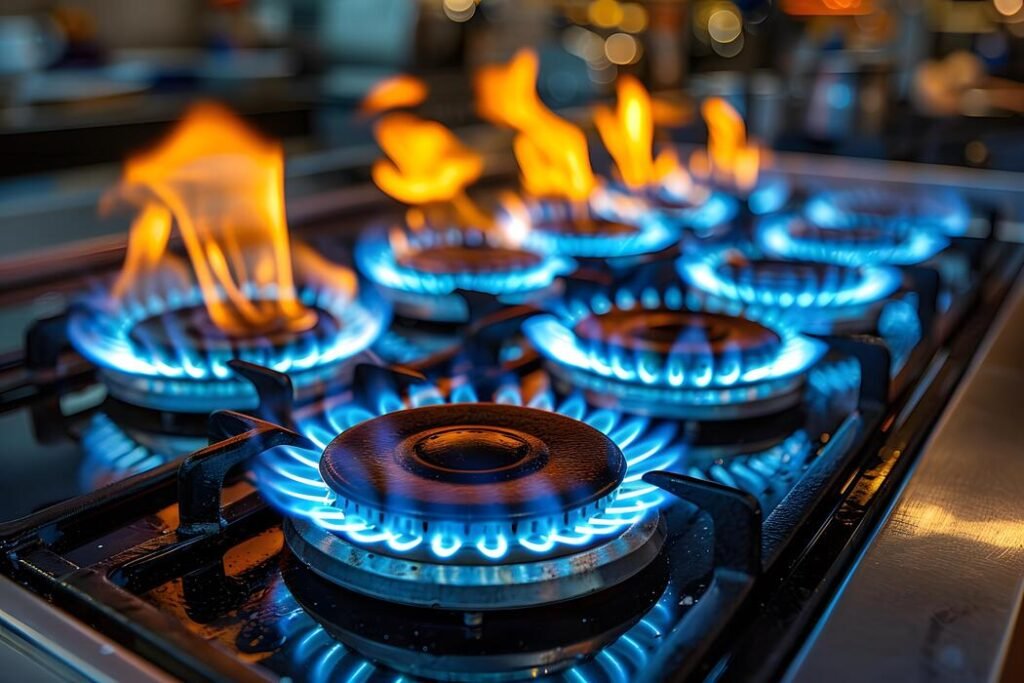
A healthy gas flame is blue. Not orange, not yellow, not flickering in odd patterns. Blue means the gas is burning efficiently.
If you see yellow tips or a mostly yellow flame, it usually means incomplete combustion. That doesn’t just waste fuel—it can also produce soot and, in some cases, carbon monoxide.
Instead of ignoring it, treat flame color like a quick diagnostic tool. If the color changes, ask why.
Often, it’s something simple: dirty burner ports, a misaligned burner cap, or debris affecting airflow. Sometimes, it’s a deeper issue like improper gas pressure or a clogged air shutter.
You don’t need to panic, but you shouldn’t delay either. Fixing the cause early keeps your stove efficient and avoids the kind of damage that leads to costly servicing.

hack 3: keep the igniter dry and debris-free
That clicking sound you hear when lighting the stove comes from the igniter. When it works well, it’s almost invisible in your routine. When it doesn’t, it becomes instantly frustrating.
Igniters are sensitive to moisture and food residue. A simple spill—especially something sugary or oily—can coat the igniter and weaken the spark.
The result? You hold the knob longer, gas flows without ignition for a few seconds, and sometimes you end up lighting it manually.
That delay wastes gas every single time.
After cleaning your stove, always dry the igniter area completely. If it’s already dirty, gently clean it with a dry cloth or a small brush. Avoid soaking it or using excessive water.
A clean, dry igniter lights faster, reduces gas waste, and lowers the risk of gas buildup before ignition.
hack 4: align burner caps properly (it matters more than you think)
It sounds too simple to matter, but a misaligned burner cap can disrupt the entire flame pattern.
If the cap isn’t sitting correctly, gas won’t distribute evenly. You’ll get uneven flames, hot spots, and sometimes a burner that refuses to light properly.
This often happens after cleaning. You remove the caps, wipe everything down, and then place them back without checking alignment.
Make it a habit: after cleaning, place each cap carefully and ensure it sits flat and stable. Give it a slight wiggle—if it rocks or feels uneven, adjust it.
This tiny step prevents uneven heating and saves fuel by ensuring efficient combustion.
hack 5: don’t ignore slow gas flow—it’s not “normal”
If a burner takes longer to reach full flame or never quite gets there, something is restricting gas flow.
People often adjust by turning the knob higher or cooking longer. That’s not a fix—it’s a workaround that costs you money.
Common causes include clogged burners, partially blocked gas lines, or issues with the regulator.
Start with the basics: clean the burners thoroughly and check for visible obstructions. If the issue persists, it may be worth checking the regulator or consulting a technician.
Addressing slow gas flow early prevents strain on the system and avoids larger, more expensive repairs.
hack 6: wipe spills immediately (yes, immediately)
It’s tempting to leave a spill until after cooking. After all, you’re in the middle of preparing a meal.
But when food or liquid spills onto a hot stove, it bakes onto the surface almost instantly. That hardened residue is much harder to clean later and more likely to clog burner ports.
Even worse, sugary spills can damage components over time.
The habit to build is simple: if something spills, turn the heat down or off for a moment and wipe it while it’s still soft. It takes seconds and prevents buildup.
This one habit alone reduces the need for deep cleaning and keeps your stove functioning efficiently.
hack 7: inspect the gas hose and connections regularly
This is where safety and savings overlap.
A small leak in the gas hose or a loose connection can waste gas continuously. You might not notice it right away, especially if the leak is minor.
But over time, it adds up—not just in cost, but in risk.
Every month or so, do a quick inspection. Look for cracks, wear, or loose fittings. You can also use a simple soap solution—apply it to the connections and watch for bubbles when the gas is on (without lighting the stove).
If you see bubbles, there’s a leak.
Fixing a loose connection or replacing a worn hose is far cheaper than dealing with the consequences of a long-term leak.
hack 8: use the right cookware size for each burner
This isn’t exactly a repair tip, but it directly affects how your stove performs and how much gas you use.
Using a small pan on a large burner wastes heat. The flame extends beyond the base of the pan, heating the air instead of your food.
Using a large pan on a small burner can also be inefficient, as it takes longer to heat evenly.
Match the cookware to the burner size. It sounds obvious, but many people don’t pay attention to it.
Over time, this simple adjustment reduces cooking time and gas consumption, which translates into noticeable savings.
hack 9: schedule a simple deep clean once a month
Daily wiping and occasional scrubbing are good, but they’re not enough on their own.
Once a month, take the time to do a deeper clean. Remove all detachable parts—burner caps, rings, grates—and clean them thoroughly.
Check underneath for hidden debris. Wipe areas you don’t usually see. Inspect components while you’re at it.
This monthly reset prevents buildup from reaching a point where it affects performance.
Think of it as maintenance, not cleaning. It keeps everything running smoothly and reduces the chances of sudden issues.
a few habits that tie everything together
The hacks above work best when they become part of your routine. You don’t need to do everything every day. In fact, that would be overkill.
Instead, spread them out.
A quick wipe after cooking. A more careful clean every couple of weeks. A deeper inspection once a month.
Pay attention to how your stove behaves. It often tells you when something is off—through flame color, ignition speed, or heat consistency.
When you respond early, fixes are easy and cheap. When you wait, they become complicated and expensive.
why these small actions actually save money
It’s easy to underestimate the financial impact of maintenance. After all, each action seems small.
But consider this:
A clean burner uses less gas to produce the same heat.
A properly aligned cap prevents uneven cooking and wasted fuel.
A working igniter reduces gas loss before ignition.
A leak-free connection ensures you’re not paying for gas you’re not using.
Individually, the savings might seem minor. Together, over months and years, they add up.
More importantly, these habits extend the life of your stove. Replacing a stove or major component is far more expensive than maintaining it.
common mistakes people make (and how to avoid them)
One common mistake is over-cleaning with harsh chemicals. While it might make the stove look shiny, it can damage components, especially the igniter and burner coatings.
Another mistake is ignoring small changes. A slightly weaker flame or a delayed ignition doesn’t seem urgent, but it’s often the first sign of a problem.
There’s also the habit of postponing maintenance. People wait until something stops working before taking action.
The better approach is preventative. Small, regular efforts keep everything in check.
a realistic maintenance routine you can follow
If you’re wondering how to put all this into practice without overcomplicating your life, here’s a simple routine:
after every use
wipe the surface and clean any spills
once a week
check burner caps and give a light clean to visible areas
every two weeks
clean burner ports and inspect the igniter
once a month
do a deep clean and inspect hoses and connections
This routine doesn’t take much time, but it covers all the essentials.
final thoughts
Gas stove maintenance isn’t about technical expertise. It’s about attention and consistency.
You don’t need special tools or advanced skills. Most of what keeps a stove running well comes down to simple habits.
When you take care of the basics, the stove rewards you with better performance, lower gas bills, and fewer unexpected repairs.
It’s one of those areas where a little effort goes a long way.
faqs
- how often should i clean my gas stove burners
If you cook daily, a light cleaning every week and a deeper cleaning every two to four weeks works well. Regular cleaning prevents clogs and keeps the flame efficient. - why is my gas stove flame yellow instead of blue
A yellow flame usually indicates incomplete combustion, often caused by clogged burner ports or poor airflow. Cleaning the burners and ensuring proper alignment usually fixes the issue. - is it safe to clean the igniter with water
It’s better to avoid using water directly on the igniter. Use a dry cloth or brush instead, as moisture can interfere with the spark. - how can i tell if there is a gas leak
You might notice a gas smell, but a safer method is using a soap solution on connections. If bubbles form when the gas is on, there’s likely a leak. - does using the wrong pan size really waste gas
Yes, using mismatched cookware can waste heat and increase cooking time, which leads to higher gas usage over time. - when should i call a professional for gas stove repair
If cleaning and basic maintenance don’t solve the problem, or if you suspect issues with gas flow, pressure, or internal components, it’s best to consult a professional.

