
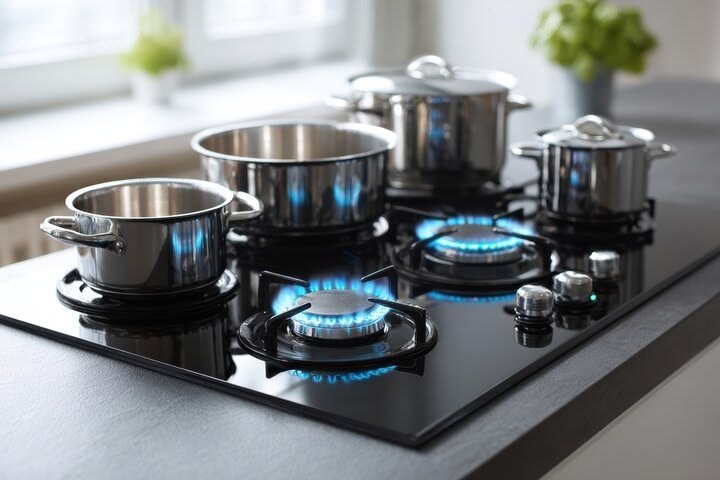
I still remember the afternoon my neighbor called me in a panic. She’d noticed a faint smell in her kitchen — not strong enough to set off any alarm, but enough to make her uneasy. Turned out, one of her burner knobs hadn’t fully clicked back to the “off” position after cooking. The gas had been slowly seeping out for over an hour.
Nothing catastrophic happened, thankfully. But it shook both of us up. And honestly? It made me realize how casually most of us treat our gas stoves — these powerful appliances we use every single day without a second thought.
After that incident, I went down a rabbit hole learning everything I could about gas stove safety. I talked to a technician who’d been doing appliance repairs for 20+ years, read through manufacturer guides, and started paying way more attention to my own habits in the kitchen. What I found was eye-opening.
So here’s what I put together — 8 safety rules that every family should actually be following. These aren’t just theoretical tips. They’re the kind of things that make a real difference.
1. Always Check Your Burner Knobs Before Leaving the Kitchen — Every Single Time
This sounds almost too obvious, right? But this is exactly what my neighbor missed. The knob felt like it was in the “off” position, but it wasn’t quite there.
Get into the habit of doing a quick visual and physical check of every single burner knob before you walk out of the kitchen — whether you’re stepping out for two minutes or heading to bed. Push and turn each knob, confirm the click, and make sure the flame is fully out.
I actually started using a simple trick: before leaving the kitchen after cooking, I say out loud, “All burners off” — even if I’m alone. It sounds silly, but it creates a mindful moment instead of just assuming everything is fine.
What to watch for:
- Knob in the “between” zone (not fully off, not fully on)
- A faint hissing sound near the stove
- Any lingering smell of gas even after the flame is off
If you’re someone who forgets easily (no judgment — we all do), consider a small sticky note on the fridge: “Did you turn off the stove?” Old school? Yes. Effective? Absolutely.
2. Never Ignore the Smell of Gas — Even If It Seems Faint
Natural gas itself is odorless. The smell you associate with a gas leak — that rotten egg or sulfur-like odor — comes from a chemical called mercaptan that’s added intentionally so you can detect leaks.
Here’s the mistake a lot of people make: they smell something faint, assume it’s just leftover from cooking, and move on. Don’t do this.
Even a small gas leak can build up in enclosed spaces. And in a kitchen with a pilot light, an electric switch, or even a phone charger — any tiny spark can ignite it.
If you smell gas:
- Don’t turn any switches on or off (this includes lights)
- Don’t use your phone inside the house
- Open windows and doors as you exit
- Leave the house immediately
- Call your gas company from outside
A gas detector is a genuinely useful investment. You can find decent ones for under $30-40. It plugs into a wall outlet and beeps if it detects a gas leak — giving you a warning even when you can’t smell anything yet. Some newer smart detectors even send alerts to your phone.
For more tips on catching gas-related issues early, check out these 7 Essential Gas Stove Repair Basics Safety Rules Every Kitchen Needs.
3. Keep the Burner Caps and Ports Clean — Clogged Ones Are Dangerous
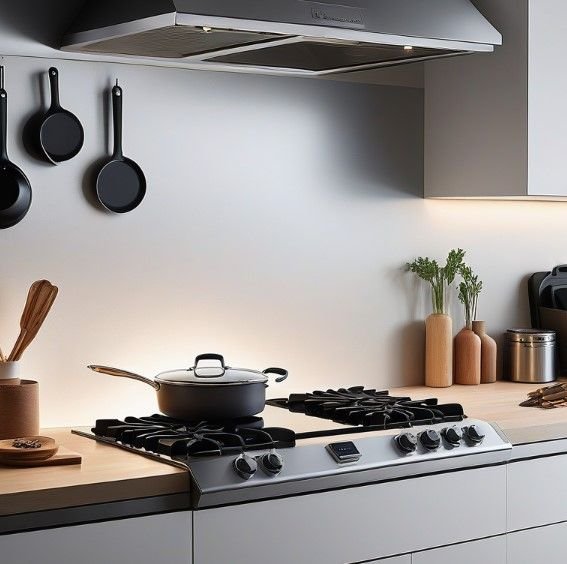
This one surprised me when the technician explained it. Most of us clean the stove surface, maybe scrub the grates — but the burner caps and the tiny ports (holes) around them? Often overlooked.
When grease, food particles, or boiled-over liquids clog those ports, gas can’t flow evenly. This leads to uneven flames, and in some cases, pockets of unburned gas that can cause small flare-ups when the burner finally ignites.
Cleaning routine I follow (once a week or after any spill):
- Remove the burner cap and grate after the stove has fully cooled
- Soak the cap in warm, soapy water for 15-20 minutes
- Use a soft brush (an old toothbrush works perfectly) to gently scrub the ports
- Clear any stubborn clogs with a toothpick or a thin needle — never use anything metallic that could widen the holes
- Dry everything completely before putting it back — moisture near a burner is a problem
A wet burner cap can cause sputtering, clicking, or even prevent ignition altogether. Always let parts air dry fully or use a dry cloth before reassembly.
Here’s a quick comparison of what happens when you clean regularly vs. when you don’t:
| Condition | Flame Behavior | Risk Level |
|---|---|---|
| Clean burner ports | Even, blue flame | Low |
| Partially clogged | Uneven, orange patches | Moderate |
| Heavily clogged | Sputtering, delayed ignition | High |
| Wet after cleaning | Clicking, won’t light | Moderate |
4. Make Sure There’s Proper Ventilation While Cooking
Gas stoves don’t just produce heat — they also produce combustion byproducts like carbon monoxide, nitrogen dioxide, and water vapor. In a well-ventilated kitchen, these disperse quickly. In a sealed, poorly ventilated space? They can build up to unhealthy levels.
Carbon monoxide is the serious one. It’s colorless, odorless, and can cause headaches, dizziness, and nausea even at low concentrations — symptoms most people chalk up to tiredness or a bad day.
Ventilation basics:
- Always run your range hood or exhaust fan while cooking — not just when things get smoky
- If you don’t have a range hood, crack a window
- Install a carbon monoxide detector in or near the kitchen — separate from your smoke detector
- Never use a gas stove to heat your home, even briefly (a surprisingly common mistake in winter)
I personally use a combination smoke and CO detector from a brand called Kidde — it’s wall-mounted, reliable, and has been a good investment. There are also smart versions that connect to apps like Google Home or Amazon Alexa if you want remote monitoring.
5. Watch What You Store Near the Stove — This One Gets People
Olive oil bottles, paper towels, oven mitts, wooden spoons, cereal boxes — all common things that end up sitting on or right next to the stove. And all of them are fire hazards.
Cooking oils are particularly sneaky. An oil bottle that’s close enough to the stove can get hot during extended cooking sessions. If that bottle is right next to a burner and something spatters — you can end up with a grease fire faster than you’d expect.
The general rule: keep at least 12 inches of clearance around any active burner. Nothing flammable should be within that zone.
Things people commonly leave near the stove that they shouldn’t:
- Paper towel rolls
- Cloth towels or dishcloths
- Plastic bags or wrapping
- Recipe cards or open cookbooks
- Aerosol cans (this one is genuinely dangerous — they can explode when heated)
Reorganize your counter space so that flammable items have a permanent spot away from the cooking area. It takes five minutes to rethink your kitchen layout and it’s absolutely worth it.
6. Never Leave Cooking Unattended — Especially on High Heat
I know. We’ve all done it. You put something on to boil, step out to check on the kids or answer the door, and come back to a scorched pot and a smoke-filled kitchen.
Unattended cooking is the leading cause of kitchen fires, full stop. With a gas stove specifically, the risk is higher because you’re dealing with an open flame rather than an electric element.
If you absolutely have to step away:
- Turn the flame to its lowest setting
- Set a loud timer on your phone — not a mental note, an actual alarm
- Never leave the house with anything on the stove, even for “just a minute”
For households with kids, there’s an additional layer to this: teach children early that the stove is not a toy and establish a clear boundary — usually a foot away from the stove — that they don’t cross when cooking is happening.
Stove knob covers (designed for child safety) are also a practical tool if you have toddlers in the house. They make it difficult for small hands to turn the burners on accidentally.
7. Know How to Handle a Grease Fire — Most People Get This Wrong
Grease fires are the most common type of kitchen fire, and the instinct most people have when they see one is exactly wrong: they reach for water.
Water on a grease fire doesn’t put it out — it causes the hot oil to violently splatter, spreading the fire instantly. This is genuinely dangerous.
What to actually do if a pan catches fire:
- Turn off the burner immediately
- Slide a metal lid over the pan to cut off oxygen — don’t use glass
- Leave the lid on until the pan has cooled completely
- If the fire is small and contained, a fire extinguisher rated for grease fires (Class K or Class B) works
- If it’s spreading or you’re not sure, get everyone out and call emergency services
Keep a fire extinguisher accessible in your kitchen — mounted on the wall, not buried in a cabinet. Check the pressure gauge once a year to make sure it’s still functional. A dry powder extinguisher works for most kitchen fires, but a Class K (wet chemical) is specifically designed for cooking fires.
One more thing: never put a burning pan in the sink. This is another reflex that can backfire badly.
8. Schedule Regular Professional Inspections — Don’t Wait for Something to Break
This is the rule most people skip because it costs a little money and nothing seems obviously wrong. But gas appliances need periodic professional checks, especially as they age.
A qualified technician will check things you can’t see or safely inspect yourself — gas line connections, valve integrity, igniter condition, and burner calibration. Catching a small issue before it becomes a safety hazard is far cheaper and less stressful than dealing with an emergency.
When to schedule an inspection:
- When you move into a new home
- If your stove is more than 5 years old and has never been inspected
- After any significant repair
- If you’ve noticed anything unusual — clicking igniters, weak or uneven flames, strange smells
You can also do a basic DIY safety check yourself using soapy water. Apply it around gas connections with a brush or cloth. If you see bubbles forming, that indicates a gas leak at that connection. Turn off the gas and call a professional immediately.
For a deeper look at what these checks involve, this article on 8 Smart Gas Stove Repair Basics Safety Checks Before Every Repair walks through the process in detail.
Common Mistakes Families Make (And How to Avoid Them)
Let me wrap up the practical side with a quick list of the mistakes I see — and have made myself — that are worth being aware of:
| Mistake | Why It’s Risky | Fix |
|---|---|---|
| Leaving knobs partially turned | Slow gas leak | Always confirm full click to “off” |
| Using water on grease fire | Spreads fire instantly | Use lid or correct extinguisher |
| Ignoring weak flame | Blocked ports, possible leak | Clean burners, call tech if persists |
| Storing flammables near stove | Fire risk | Clear 12-inch zone around burners |
| Cooking without ventilation | CO buildup | Run exhaust fan every time |
| Skipping professional checks | Undetected gas leaks | Annual inspection recommended |
Final Thoughts
Gas stoves are genuinely excellent — they give you precise heat control, they’re efficient, and most of them last for decades with decent care. But “decent care” absolutely includes taking safety seriously.
None of the rules above require expensive equipment or hours of effort. Most of them are just habits — small, consistent actions that become second nature after a while. The knob check. The exhaust fan. The cleared counter space. The fire extinguisher you actually know how to use.
My neighbor was lucky. Her slow-leak situation didn’t turn into anything worse. But I think about how different that afternoon could have looked, and it’s a good reminder that safety habits aren’t about being anxious or overcautious — they’re about being prepared so you can cook in peace.
Take your kitchen seriously. It’s where some of the best parts of family life happen — and it deserves to be a safe space.
Also worth reading: If you’ve been dealing with burner issues or ignition problems alongside safety concerns, check out 10 Easy Gas Stove Repair Basics Safety Tips Every Beginner Must Know — it covers the basics in a beginner-friendly way that pairs well with everything above.

