
8 Essential Gas Stove Repair Basics Installation Tips for Safe Use
Introduction
A gas stove is one of the most important appliances in any kitchen. It is simple in appearance, but behind every flame is a carefully balanced system of gas flow, air mixing, ignition, and safety control. When installed correctly, a gas stove provides reliable cooking performance for years. When installed poorly, it can become dangerous, inefficient, and expensive to maintain.
Many households face issues not because the stove itself is defective, but because the installation or early setup was not done properly. Small mistakes like loose connections, incorrect burner alignment, or improper gas pressure can lead to uneven flames, gas leakage, or frequent breakdowns.
This article explains eight essential gas stove repair basics and installation tips that help ensure safe use. These are practical, experience-based guidelines that focus on safety, efficiency, and long-term durability.
Understanding how a gas stove works before installation
Before touching any part of a gas stove, it is important to understand its basic working system. A gas stove operates by mixing gas with air and igniting it through a spark or manual flame. The key components include burners, gas valves, regulator, ignition system, and gas pipeline.
Each part plays a specific role:
- The regulator controls gas pressure
- The pipeline delivers gas safely from cylinder or supply line
- The burners distribute flame evenly
- The ignition system helps start combustion
- The valves regulate flow to each burner
When even one of these parts is not installed correctly, the entire system can become unstable. That is why installation is not just about connecting pipes, but about ensuring proper balance across the whole system.
Tip 1: Always check gas supply and pressure before installation
One of the most common mistakes during installation is ignoring gas pressure levels. Gas pressure that is too high or too low can cause major issues.
If pressure is too high, flames become noisy and unstable. If pressure is too low, burners will not light properly or will produce weak flames.
Before installation:
- Check cylinder condition or pipeline supply
- Ensure regulator is compatible with your stove type
- Confirm there is no blockage in the line
- Test gas flow briefly before connecting burners
A stable and balanced gas supply ensures that the stove performs efficiently from the beginning.
Tip 2: Ensure proper placement and leveling of the stove
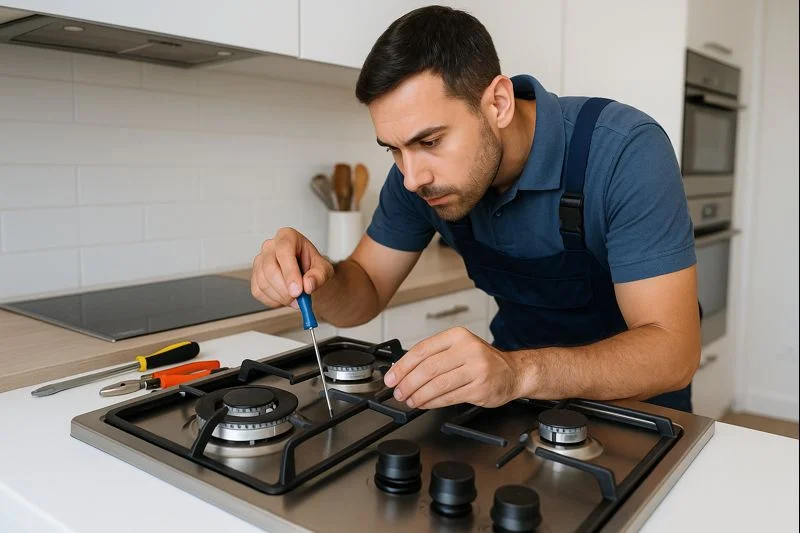
A gas stove must always be placed on a flat, stable surface. Uneven placement can cause multiple problems including uneven flame distribution and accidental tipping.
Proper leveling ensures:
- Even cooking heat
- Safe pan positioning
- Reduced risk of gas leakage from tilted burners
If the stove is not level, use adjustable feet or a stable base. Never place a stove on a soft or unstable surface such as loose wood or uneven tiles.
Even a small tilt can affect long-term performance and safety.
Tip 3: Secure all gas connections tightly but carefully
Loose connections are one of the biggest causes of gas leakage. However, over-tightening can also damage threads and seals.
When connecting pipes:
- Use proper sealing tape or approved gas sealant
- Tighten connections firmly but not forcefully
- Check joints between regulator, pipe, and stove inlet
- Avoid using damaged or old rubber tubes
After installation, always perform a leak test using soap water. If bubbles appear, it means gas is escaping and the connection must be fixed immediately.
This simple step prevents dangerous accidents.
Tip 4: Install burners correctly for balanced flame distribution
Burners are responsible for flame quality. If they are not installed properly, the flame may become uneven or yellow instead of blue.
Proper burner installation includes:
- Aligning burner caps correctly
- Ensuring no dust or debris is blocking holes
- Checking burner ring position
- Making sure flame spreads evenly around the circle
A correctly installed burner produces a steady blue flame, which indicates efficient combustion. Yellow flames usually mean incomplete combustion and wasted gas.
Cleaning burners before installation also helps avoid early performance issues.
Tip 5: Keep ignition system properly aligned and functional
Modern gas stoves often include automatic ignition systems. These systems must be carefully handled during installation.
Important steps include:
- Checking electrode position near burners
- Ensuring wires are not loose or damaged
- Testing spark before final placement
- Keeping ignition components dry and clean
If the ignition system is misaligned, it may fail to produce a spark or may spark continuously, which wastes energy and can become unsafe.
Proper alignment ensures quick and reliable ignition every time.
Tip 6: Ensure proper ventilation in the kitchen
Ventilation is often ignored during installation, but it plays a major role in safety. Gas combustion produces heat and small amounts of byproducts that must be released safely.
Good ventilation helps:
- Prevent gas buildup in case of leakage
- Maintain air quality
- Reduce heat accumulation in the kitchen
Always install gas stoves in kitchens with windows, exhaust fans, or ventilation ducts. Never use a gas stove in a completely sealed room.
Good airflow reduces risk and improves cooking comfort.
Tip 7: Regular inspection after installation
Installation is not the final step. Regular inspection ensures that the stove remains safe over time.
You should check:
- Pipe condition for cracks or wear
- Burner cleanliness and flame consistency
- Gas smell around connections
- Regulator performance
Even if everything seems fine, a quick monthly check helps prevent long-term issues. Many serious stove problems start as small unnoticed leaks or blockages.
Tip 8: Know when to call a professional technician
Not every problem should be fixed at home. Some issues require trained technicians, especially when dealing with gas systems.
Call a professional if you notice:
- Persistent gas smell
- Weak or unstable flame despite cleaning
- Continuous ignition failure
- Visible damage to gas line or regulator
Trying to fix complex gas issues without experience can be dangerous. Professional inspection ensures safety and proper repair.
Common installation mistakes to avoid
Even experienced users sometimes make avoidable mistakes during installation. These include:
- Using mismatched regulators
- Ignoring small gas leaks
- Installing stove near flammable materials
- Over-tightening pipe connections
- Skipping burner cleaning before setup
Avoiding these mistakes significantly increases stove lifespan and safety.
Basic troubleshooting after installation
If your gas stove is not working properly after installation, check these common issues:
- Burner not lighting: check ignition or gas flow
- Weak flame: check pressure or blockage
- Yellow flame: clean burner holes
- Gas smell: immediately shut off supply and inspect leakage
- Clicking sound without ignition: check electrode alignment
Simple troubleshooting can solve many issues without major repair.
Maintenance tips for long-term performance
To keep your gas stove in good condition:
- Clean burners weekly
- Avoid spilling liquids into burner holes
- Replace rubber tubes periodically
- Keep stove surface clean and dry
- Check ignition system regularly
Good maintenance reduces repair costs and improves cooking efficiency.
Safety precautions for everyday use
Safety should always come first when using a gas stove:
- Turn off gas supply after use
- Never leave flames unattended
- Keep children away from stove area
- Avoid using stove near flammable materials
- Always check for gas smell before ignition
These habits create a safe kitchen environment for everyone.
Conclusion
A gas stove is a simple but sensitive appliance that requires careful installation and regular attention. Following these eight essential gas stove repair basics installation tips ensures not only better performance but also long-term safety.
From checking gas pressure to ensuring proper burner alignment and ventilation, each step plays an important role. Most issues that users face in daily life can be prevented with correct installation and routine maintenance.
A properly installed gas stove does not just make cooking easier—it also makes your kitchen safer and more efficient.
FAQs
- How do I know if my gas stove is installed correctly?
If the flame is blue, stable, and evenly distributed, and there is no gas smell, your stove is likely installed correctly. - Why does my gas stove flame turn yellow?
Yellow flame usually means incomplete combustion, often caused by dirty burners or low oxygen supply. - How often should I check gas stove connections?
It is recommended to check connections at least once a month for safety. - Can I install a gas stove myself?
Basic installation can be done carefully, but complex gas line work should always be handled by a professional. - What should I do if I smell gas in the kitchen?
Immediately turn off the gas supply, open windows for ventilation, avoid flames or switches, and check for leaks. - How long does a gas stove installation usually last before maintenance is needed?
With proper installation and care, a gas stove can work efficiently for years, but basic maintenance should be done regularly every few months.

