
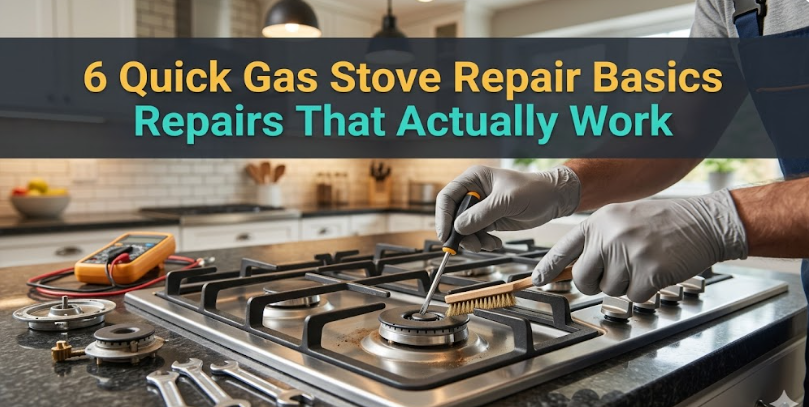
6 Quick Gas Stove Repair Basics Repairs That Actually Work
There is something oddly comforting about the familiar click of a gas stove igniting, followed by the steady blue flame that promises a warm meal. But when that click turns into silence, or the flame sputters and fades, frustration quickly replaces comfort. Gas stoves are simple machines at heart, yet they can feel surprisingly complex when they stop working. The good news is that many common problems don’t require a technician, expensive parts, or even advanced tools. What they do require is a little patience, a bit of observation, and a willingness to get your hands slightly dirty.
This guide walks through six quick and practical gas stove repair basics that actually work in real-life situations. These are not theoretical fixes or overly technical instructions. They are grounded in everyday experience—the kind you learn after dealing with stubborn burners, weak flames, or ignition failures more times than you’d like to admit.
Before getting into the repairs, one thing needs to be clear: safety comes first. Always turn off the gas supply before attempting any repair. If you ever smell strong gas that doesn’t go away quickly, stop immediately and ventilate the area. These fixes are for common, minor issues—not for major leaks or broken gas lines.
Now, let’s step into the real work.
understanding the anatomy of your gas stove
Before fixing anything, it helps to know what you’re dealing with. A typical gas stove consists of burners, burner caps, grates, an ignition system (either electric or manual), gas valves, and supply lines. Each component has a role, and when one fails, the entire system can feel broken.
Think of it like a chain. If one link is weak, the entire chain loses strength. Most issues you’ll encounter—like uneven flames or ignition failure—come down to just one or two components not doing their job properly.
repair one: fixing a burner that won’t light
One of the most common issues is a burner that simply refuses to ignite. You turn the knob, hear the clicking sound, but nothing happens. Or worse, there’s no click at all.
Start by removing the burner cap and the grate. Often, the issue is as simple as debris blocking the gas flow. Food particles, grease, or even moisture can clog the tiny holes around the burner.
Take a thin wire or a pin and gently clean the holes. Don’t force anything inside; just loosen any visible blockage. After that, wipe the burner with a dry cloth. If there’s moisture, let it air dry completely before reassembling.
If the clicking sound is absent, the ignition system might be dirty or misaligned. Clean the igniter with a soft brush and ensure it’s positioned correctly near the burner edge.
In many cases, this simple cleaning process restores normal function. It’s surprising how often the problem isn’t mechanical failure, but simple neglect.
repair two: restoring a weak or uneven flame
A healthy gas flame should be blue and steady. If it’s yellow, orange, or flickering unevenly, something is off. This usually points to incomplete combustion, often caused by restricted airflow or dirty burners.
Again, remove the burner components and give them a thorough cleaning. But this time, pay extra attention to the air intake areas. These are small openings that allow oxygen to mix with gas. If they’re blocked, the flame won’t burn cleanly.
You can also check the burner alignment. Sometimes, after cleaning or moving the stove, the burner cap doesn’t sit properly. Even a slight misalignment can disrupt the flame pattern.
After reassembling, light the burner and observe the flame. If it’s still uneven, adjust the air shutter if your stove has one. This small adjustment can make a noticeable difference.
repair three: dealing with a clicking sound that won’t stop
A continuously clicking stove can be both annoying and concerning. Even when the burner is lit, the clicking persists. This usually indicates moisture in the ignition system or a stuck switch.
Spills are often the culprit. If liquid gets into the ignition switch, it can cause constant sparking. The fix is simple but requires patience.
Turn off the stove and unplug it if it’s electric. Let it dry completely. You can speed up the process by using a fan or gently wiping around the knobs and ignition area.
If drying doesn’t solve the issue, the ignition switch may need cleaning. Carefully remove the knobs and clean around the switch with a dry cloth. Avoid using water or cleaning solutions in this area.
Most of the time, the clicking stops once the moisture is gone.
repair four: fixing a gas smell near the stove
A faint gas smell right after turning on the burner can be normal. But if the smell lingers or appears when the stove is off, it’s a red flag.
Start by checking if the knobs are fully turned off. It sounds obvious, but it’s a common oversight.
Next, inspect the connections. Loose fittings can allow small amounts of gas to escape. Tighten them gently, but don’t overdo it.
You can also perform a simple leak test using soapy water. Apply it to the connections and look for bubbles. If bubbles form, there’s a leak.
For minor leaks at connections, tightening usually solves the problem. But if the leak persists, it’s time to call a professional. This is one area where caution should override DIY enthusiasm.
repair five: unsticking a stubborn control knob
Over time, stove knobs can become stiff or difficult to turn. Grease buildup, dirt, or internal wear can cause this.
Remove the knob and clean it thoroughly. Pay attention to the shaft it connects to. A buildup of grime here can make movement difficult.
Use a dry cloth or a small brush to clean the area. If needed, apply a tiny amount of lubricant designed for appliances. Avoid using excessive oil, as it can attract more dirt.
Once cleaned, reattach the knob and test it. In most cases, it will turn smoothly again.
repair six: reviving a burner that keeps going out
Sometimes a burner lights but won’t stay lit. You might have to hold the knob down longer than usual, or the flame dies as soon as you release it.
This often points to a thermocouple issue. The thermocouple is a safety device that detects heat and keeps the gas flowing. If it doesn’t sense enough heat, it shuts off the gas.
Start by cleaning the thermocouple. It’s usually a small metal rod near the burner. Dirt or grease can interfere with its function.
If cleaning doesn’t help, the thermocouple might be worn out. Replacing it is relatively simple and inexpensive, but it may require a bit more confidence and the right tools.
In many cases, though, a good cleaning is enough to restore normal operation.
making repairs part of routine maintenance
The truth is, most gas stove problems don’t appear overnight. They build up gradually—through spills, grease accumulation, and everyday wear. By the time something stops working, the issue has often been developing for weeks or months.
That’s why these repairs shouldn’t be seen as one-time fixes. They’re part of a broader habit of maintenance.
A quick wipe after cooking, occasional deep cleaning, and paying attention to small changes in performance can prevent bigger problems. It’s not about perfection; it’s about consistency.
the human side of fixing things
There’s something deeply satisfying about fixing something yourself. It’s not just about saving money, though that’s a nice bonus. It’s about understanding how things work and taking control of your environment.
A gas stove, despite its simplicity, can feel like a mystery when it stops working. But once you’ve taken it apart, cleaned it, and put it back together, that mystery fades. What remains is a sense of capability.
You realize that many problems aren’t as complicated as they seem. They just require a closer look.
when to step back and call a professional
While these six repairs cover many common issues, not everything should be handled alone. If you’re dealing with persistent gas leaks, damaged gas lines, or electrical faults, it’s better to involve a professional.
There’s no shame in knowing your limits. In fact, it’s a sign of good judgment.
The goal of these fixes is not to replace professionals, but to handle the everyday problems that don’t require one.
a quiet return to normal
Once the repairs are done, the stove returns to its quiet, dependable self. The flame burns steady, the ignition works smoothly, and the kitchen feels normal again.
It’s easy to forget how much we rely on these small, everyday tools until they stop working. And it’s just as easy to overlook how simple many fixes can be.
In the end, repairing a gas stove isn’t just about fixing a problem. It’s about restoring a small part of daily life.
frequently asked questions
- Why does my gas stove take longer to ignite than before?
This usually happens due to dirt or moisture around the burner or igniter. Cleaning and drying the components often solves the problem. - Is a yellow flame dangerous on a gas stove?
A yellow flame indicates incomplete combustion, which can produce carbon monoxide. It’s best to clean the burner and check airflow immediately. - Can I use water to clean the ignition system?
It’s not recommended. Water can cause more issues, especially if it gets into electrical components. Use a dry cloth or brush instead. - How often should I clean my gas stove burners?
Light cleaning after every few uses and a deeper clean once a month is a good routine for most households. - What should I do if I smell gas even when the stove is off?
Turn off the gas supply, ventilate the area, and check for leaks using soapy water. If the smell persists, contact a professional immediately. - Is it safe to replace stove parts myself?
For simple components like burner caps or thermocouples, it’s generally safe if you follow instructions carefully. For complex repairs, professional help is recommended.
This approach to gas stove repair is not about mastering every technical detail. It’s about knowing enough to solve common problems confidently. And often, that’s more than enough.

