

6 Fast Gas Stove Troubleshooting Tricks That Save Time
There’s something oddly frustrating about a gas stove that refuses to cooperate. You turn the knob expecting a steady blue flame, and instead you get clicking sounds, weak flames, or nothing at all. In moments like these, most people either panic or assume the worst. But the truth is, many gas stove problems are surprisingly simple—and more importantly, quick to fix if you know what to look for.
This guide is not just a list of fixes. Think of it as a practical, hands-on companion you can mentally revisit every time your stove acts up. Instead of overwhelming you with technical jargon, it focuses on fast, time-saving troubleshooting tricks that actually work in real homes.
Below are six carefully explained tricks that can help you identify and fix common gas stove problems without wasting hours.
- Reset the burner the right way (not the way most people do it)
One of the most common mistakes people make is assuming that a burner is properly placed just because it “looks right.” In reality, even a slightly misaligned burner cap can prevent ignition or cause uneven flames.
What usually happens:
You clean your stove or remove the burner caps, then place them back casually. Later, the stove clicks repeatedly or produces a weak flame.
Fast fix:
Remove the burner cap and base completely. Wipe the area underneath with a dry cloth. Now place the burner cap back carefully, making sure it sits perfectly flat and centered. Rotate it slightly until it locks into place naturally.
A quick check:
Turn on the stove. If the flame forms a full, even circle with a steady blue color, you’ve fixed it.
Time saved insight:
Many people waste 20–30 minutes thinking the issue is gas supply or ignition failure, when in reality it’s just improper placement.
- Clean clogged burner holes using a simple pin trick
If your flame looks uneven—some parts strong, others barely visible—the issue is almost always clogged burner ports.
Why this happens:
Food spills, oil splatters, and dust gradually block tiny holes in the burner head. Over time, gas flow becomes inconsistent.
Fast fix:
Take a thin needle, safety pin, or toothpick. Gently insert it into each burner hole to clear debris. Avoid using anything too thick, as it can damage the holes.
Then:
Wipe the burner with a dry or slightly damp cloth and let it dry completely before using.
What you’ll notice:
The flame becomes uniform again, often instantly.
Extra tip:
Do this once a week if you cook frequently. It prevents buildup and saves future troubleshooting time.
- Dry everything before blaming the ignition system
A surprisingly common cause of ignition failure is moisture. Even a few drops of water can interfere with the spark.
Typical scenario:
You’ve just cleaned your stove. Everything looks spotless—but now it won’t ignite.
What’s really happening:
Water has seeped into the ignition area or burner base, disrupting the spark.
Fast fix:
Remove the burner parts and let them air dry for 10–15 minutes. If you’re in a hurry, use a fan or gently wipe with a dry cloth.
For quicker results:
Turn on the stove knob and let gas flow for a second (without ignition), then try lighting again.
Important:
Never use the stove if you smell strong gas buildup—always ventilate first.
Time-saving reality:
Many people assume a faulty ignition and consider repairs, when all they needed was patience for drying.
- Check the gas flow before overthinking the problem
When the stove doesn’t light at all, people often jump straight to complex explanations. But the simplest question is often the right one: is gas actually reaching the burner?
Quick checklist:
- Is the gas valve turned on?
- Is the cylinder empty?
- Is the regulator properly attached?
Fast fix:
Turn off everything. Reattach the regulator firmly. Open the gas supply again and try lighting the stove.
A smart trick:
Try another burner. If none of them work, the issue is likely gas supply, not the stove itself.
Real-world example:
Someone might spend an hour cleaning and checking parts, only to realize the gas cylinder was empty.
Lesson:
Always start with the basics. It saves the most time.
- Fix weak or yellow flames in seconds
A healthy gas flame should be blue. If it turns yellow or orange, it’s not just inefficient—it can also produce soot and waste fuel.
Common causes:
- Blocked air vents
- Dirt buildup
- Improper gas-air mixture
Fast fix:
Locate the air shutter (usually near the burner base or under the stove). Slightly adjust it to allow more air into the mixture.
Then:
Clean the burner if needed and relight.
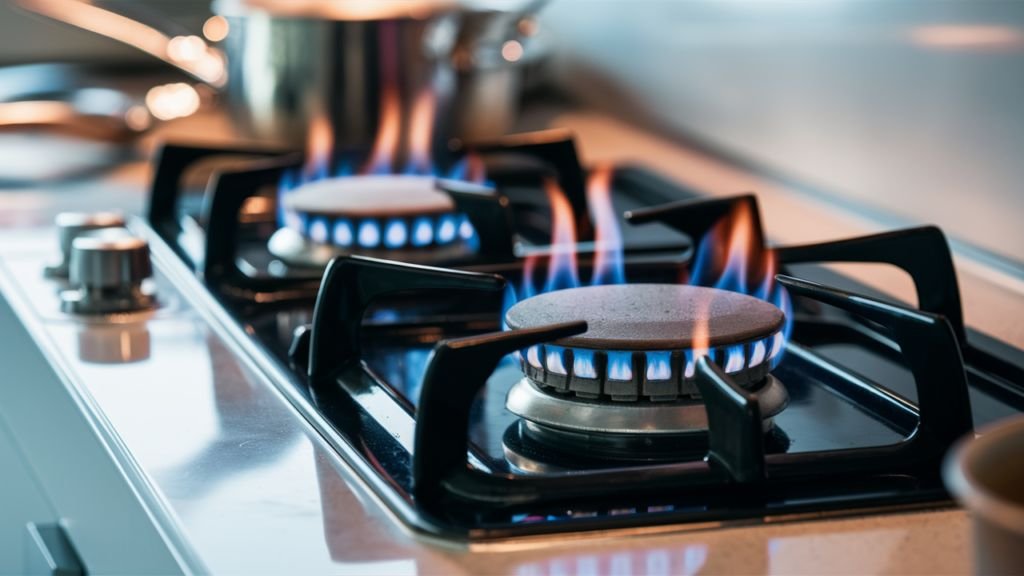
What you should see:
A sharp, steady blue flame with minimal flickering.
Why this matters:
A yellow flame not only slows cooking but also increases gas consumption.
Time-saving angle:
Instead of struggling with slow cooking, this quick adjustment restores full efficiency instantly.
- Listen to the clicking sound—it tells you everything
The ignition click is not just noise—it’s a clue.
Different sounds, different meanings:
Rapid continuous clicking:
Usually moisture or dirt around the igniter.
No clicking at all:
Possible ignition switch issue or power-related problem.
Clicking but no flame:
Gas flow issue or clogged burner.
Fast fix approach:
- If clicking is nonstop: dry and clean the igniter area.
- If silent: check power source (for auto-ignition stoves).
- If clicking but no flame: combine cleaning + gas check.
Pro insight:
Instead of randomly trying fixes, use the sound as a diagnostic shortcut.
This alone can cut troubleshooting time in half.
A quick practical checklist you can remember
When your stove stops working, don’t panic. Run through this mental list:
- Is the burner properly placed?
- Are the holes clean?
- Is everything dry?
- Is gas flowing?
- Is the flame color normal?
- What does the clicking sound indicate?
This sequence takes less than five minutes and solves most issues.
A short real-life troubleshooting story
Imagine this: you’re about to cook dinner, and the stove won’t light. You hear clicking, but no flame. Instead of calling for repair or getting frustrated, you:
- Remove the burner cap
- Notice slight moisture
- Wipe and dry it
- Clean a few clogged holes
- Reassemble carefully
You try again—and it works.
Total time: under 10 minutes.
This is the difference between guessing and knowing.
Why fast troubleshooting matters more than perfect knowledge
You don’t need to be an expert to fix common gas stove problems. What you need is a clear approach and a calm mindset.
Most delays happen because:
- People skip basic checks
- They assume the worst too early
- They try random fixes instead of structured ones
The tricks in this guide are designed to eliminate that confusion.
Small habits that prevent big problems
While troubleshooting is useful, prevention saves even more time. A few small habits can keep your stove running smoothly:
- Wipe spills immediately
- Avoid letting water sit near burners
- Clean burner holes weekly
- Check gas connections monthly
- Keep the stove dry after cleaning
These habits reduce the chances of sudden issues.
When to stop troubleshooting and seek help
Not every problem should be fixed at home. If you notice:
- Strong gas smell that doesn’t go away
- Damaged gas pipes or connections
- Ignition sparks failing completely over time
- Unusual noises from the gas line
It’s better to call a professional.
Knowing when to stop is just as important as knowing what to fix.
Frequently Asked Questions
- Why does my gas stove click but not ignite?
This usually happens due to moisture, clogged burner holes, or weak gas flow. Dry the burner, clean the holes, and check gas supply.
- Is it safe to clean burner holes with a pin?
Yes, as long as you use a thin object and do it gently. Avoid enlarging or damaging the holes.
- What causes a yellow flame on a gas stove?
A yellow flame is caused by improper air-to-gas ratio or dirt buildup. Adjust the air shutter and clean the burner.
- How often should I clean my gas stove burners?
Light cleaning can be done weekly, while deeper cleaning is recommended every 2–3 weeks depending on usage.
- Why does my stove stop working after cleaning?
Most likely due to moisture trapped in the ignition or burner area. Let everything dry completely before using again.
- Can I fix ignition problems myself?
Basic issues like dirt or moisture can be fixed easily. However, electrical or internal faults should be handled by professionals.
Final thoughts
A gas stove is one of those everyday tools we rarely think about—until it stops working. But the good news is that most problems aren’t complicated. They just require a bit of attention and the right approach.
These six fast troubleshooting tricks are not just quick fixes—they’re time-saving habits. Once you get used to them, you’ll find yourself solving stove problems almost automatically, without stress or wasted effort.
And that’s the real goal: not just fixing the stove, but doing it confidently, quickly, and without turning a small issue into a big one.

