


I’ll be honest — I used to think gas stove safety was something only paranoid people worried about. I’d cook, turn it off, and walk away. No second thoughts. No checks. Nothing.
Then one evening, after making a quick dinner, I went to bed and woke up to a faint smell in the kitchen. Turns out one of the burner knobs hadn’t fully clicked off. The gas had been leaking — slowly — for hours while I slept.
Nothing catastrophic happened, thankfully. But that morning changed how I think about my stove forever.
Since then, I’ve developed a simple 10-minute routine that I do every single day. It sounds like a lot, but honestly? It takes less time than brewing a cup of tea. And it’s saved me from at least two more close calls that I know of.
Let me walk you through exactly what I do — and why I think everyone with a gas stove should be doing the same.
2. Why Most People Ignore Gas Stove Safety (Until Something Goes Wrong)
Gas stoves are one of those things we completely take for granted. You use them every day. They work. So why would anything go wrong?
That’s exactly the trap.
The problem with gas stoves isn’t usually some dramatic explosion. It’s the quiet, invisible stuff — a tiny gas leak from a poorly seated knob, a clogged burner port that’s making the flame burn orange instead of blue, or a wet igniter that keeps clicking on its own long after you’ve walked away.
Most people don’t even know what a healthy burner looks like, let alone how to spot when something’s off.
I didn’t. Not until I started paying attention.
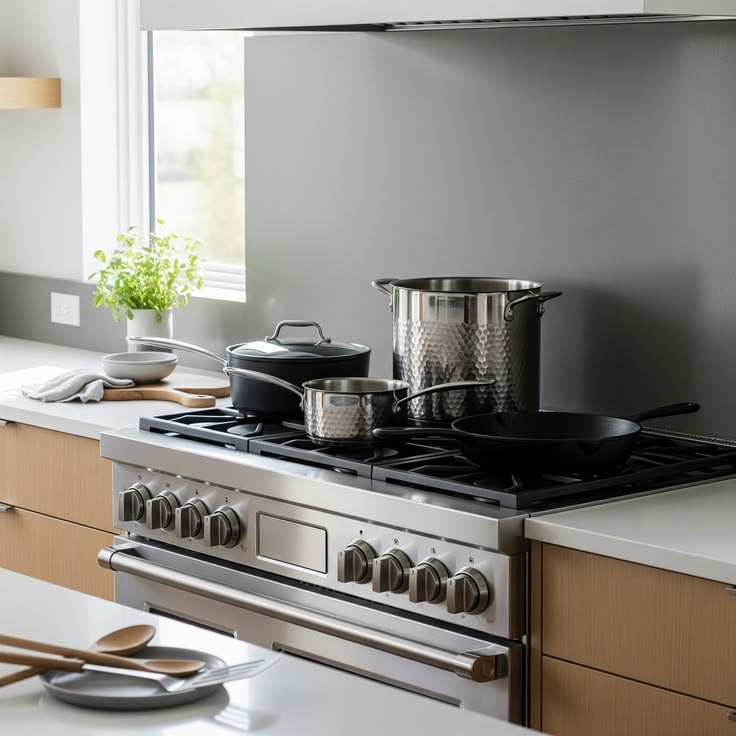
3. The Actual 10-Minute Routine (Step by Step)
Here’s what my routine looks like. I usually do this at night, after the last cooking session of the day. Some people prefer to do it in the morning. Either works — consistency matters more than timing.
Step 1 — The Sniff Test (30 seconds)
Before I do anything else, I walk into the kitchen and take a slow breath. I’m not being dramatic — I’m genuinely checking for any hint of that rotten egg or sulfur smell that indicates a gas leak.
Natural gas is odorless by itself, but gas companies add a chemical called mercaptan specifically so you can smell it. If you catch even a faint whiff, don’t touch any switches. Open windows and get out.
Most days, I smell nothing. And that 30-second check gives me real peace of mind.
Step 2 — Check Every Knob (1 minute)
I physically touch and turn every single knob — not just look at it. Knobs can look like they’re off but still be slightly open. I twist each one clockwise until I feel and hear the firm stop.
This is the habit that would have saved me that scary night. Looking is not enough. Touch every knob.
Step 3 — Wipe Down the Burner Caps and Grates (3–4 minutes)
This sounds like a cleaning step, and it is — but it’s also a safety step.
Food buildup around burner ports doesn’t just look gross. It actually blocks gas flow, which causes uneven or weak flames. Worse, it can cause the flame to burn in the wrong direction or snuff out mid-cook, leaving gas flowing without ignition.
I use a damp cloth for daily wiping and a soft toothbrush once a week to clean the burner port holes. No harsh chemicals needed — warm water and a drop of dish soap does the job.
If you’re dealing with stubborn buildup, check out these 11 easy cleaning habits that can genuinely save your stove — some of them I had no idea were even a thing.
Step 4 — Check the Flame Color (1 minute)
The next morning, when I fire up the stove for the first time, I watch the flames for about 30 seconds before putting anything on the burner.
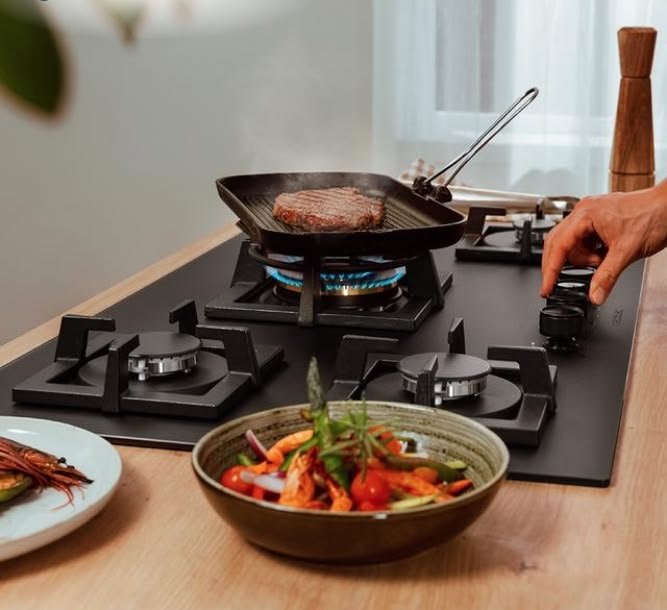
A healthy gas flame is almost entirely blue — maybe with the tiniest touch of yellow at the tips. If you’re seeing mostly orange or yellow flames, that’s a red flag. It usually means incomplete combustion, which can release carbon monoxide into your kitchen.
Common causes: blocked burner ports, wrong air-to-gas ratio, or the burner cap sitting slightly crooked after you cleaned it.
Step 5 — Listen for the Igniter (1 minute)
Turn each burner on, watch it light, and then listen. Once the flame is going, the clicking should stop completely within 2–3 seconds.
If your igniter keeps clicking after the burner is lit, you’ve got a problem — usually moisture, food debris, or a faulty igniter module. It’s annoying but also fixable. I dealt with this exact issue last year and found the fix surprisingly simple once I understood what was causing it.
Step 6 — The CO Detector Check (30 seconds)
I have a carbon monoxide detector mounted near the kitchen. Once a week, I press the test button to make sure it’s working. Batteries die. Sensors wear out. A dead CO detector is worse than no CO detector because you think you’re covered when you’re not.
If you don’t have one yet — get one. Seriously. It’s a 15-dollar investment that could save your life.
4. What I Actually Use for This Routine
You don’t need fancy gear. Here’s my actual setup:
| Item | What It Does | Cost Approx. |
|---|---|---|
| CO + Gas Detector Combo | Alerts for both carbon monoxide and gas leaks | $25–$50 |
| Soft-bristle toothbrush | Cleans burner ports without scratching | Under $2 |
| Dish soap + warm water | Daily burner cleaning | Already have it |
| Flashlight (or phone torch) | Checking burner ports up close | Already have it |
| Knob covers (optional) | Prevents accidental gas-on, great for homes with kids | $10–$15 |
The combo CO and gas detector is the one upgrade I’d push everyone toward. Mine is a basic model from a local hardware store and it’s been going strong for two years.
5. Mistakes I Made Before I Got This Right
Let me save you from some of the dumb things I did before I knew better.
Mistake 1 — Cleaning burner caps and putting them back wet
I’d wash the burner caps and immediately put them back on. Wet caps cause ignition problems and that annoying endless-clicking thing. Now I dry them with a towel and let them air dry for 10 more minutes before reassembling.
Mistake 2 — Ignoring the orange flame
For months I had one burner that burned orange-ish. I thought it was just “that burner.” Turns out the port holes were clogged with grease. A 5-minute cleaning fixed a problem I’d been ignoring for half a year. Here’s what weak or uneven flames usually mean and how to address them without calling a technician.
Mistake 3 — Assuming “off” means off
I’ve mentioned this already, but it’s worth repeating. I used to give the knob a quick turn and walk away. Now I turn until I feel the resistance stop, and I do it for every burner. Every time.
Mistake 4 — Not knowing what a gas smell actually smells like
I know that sounds ridiculous, but hear me out. I’d never smelled gas before — intentionally, in a controlled way. So the first time I caught a faint whiff, I wasn’t sure if it was gas or just something in the kitchen.
Do yourself a favor: next time your gas company is doing work in your area, ask a technician to briefly describe or demonstrate what a small leak smells like. Know what you’re looking for before an emergency happens.
6. The Safety Checks That Most People Skip
Beyond the daily routine, there are a few things worth doing monthly or seasonally that most people completely ignore.
Check the gas supply hose/connection
Behind your stove, there’s a flexible gas line connecting it to the wall supply. Over time, these can crack, corrode, or loosen. Once every few months, I pull the stove out slightly and visually inspect it. If there are any visible cracks or if the connection feels loose, that’s a professional call — not a DIY fix.
Clean under the stove
Grease and food debris that falls under and behind the stove is a fire hazard. I pull mine out and clean underneath it every 3–4 months. Boring job, but important.
Check the oven igniter too
If your stove has an oven, the oven igniter needs attention as well. If your oven is slow to heat up or the temperature feels inconsistent, the igniter may be wearing out. These are signs worth catching early. For a full walkthrough of troubleshooting steps you can do yourself, it’s worth bookmarking that guide before something actually goes wrong.
7. Quick Reference: Signs Your Stove Needs Attention
| Warning Sign | What It Likely Means | Action |
|---|---|---|
| Orange or yellow flame | Clogged ports or air mixture issue | Clean burner ports; adjust if needed |
| Igniter keeps clicking | Moisture or debris on igniter | Dry and clean igniter area |
| Weak flame on one burner | Partial blockage in gas port | Deep clean or replace burner cap |
| Gas smell without flame | Potential leak | Turn off gas, ventilate, call professionals |
| Stove slow to light | Igniter or gas pressure issue | Check for debris; call tech if persistent |
| CO detector going off | Carbon monoxide buildup | Evacuate and call gas company immediately |
8. The Mindset Shift That Actually Made This Stick
Here’s the honest part — knowing what to do and actually doing it consistently are completely different things.
What made this routine stick for me wasn’t fear. It was reframing it as maintenance, not paranoia.
I service my car. I update my phone’s software. I replace smoke detector batteries. Checking my stove for 10 minutes a day is no different — it’s just looking after something I use every single day and rely on completely.
Once I started thinking of it that way, it stopped feeling like extra work and started feeling like just… part of the kitchen.
My partner was skeptical at first — thought I was being obsessive. Now they do the knob check themselves every night before bed. Habits are contagious when people see the logic behind them.
9. What to Do If You Smell Gas Right Now
I want to include this because it matters and most people don’t actually know the correct steps:
- Do NOT turn any light switches or electrical switches on or off
- Do NOT use your phone inside the house — step outside first
- Leave all doors open as you exit to ventilate
- Turn off the gas supply valve (usually behind the stove or at the meter)
- Call your gas company from outside
- Do not re-enter until the all-clear is given by a professional
This isn’t meant to scare you. Gas stoves are safe when maintained properly. But knowing these steps before you need them is the entire point.
10. Final Thoughts
I’m not a professional technician. I’m just someone who had a near-miss and decided to take this more seriously.
The 10-minute routine I described took me maybe two weeks to turn into a real habit. Now I don’t even think about it — it’s just something I do, like locking the front door before bed.
If you take one thing from this article, let it be the knob check. Touch every knob, every time. Don’t just look.
And if your stove has been giving you trouble — clicking igniters, weak flames, burners that won’t light — don’t put off figuring it out. Most of these things are simpler to fix than you’d think.
Also worth reading: 7 Powerful Gas Stove Repair Basics Ideas to Fix Ignition Problems — if your igniter’s been acting up, this one has some genuinely useful fixes that most people overlook.

