
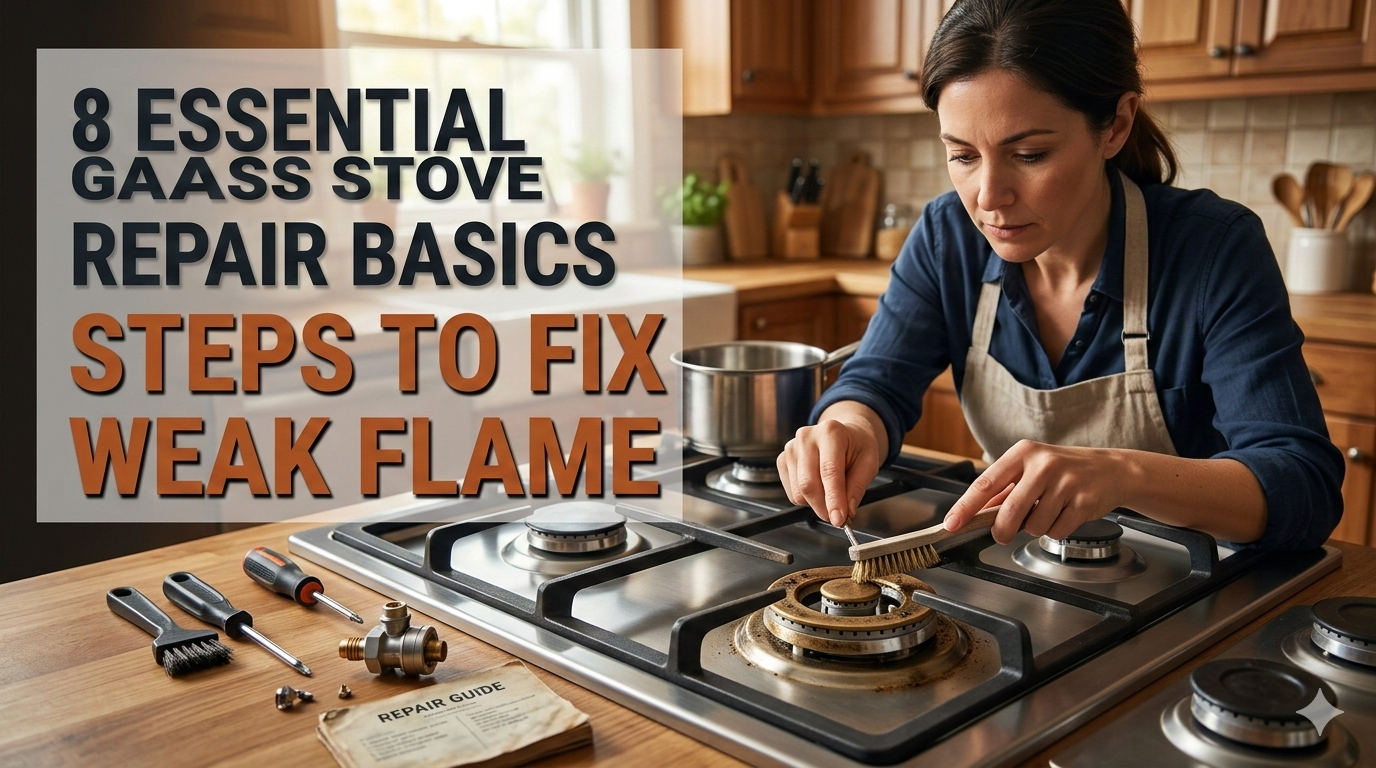
8 Gas Stove Repair Basics: What to Do about Weak Flame
Meta Description: Basic Gas stove repairs will help you save time and money. Fix a weak flame with these 8 steps to bring your stove back in action.
Is the flame coming from your gas stove small, uneven or almost nonexistent? You’re not alone. One of the most common gas stove problems homeowners encounter is a weak flame. The good news? About 90 percent of the time, you don’t need a professional or a lot of cash to address it.
With the right tips and tools, you could troubleshoot and fix the issue yourself. This guide will take you through step by step 8 essential gas stove repair basics so you can return to cooking with a strong, even flame.
Let’s get into it.
Why Is Your Gas Stove’s Flame So Weak?
Before diving into the steps to fix it, it’s helpful to know why this happens in the first place. If you have a weak flame, it often means gas isn’t reaching the burner properly. There can be several reasons for this to happen.
Common causes include:
| Cause | Description |
|---|---|
| Clogged burner ports | Food residue blocking the gas apertures |
| Dirty burner cap | Greasy debris preventing even distribution of the flame |
| Low gas pressure | Inadequate gas supply reaching the burner |
| Faulty regulator | The pressure control is out of order |
| Misaligned burner cap | Improperly positioned cap |
| Worn-out igniter | Weak spark affects the start-up of the flame |
| Blocked gas line | Internal blockage hinders proper delivery of gas |
| Defective valve | The control valve isn’t fully opening |
These problems are mostly repairable at home. Some — such as a bad regulator or clogged gas line — will require a technician. But first, some basics.
What You Should Have Before Getting Started
Preparing your tools in advance is a time and safety issue. Here’s a quick checklist:
- Mild dish soap and warm water
- A small brush or old toothbrush
- A pin, needle, or thin wire
- Dry cloth or paper towels
- Screwdriver (flathead and Phillips)
- Flashlight
- A receptacle for soaking parts
And always, make sure the stove is turned completely off before you get going. Shut off all the burner knobs. If it has recently been in use, allow the stove to cool down completely.
Step 1 — Turn the Stove Off and Allow to Cool
Dealing with gas stove repair basics, there are important safety considerations that always come first.
Do not attempt to repair a gas stove when it is hot or in use. Gas is flammable, and working on a hot stove gives you more opportunity for accidents.
Here’s what to do:
- Turn off the burner controls completely.
- If the stove was used recently, allow it to cool down for at least 30 minutes.
- Open a window or turn on a kitchen fan to ventilate.
- Do not use any open flames nearby while working on it.
⚠️ Important: If at any point you smell a strong odor of gas, don’t attempt to fix anything yourself. Exit the kitchen, open windows, and contact your gas company right away.
Step 2 — Take Off the Burner Grates and Cap
Once the stove cools down, you can start taking apart the surface components — nothing too complicated.
How to Safely Remove the Parts
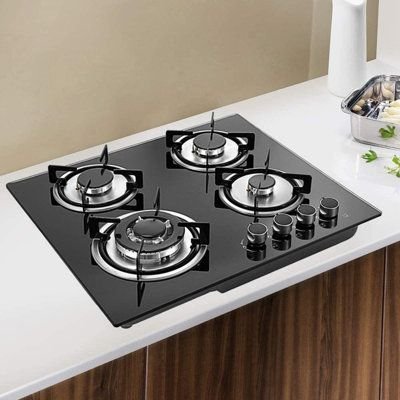
The vast majority of gas stoves share a basic layout:
- Grates — the heavy metal pieces you set pots on
- Burner cap — the round disc on top of the burner
- Burner head/base — the section below the cap with tiny holes
Lift the grates straight up. They typically just rest on the stove surface. Then lift off the burner cap. It should be removable without tools.
💡 Pro tip: Snap a quick photo before pulling anything off. This will help you remember precisely how everything goes back together.
Step 3 — Clean the Burner Cap Well
Dirty burner caps are among the leading causes of a weak gas stove flame. Grease, food residue and mineral buildup can block the small grooves that help distribute the flame evenly.
The Right Way to Clean It
Combine warm water with a few drops of dish soap in a bowl. Drop the burner cap in and allow it to soak for 15–20 minutes. This loosens hardened grease and makes scrubbing much simpler.
After soaking, scrub all surfaces — top, bottom and edges — with an old toothbrush. Pay close attention to the small notches or slots along the edges. These are the outlets where the flame emerges. If they’re blocked, you will have a weak, uneven flame.
Rinse well with clean water. Wipe off completely with a cloth or leave it to air dry. Do not replace any wet parts on the stove. If moisture gets on the igniter it can cause ignition issues or damage it.
Step 4 — Clean the Burner Ports With a Pin
This is among the top gas stove repair essentials for fixing a weak flame.
The burner head (the base under the cap) contains small holes known as burner ports. Gas escapes through these holes and ignites into a flame. When these ports become clogged — typically with boiled-over food or grease — the flame comes out weak, uneven or not at all.
How to Unclog the Ports
Use a pin, thin needle or piece of thin wire. Lightly guide it into each port hole to unclog any debris. Avoid using a toothpick — it may break off inside the hole and complicate matters. Do not try to widen the holes. That alters the flow of gas and can be dangerous.
Go around all the ports. You might notice tiny flakes of dried food drop out. This is perfectly normal — and a good indication that you’re making progress.
Once you have cleared the ports, puff lightly across the burner head to dislodge any loose debris. It can also be wiped clean with a dry cloth.
Step 5 — Check the Igniter and Clean
That little ceramic piece next to the burner is the igniter. It generates the spark that ignites the gas. If it is dirty or wet, it can create a weak spark — and that often results in a weak flame or one that is delayed.
Signs Your Igniter Needs Cleaning
- You hear clicking but the flame is slow to appear
- The flame starts small then grows
- You have a yellow or orange flame rather than blue
How to Clean the Igniter
Gently scrub around the igniter tip with a dry toothbrush. Avoid applying water directly to the igniter. Even the slightest bit of moisture can prevent a proper spark.
If the igniter appears cracked, broken or burnt, cleaning it will not help. Replace the damaged igniter. Replacement igniters are affordable and available at hardware stores or online.
Step 6 — Inspect the Burner Cap Alignment
This step is easy but often overlooked. A slightly misaligned burner cap can give you a weak, lopsided flame. The cap has a specific way it fits onto the burner base — when it’s not aligned, the gas can’t flow out evenly.
How to Check the Alignment
Reinstall the burner cap on the burner base. Look at it from the side. It should sit flat and level. If you push down lightly, it shouldn’t wobble. The notch or slot in the cap needs to be lined up with the igniter.
If it’s not resting flat, lift and reposition it. Some caps have a small arrow or groove indicating the correct direction.
Visual test: Upon relighting, view the flame from overhead. When aligned properly, a cap will create an even circular flame. If the flame is stronger on one side or absent in some spots, the cap might still be slightly off.
Step 7 — Test the Gas Pressure and Valve
If you have cleaned everything and the flame is still weak, there may be a problem with gas pressure or the burner control valve.
Low Gas Pressure
Low gas pressure means not enough gas is getting to the burner. This can happen if:
- Multiple appliances are operating simultaneously
- Your home’s gas supply is temporarily reduced
- The regulator is failing
A quick test: Turn on a single burner. Is the flame still weak? Try a different burner. If all burners have a weak flame, the problem is more likely with the gas supply or regulator — not the burner itself.
According to the U.S. Consumer Product Safety Commission, gas appliance issues related to pressure or supply should always be assessed by a qualified technician.
The Control Valve
A knob on the burner is linked to a control valve. Turning the knob opens the valve and allows gas to flow. If the valve is partially blocked or worn out, it won’t open all the way — and you’ll get a weak flame even on high.
Try slowly turning the knob from low to high. Does the flame increase smoothly? Or does it stay the same? If the flame does not respond to the knob, you may need to call a professional to inspect the valve.
Step 8 — Put the Burner Back Together and Test
You’ve cleaned and checked everything. Time to put it all back together and test.
Reassembly Checklist
| Part | What to Check |
|---|---|
| Burner head | Flat on the stove surface |
| Burner cap | Centered and level on top of burner head |
| Grates | Properly in place, not wobbling |
| Igniter | Clean and dry |
| Knobs | Turned all the way to “off” before testing |
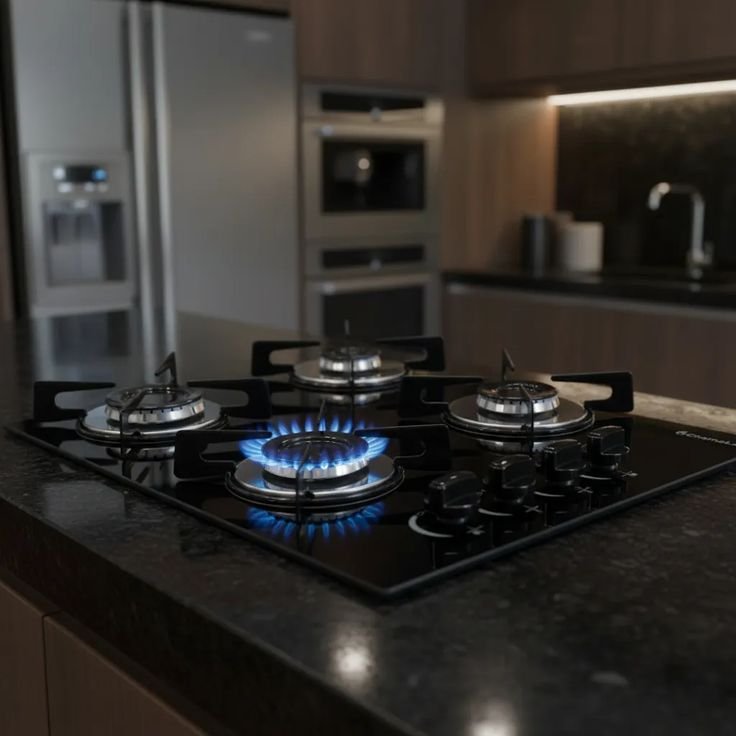
When everything is back in position, slowly turn on the burner knob. Watch for the igniter spark. Within 2–4 seconds the flame should be visible — even, blue and uniform all around.
A healthy flame is:
- Blue with a small yellow tip
- Even and circular
- Approximately 1–2 inches high on medium setting
If the flame is still weak after all these steps, or you’re seeing yellow or orange throughout, there may be a deeper issue — such as a blocked internal gas line or a failing regulator. At that point, enlisting the help of a licensed gas technician is the safest course of action.
When to Call a Professional
Most weak flame problems are DIY fixes. But some problems fall outside the scope of basic gas stove maintenance and will require a professional.
Call a technician if:
- You smell gas constantly, even when you aren’t using the stove
- You have a yellow or orange flame that persists after cleaning
- One burner has no flame at all despite thorough cleaning
- The gas line or regulator appears to be damaged
- You hear hissing near the stove
Gas is not something you want to take chances with. A licensed technician can safely identify deeper problems and ensure your stove is functioning correctly.
At-Home Fix vs. Professional Repair: Quick Breakdown
| Issue | DIY Fix | Call a Pro |
|---|---|---|
| Clogged burner ports | ✅ Yes | ❌ No |
| Dirty burner cap | ✅ Yes | ❌ No |
| Misaligned burner cap | ✅ Yes | ❌ No |
| Dirty igniter | ✅ Yes | ❌ No |
| Faulty igniter (cracked) | ⚠️ Maybe | 👨🔧 Recommended |
| Low gas pressure | ❌ No | ✅ Yes |
| Damaged control valve | ❌ No | ✅ Yes |
| Gas leak | ❌ No | ✅ Yes (urgent) |
How to Keep Your Gas Stove Flame Strong
Prevention is better than cure. Once your flame is back, keep it that way by following these simple habits.
Monthly Maintenance Routine
- Wipe burner caps after cooking, particularly after boilovers
- Inspect burner ports monthly for early clogging
- Clean grates to prevent grease from falling into burners
Every 3–6 Months
- Deep clean every part of your burners
- Check igniters for signs of wear or discoloration
- Ensure all caps are laying flat and aligned
Yearly
- Check gas pressure and regulator with a technician
- Look for signs of wear on knobs and valves
Gas Stove Repair Basics: FAQs
Q1: How can I tell if my gas stove flame is weak? A normal flame is blue, even and approximately 1–2 inches in height on medium heat. If the flame is very small, mostly yellow or flickering constantly, it is too weak and should be addressed.
Q2: Can I clean the igniter with water? Keep moisture usage around the igniter to a minimum. If you do use a damp cloth, dry the area thoroughly before relighting. Water can cause it to spark poorly or damage it.
Q3: Can I safely repair a weak flame myself? Yes, for most common problems such as clogged ports or a dirty burner cap. Make sure the stove is always off and cool. If at any point you smell gas, stop what you’re doing and call your gas company.
Q4: How long does it take to clean and repair a weak flame? Typical tasks take 30–45 minutes. Soaking and drying parts may take an additional 20–30 minutes. Total cleaning time is usually under 90 minutes.
Q5: What does it mean when my flame is yellow instead of blue? A yellow flame typically indicates incomplete combustion — the gas is burning inefficiently. This is usually due to clogged burner ports or a misaligned cap. If cleaning doesn’t resolve it, call a technician.
Q6: Does a weak flame impact cooking performance? Absolutely. A low flame takes longer to heat food, results in uneven cooking and wastes gas. Repairing it will improve both cooking results and efficiency.
Q7: Are special tools needed for gas stove repair? No. Most repairs only require basic household items such as a toothbrush, pin, dish soap and a screwdriver. Surface-level cleaning requires no special tools.
Q8: How often should I clean my gas burners? A light clean after each use and a deep clean every 1–3 months will keep the burners in good shape and help prevent weak flame issues.
Conclusion
A weak gas stove flame is frustrating — but it’s nearly always fixable. This guide covers 8 gas stove repair basics, taking you from identifying the cause all the way to reassembling and testing your burner.
Quick summary of steps:
- Turn off and cool the stove
- Remove grates and burner cap
- Deep clean the burner cap
- Clear clogged burner ports
- Clean the igniter
- Check burner cap alignment
- Test gas pressure and control valve
- Reassemble and test the flame
All it takes is soap, water and a toothbrush. It may take 30–60 minutes, but you could save a service call charge and get your stove working like new.
Keep up with regular maintenance, and you’ll rarely have to deal with a weak flame again. And when an issue goes beyond a little cleaning, reach out to the pros. Your safety always comes first.

