
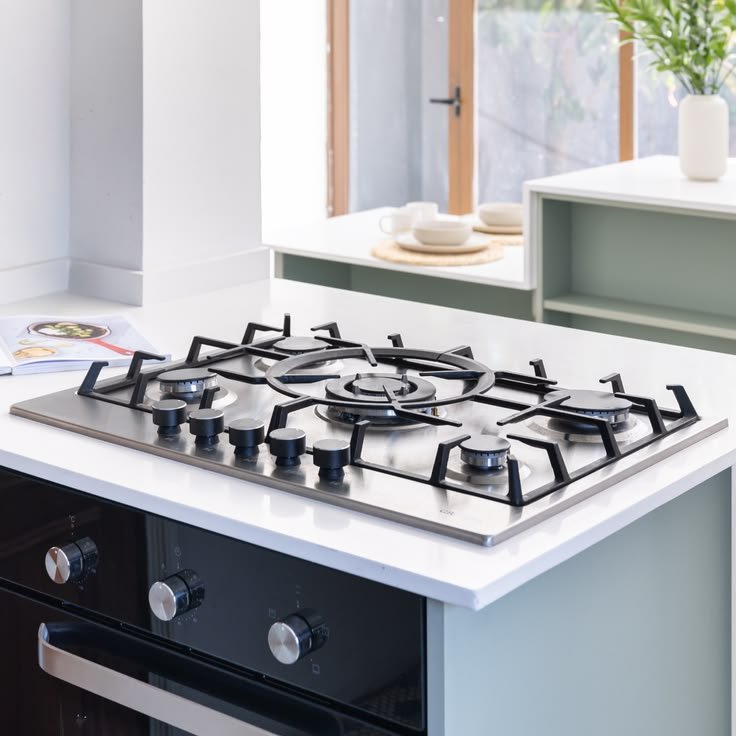
Last Tuesday, I was halfway through making dinner when my front burner just… stopped lighting. Not a dramatic explosion or anything — just click, click, click, and nothing. The flame refused to show up. My pasta was waiting. I was annoyed.
I’ve been there more times than I’d like to admit. And over the years, I’ve picked up enough hands-on experience fixing my own gas stove that I no longer panic when something goes wrong. Most of the time, the fix takes less than 15 minutes and costs nothing.
So if your stove is acting up right now — weak flame, igniter clicking endlessly, burner not lighting, uneven fire — keep reading. These are real fixes that actually work.
1. Clean the Burner Cap First (Seriously, Do This Before Anything Else)
Nine times out of ten, a burner that won’t light or burns unevenly has a clogged burner cap. Food debris, grease, and boiled-over liquids block the tiny gas ports, and the flame either doesn’t come out right or doesn’t come out at all.
What to do:
- Remove the grate and lift off the burner cap (it just sits there — no screws)
- Soak it in warm soapy water for 10–15 minutes
- Use a toothpick or a thin needle to poke through each port hole
- Rinse, dry completely, and place it back
The drying part matters more than people think. I once put a damp cap back and wondered why the igniter kept clicking without lighting. A fully dry cap made the difference immediately.
2. 1. Realign the Burner Cap Properly
This one sounds too simple to be real, but it works. The burner cap needs to sit perfectly flat and centered on the burner base. If it’s even slightly tilted or off-center after cleaning (or after someone bumped it while cooking), the flame won’t distribute evenly.
Just lift it off, set it back down carefully, and make sure it’s seated flat. No tools needed. Takes about 10 seconds.
I’ve watched my wife cook and then drop the cap back loosely after cleaning — and then wonder why one side of the flame looked yellow and weak. Realigning it fixed it instantly.
3. Dry Out a Wet Igniter
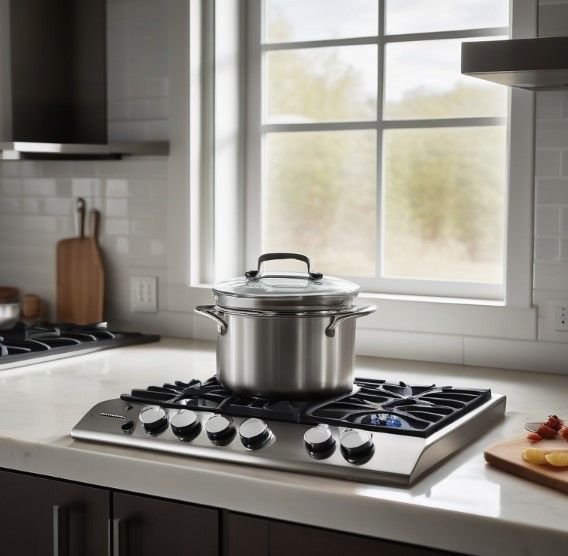
If your igniter is clicking non-stop even when the knob is off, there’s a good chance moisture got into it. This happens a lot after you wipe down the stovetop or after something boils over.
What to do:
- Turn off all burners and make sure the gas knob is off
- Use a dry cloth to wipe around the igniter (that small white ceramic tip next to the burner)
- If it’s still clicking, aim a hairdryer on a low setting at the igniter for 1–2 minutes
- Let it air out for another 10 minutes before trying again
I used to ignore this clicking and just unplug the stove to make it stop. That’s a terrible habit. Drying it out properly is the right fix and takes almost no time.
For more on this, check out 8 Smart Gas Stove Repair Basics: Solutions for Clicking Igniters — it goes deeper into exactly why this happens.
4. Check the Gas Supply Line
Before you tear anything apart, just confirm the basics. Is the gas supply valve fully open? The valve is usually behind or under the stove — a lever that should be parallel to the pipe when it’s on.
Also, if you have multiple appliances running on the same gas line (like a water heater or dryer), make sure your supply pressure isn’t being split too thin. I’ve had a weak flame issue that turned out to be nothing more than the valve being 80% open instead of fully open. Embarrassing, but a real fix.
| Symptom | Likely Cause | Quick Fix |
|---|---|---|
| No flame at all | Gas off or igniter fault | Check valve, dry igniter |
| Weak/small flame | Clogged ports or low pressure | Clean burner cap, check valve |
| Uneven flame | Misaligned or dirty cap | Realign or clean cap |
| Endless clicking | Moisture on igniter | Dry with cloth or hairdryer |
| Yellow/orange flame | Blocked ports or wrong air mix | Clean ports, adjust air shutter |
5. Unclog the Burner Ports with a Needle
If the flame looks uneven — strong on one side, missing on another — specific ports are clogged. You don’t need to replace anything. A simple sewing needle or a thin piece of wire can clear them out.
Step-by-step:
- Remove the burner cap and base (the base usually lifts right off too)
- Hold the cap up to a light — you’ll literally see which holes are blocked
- Push the needle through each blocked hole gently (don’t enlarge the hole, just clear the debris)
- Rinse with warm water and let it dry completely
- Reassemble and test
Don’t use a toothpick for this — it can break off inside the port and make things worse. A metal needle or a thin guitar string works perfectly.
6. Adjust the Air-to-Gas Mixture (The Air Shutter Trick)
A healthy flame should be blue with maybe a tiny bit of yellow at the tip. If yours is mostly yellow or orange and making a roaring sound, the air-to-gas ratio is off.
Most burners have a small air shutter near the base of the burner tube — it’s a little sliding plate or collar that you can rotate to adjust how much air mixes with the gas.
To adjust:
- Turn the burner on to medium
- Locate the shutter at the base of the burner tube (you may need to pull the stove away from the wall slightly)
- Slowly open the shutter (let in more air) until the flame turns blue
- If the flame lifts off or blows out, close the shutter slightly
This fix changed my cooking quality noticeably. My risotto stopped tasting slightly off after I fixed a yellow flame burner that had been running wrong for months.
7. Clean the Igniter with a Dry Toothbrush
The igniter (the ceramic spark electrode) can get coated in grease, and that coating insulates it enough to prevent sparking properly. You don’t need any liquids for this — just a dry, stiff toothbrush.
Brush around the white ceramic tip gently. You’ll sometimes see a visible black or brown residue come off. After cleaning, try the burner. Often the spark becomes stronger and more reliable right away.
Do NOT use water directly on the igniter. And never use a metal brush — you can scratch the ceramic and permanently damage it.
You can read more practical tips like this in 7 Powerful Gas Stove Repair Basics Ideas to Fix Ignition Problems — a solid guide if ignition is your main headache.
8. Re-seat or Replace the Igniter Wire
Sometimes the wire connecting the igniter to the spark module gets loose or slightly burnt at the connector. This is more of an intermediate fix, but it’s still DIY-friendly.
What to check:
- Pull the stove out slightly and look at the wires running to each burner’s igniter
- Look for any wires that have pulled loose from their connectors
- Press any loose connectors firmly back into place
- Check for any visible melting or burn marks on the wire insulation
If a wire is actually burned through, you’ll need a replacement igniter wire — they’re inexpensive (usually under $10) and available on Amazon or at appliance parts stores. The brand and model number of your stove is usually printed on a label inside the door panel or on the back.
9. Fix a Burner That Lights but Immediately Goes Out
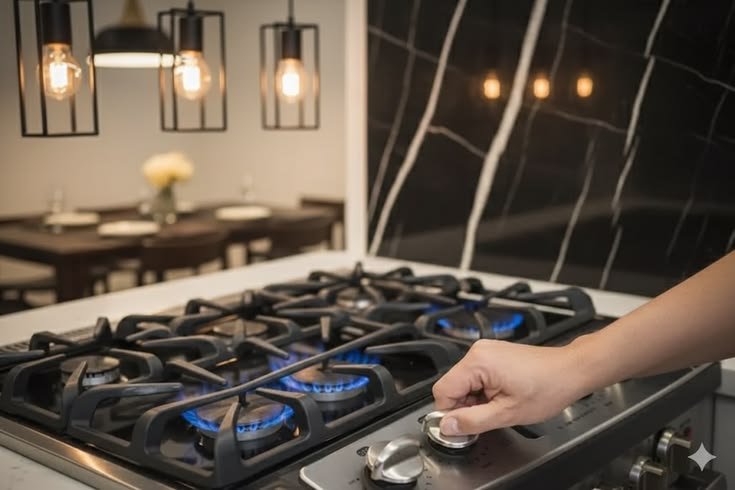
This one stumped me for a long time. The burner would light up fine, but the moment I released the knob, it went out. The culprit is usually the thermocouple — a small safety sensor that detects whether the flame is actually burning.
What’s happening: The thermocouple needs heat to stay open (let gas flow). If it’s dirty or mispositioned, it doesn’t sense the flame and shuts the gas off immediately.
What to do:
- Turn off the stove and let it cool completely
- Locate the thermocouple — it’s the thin copper tube that points directly into the burner flame area
- Gently clean it with fine steel wool or an emery cloth (just a light polish)
- Check if it’s bent away from the flame path — it should sit close enough to actually be touched by the flame
- Gently bend it back toward the flame if needed
After this fix, hold the knob in for 10–15 seconds after lighting to give the thermocouple time to heat up. If the issue persists, the thermocouple itself might need replacement — also a cheap part.
| Fix Type | Tools Needed | Difficulty | Cost |
|---|---|---|---|
| Clean burner cap | Soapy water, toothpick | Very Easy | Free |
| Realign burner cap | None | Very Easy | Free |
| Dry igniter | Dry cloth, hairdryer | Very Easy | Free |
| Clean igniter | Dry toothbrush | Easy | Free |
| Clear clogged ports | Needle or thin wire | Easy | Free |
| Adjust air shutter | None (maybe screwdriver) | Medium | Free |
| Fix thermocouple | Emery cloth | Medium | Free–$15 |
| Replace igniter wire | Screwdriver, new wire | Medium | $5–$15 |
10. Do a Proper Deep Clean of the Whole Burner Assembly
If multiple burners are acting up at the same time or your stove has been grumpy for a while, the best fix is a full deep clean. I try to do this every few months, and honestly it’s the reason my 8-year-old stove still runs like new.
Full burner deep clean routine:
- Remove all grates and soak them in hot soapy water (add some baking soda for tough grease)
- Lift off every burner cap and base
- Soak caps and bases in a 1:1 vinegar and water solution for 20 minutes
- Use an old toothbrush to scrub all surfaces, especially the port holes
- While everything soaks, wipe down the stovetop surface with a degreaser
- Use a toothpick to clear every single port
- Dry everything — I leave parts on a towel for at least 30 minutes, or use the hairdryer
- Reassemble carefully, making sure everything is seated correctly
The 11 Easy Gas Stove Repair Basics Cleaning Habits That Saved My Stove article has a really practical breakdown of habits to maintain after this kind of deep clean.
Common Mistakes to Avoid
A few things I’ve learned the hard way so you don’t have to:
Don’t put wet parts back. This is the number one cause of post-repair problems. Always let everything dry completely — at least 20–30 minutes or use a hairdryer.
Don’t use sharp metal objects on igniters. The ceramic is fragile. A metal pick can chip it and then you’re looking at a replacement.
Don’t over-tighten anything. Gas stove parts are meant to fit snugly but not be forced. If something doesn’t fit easily, it’s probably not aligned right.
Don’t ignore a gas smell. If you smell gas and it doesn’t go away after you turn the burner off, don’t keep fiddling. Open windows, leave the house, and call your gas company. None of the DIY fixes in this article are worth ignoring an actual gas leak.
Don’t assume it’s the igniter when it’s actually the cap. This was my mistake for a long time. I replaced an igniter once that was perfectly fine — the real problem was a blocked burner cap. Always clean first, replace later.
One More Thing Before You Call a Technician
Most people call a technician the moment their stove misbehaves. And sometimes that’s absolutely the right call — if you smell gas, if there’s visible damage to internal components, or if the stove is consistently failing in ways you can’t diagnose.
But for everyday issues — clicking igniters, weak flames, burners not lighting, uneven fire — the fixes above genuinely solve the problem 80–90% of the time. I’ve saved myself several service call fees just by taking 15 minutes to clean and check things properly.
The tools you need are already in your kitchen: a toothpick, a dry toothbrush, dish soap, a needle, and maybe a hairdryer. That’s it.
Start with the simplest fix first (clean the cap, dry the igniter) before moving to anything more involved. You’ll be surprised how often the simplest thing is all it takes.
Also worth reading: 9 Easy Gas Stove Repair Basics Troubleshooting Steps Anyone Can Try — this covers a wider range of common stove problems with beginner-friendly troubleshooting steps, including some issues I didn’t cover here.

