

7 easy gas stove repair basics installation tips for beginners
There’s something quietly empowering about understanding how the tools in your home actually work. A gas stove, in particular, is one of those everyday appliances that feels simple on the surface—turn a knob, light a flame—but underneath that simplicity lies a system of valves, pressure, air mixing, and ignition. When something goes wrong, many beginners assume it’s too risky or technical to handle. In reality, with the right awareness and a few foundational principles, a lot of common issues can be diagnosed, prevented, and even fixed safely.
This guide is designed to feel less like a technical manual and more like a conversation with someone who has been there—someone who has smelled that faint gas odor, struggled with a stubborn burner, or wondered why the flame suddenly turned orange. You’ll find not only step-by-step tips but also small checklists, real-life scenarios, and simple explanations that make the process feel approachable.
Before diving into the seven core tips, there’s one important idea to carry with you throughout: safety always comes first. Gas is efficient and reliable, but it demands respect. If you ever feel unsure, it’s better to pause and seek professional help.
Let’s begin.
—
tip 1: understanding how your gas stove actually works
Most beginners skip this step, but it’s the one that makes everything else easier.
A gas stove operates on a simple concept: fuel (natural gas or LPG) mixes with air and ignites to produce a controlled flame. But several small components must work together perfectly:
• the gas supply line delivers fuel
• the control valve regulates flow
• the burner mixes gas with air
• the ignition system creates a spark
• the flame ports distribute the fire evenly
When any of these components is slightly off—blocked, loose, or worn—you’ll see symptoms like weak flames, uneven heating, or delayed ignition.
Think of it like breathing. If your airflow is restricted or your rhythm is off, everything feels wrong. The same applies here.
mini checklist:
Before troubleshooting anything, ask yourself:
– is the gas supply consistent?
– does the ignition click normally?
– is the flame color blue or something else?
These simple observations often point directly to the problem.
—
tip 2: safe installation starts with proper positioning
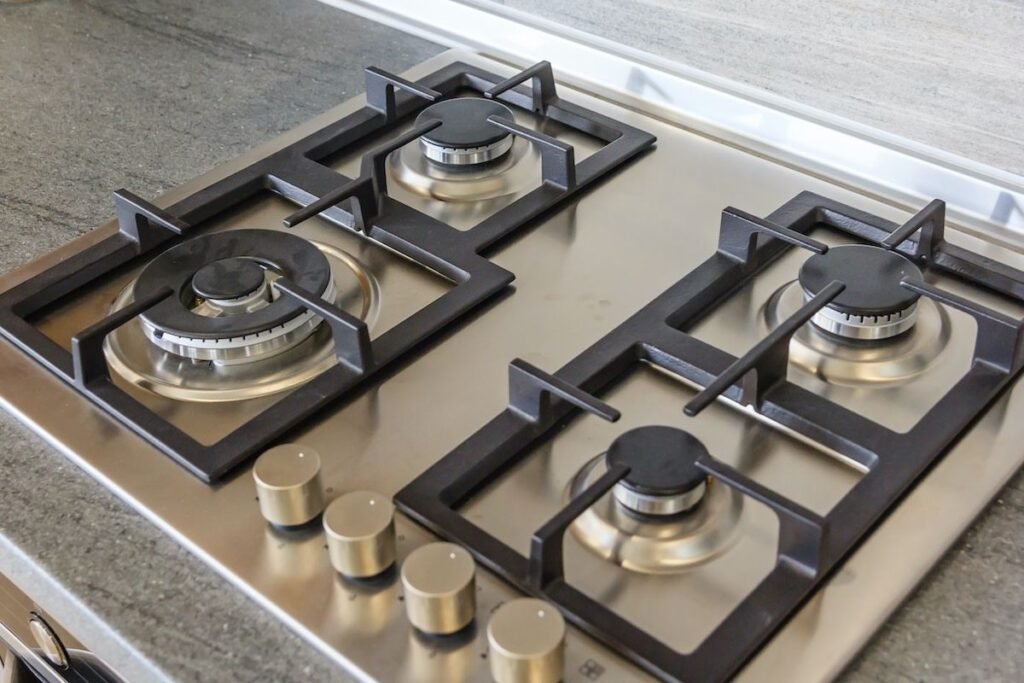
Installation is not just about connecting a pipe and lighting a flame. The position of your stove matters more than most people realize.
A poorly placed stove can lead to overheating, poor ventilation, or even dangerous gas buildup.
Here’s what beginners should focus on:
- ventilation
Always install your stove in a well-ventilated area. A kitchen window or exhaust fan is not optional—it’s essential. - level surface
If the stove is tilted, gas distribution inside the burner becomes uneven. This can cause inconsistent flames or even damage over time. - safe distance
Keep the stove away from flammable materials like curtains, wooden cabinets, or paper items. Even a small flame flare-up can become risky.
real-life scenario:
A beginner installs a stove too close to a wall. Over time, heat discolors the paint and weakens the surface. Eventually, a small crack forms, allowing heat to concentrate further. This kind of slow damage is avoidable with better spacing.
installation reminder:
Measure twice, place once.
—
tip 3: checking gas connections the right way
One of the most critical steps in installation or repair is ensuring there are no leaks.
The good news is, you don’t need fancy tools to do a basic check.
soap solution method:
Mix water with a little dish soap and apply it to the gas connection points. Turn on the gas slightly (without igniting). If bubbles form, there’s a leak.
This method is simple but incredibly effective.
what beginners often do wrong:
They rely on smell alone. While gas has a distinct odor added for safety, small leaks may not always be noticeable.
connection tips:
– use proper fittings, not makeshift solutions
– avoid over-tightening, which can damage threads
– check connections regularly, not just during installation
small habit that helps:
Make it a routine to check connections once every few months. It takes less than five minutes.
—
tip 4: cleaning burners is not optional
If your flame is uneven, weak, or orange instead of blue, the burner is likely dirty.
Over time, food particles, grease, and dust clog the tiny holes (ports) in the burner. This disrupts the gas-air mixture.
simple cleaning routine:
step 1: remove the burner cap
step 2: soak it in warm, soapy water
step 3: use a soft brush or toothpick to clear blocked holes
step 4: dry completely before placing it back
important note:
Never use sharp metal objects aggressively. You might enlarge the holes, which changes how gas flows.
visual cue:
A clean burner produces a steady blue flame. If you see yellow or orange, something is off.
quick comparison:
clean burner → quiet, even flame
dirty burner → noisy, flickering flame
—
tip 5: fixing ignition problems without panic
Few things are more frustrating than a stove that won’t ignite.
Before assuming the worst, check these common causes:
- moisture
If you’ve recently cleaned the stove, water may have seeped into the ignition system. - food debris
Small particles can block the spark area. - worn-out igniter
Over time, the spark generator may weaken.
basic troubleshooting steps:
– dry the burner completely
– clean around the ignition point
– listen for the clicking sound
if there’s no clicking:
The issue might be electrical (for auto-ignition stoves). Check the power source or battery.
manual workaround:
Use a lighter carefully while troubleshooting.
confidence tip:
Ignition problems often look serious but are usually simple fixes.
—
tip 6: understanding flame color and what it means
Your stove flame tells a story—if you know how to read it.
blue flame:
This is what you want. It means efficient combustion.
yellow or orange flame:
This usually indicates incomplete combustion, often due to:
– dirty burners
– poor air supply
– incorrect gas pressure
why it matters:
Incomplete combustion can produce carbon monoxide, which is dangerous.
beginner-friendly test:
Turn on the burner and observe for a few seconds. A stable blue flame means everything is working well.
if the flame changes suddenly:
That’s your cue to inspect the system.
small insight:
Your stove is constantly “communicating” through its flame. Pay attention.
—
tip 7: knowing when to repair and when to call a professional
This might be the most important tip of all.
There’s a difference between basic maintenance and complex repair.
safe to do yourself:
– cleaning burners
– checking for leaks
– replacing simple parts like knobs or caps
call a professional for:
– major gas leaks
– internal valve issues
– persistent ignition failure
– strong gas smell with no visible source
rule of thumb:
If the problem involves internal gas flow or you feel uncertain, don’t risk it.
there’s no shame in asking for help. In fact, it’s the smartest move in many situations.
—
a simple beginner’s routine for gas stove care
Instead of waiting for problems, follow this weekly and monthly routine:
weekly:
– wipe the surface
– check burner cleanliness
monthly:
– inspect gas connections
– test flame quality
– clean thoroughly
every 6 months:
– do a detailed inspection
– consider professional servicing
consistency beats emergency repairs.
—
common mistakes beginners should avoid
Even with the best intentions, beginners often make small mistakes that lead to bigger issues.
here are a few to watch out for:
– ignoring small flame changes
– delaying cleaning
– using low-quality replacement parts
– forcing knobs or components
– assuming all problems are complicated
learning from these mistakes early saves time, money, and stress.
—
a short reflection: learning by doing
There’s a moment, usually after your first successful fix, when something shifts. You realize that the appliance you once feared is actually understandable. Not simple, but not mysterious either.
Gas stove repair isn’t about becoming an expert overnight. It’s about building familiarity. Each small task—cleaning a burner, checking a connection—adds to your confidence.
And that confidence changes how you approach other things in your home.
—
frequently asked questions
- is it safe for beginners to repair a gas stove?
Yes, as long as you stick to basic tasks like cleaning and checking connections. Avoid complex internal repairs unless you have proper training. - how often should i clean my gas stove burners?
Ideally once a week for light cleaning and once a month for deeper cleaning. Regular maintenance prevents most common issues. - what should i do if i smell gas in my kitchen?
Turn off the gas supply immediately, open windows for ventilation, and avoid using electrical switches. If the smell persists, contact a professional. - why is my gas stove flame orange instead of blue?
This usually happens بسبب dirt in the burner or improper air-gas mixture. Cleaning the burner often solves the problem. - can i install a gas stove by myself?
Basic installation is possible if you follow safety guidelines, but it’s recommended to have a professional check the setup, especially for gas line connections. - what causes a gas stove to click but not ignite?
This can be due to moisture, dirt near the igniter, or a weak spark. Cleaning and drying the area usually fixes it.
—
In the end, learning these basics isn’t just about saving money or avoiding inconvenience. It’s about understanding your space, taking ownership of your environment, and developing practical skills that stay with you for life.
Start small. Stay safe. And don’t underestimate how much you can learn by simply paying attention.

