
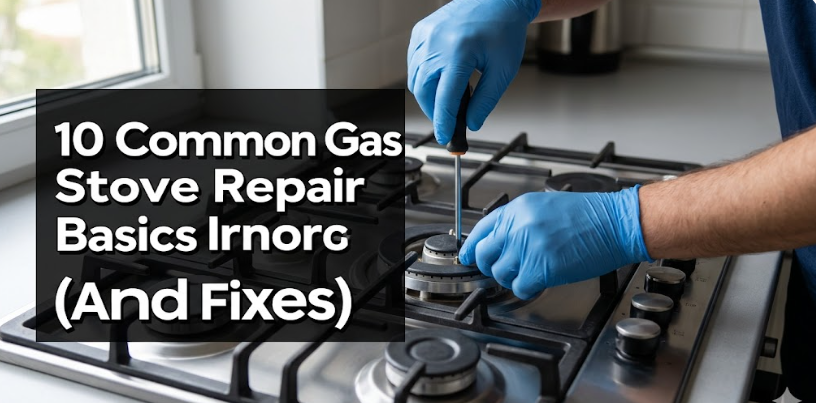
10 Common Gas Stove Repair Basics Installation Errors And Fixes
There is something quietly satisfying about a gas stove that works exactly the way it should. The flame lights instantly, burns evenly, and responds to every small adjustment with precision. But that kind of reliability rarely comes by accident. More often than not, it is the result of careful installation—and just as often, it is the result of learning from mistakes.
If you have ever dealt with weak flames, clicking igniters, gas smells, or burners that simply refuse to cooperate, chances are the root of the problem lies in how the stove was installed or set up. What makes things tricky is that many of these errors are not dramatic. They are subtle, easy to overlook, and sometimes even look “good enough” at first glance.
This guide walks through ten of the most common gas stove installation errors people make, along with practical, real-world fixes. It is not just a checklist; it is a way of understanding how your stove actually works so that you can avoid repeating the same frustrations.
error 1: loose or improperly sealed gas connections
One of the most common installation mistakes is not securing gas connections properly. It might seem like tightening the pipe or hose is enough, but gas connections require more than just force—they require precision.
When connections are even slightly loose or poorly sealed, tiny amounts of gas can escape. You may not always smell it immediately, but over time it becomes noticeable. In some cases, the stove may also struggle to maintain a steady flame.
The fix is straightforward but important. Always use a proper gas-rated thread sealant or Teflon tape designed specifically for gas lines. Wrap it correctly around the threads before tightening. Once installed, test the connection using a simple soap solution. If bubbles form, there is a leak that needs to be corrected immediately.
This small step can prevent one of the most dangerous and frustrating issues in gas stove setup.
error 2: incorrect regulator installation
The regulator controls the pressure of the gas entering your stove. Installing it incorrectly—or skipping it altogether—can lead to inconsistent flames, loud burner noise, or even damage to internal components.
Some people install the regulator backwards without realizing it. Others use a regulator designed for a different gas type.
Fixing this requires checking the arrow on the regulator body, which indicates the direction of gas flow. Make sure it is aligned correctly. Also ensure that the regulator matches your gas source, whether it is LPG or natural gas.
A properly installed regulator brings immediate improvement in flame stability and performance.
error 3: using the wrong type of gas nozzle
Gas stoves are designed for specific types of gas, and each type requires a different nozzle size. LPG and natural gas do not behave the same way, and using the wrong nozzle disrupts combustion.
If you install a stove without checking the nozzle compatibility, you might end up with yellow flames, soot buildup, or burners that do not ignite properly.
The fix involves confirming your gas type and installing the correct jets or nozzles. Many stoves come with interchangeable nozzles for this reason. If you are unsure, consult the manual or a technician before proceeding.
It is a small detail, but it makes a significant difference in how efficiently your stove runs.
error 4: poor ventilation setup
Ventilation is often treated as an afterthought, but it plays a major role in gas stove safety and performance. Without proper airflow, combustion becomes incomplete, leading to weak flames and carbon buildup.
In kitchens where ventilation is limited, users often notice lingering smells, discomfort, or even headaches after prolonged cooking.
Fixing this does not always require major renovations. Start by ensuring there is at least one functional exhaust fan or chimney above the stove. Keep nearby windows open when cooking. Avoid installing the stove in tight, enclosed spaces without airflow.
Good ventilation not only improves stove performance but also makes the kitchen environment healthier.
error 5: uneven stove placement
A gas stove must sit level on the countertop. If it tilts even slightly, the burners may distribute gas unevenly, leading to irregular flames and cooking issues.
Many people overlook this because the tilt may not be obvious at first. But over time, you may notice that one side of a pan heats faster than the other.
The fix is simple. Use a spirit level to check the alignment of the stove. Adjust the legs or place small supports under the base until it sits evenly. Some modern stoves come with adjustable feet for this purpose.
This small correction improves both cooking results and burner efficiency.
error 6: ignoring burner alignment during installation
Burners are designed to sit perfectly aligned with the gas outlet and ignition system. If they are not positioned correctly, the flame may not spread evenly, or the igniter may fail to spark in the right spot.
This often happens when the stove is cleaned or reassembled without careful attention to placement.
Fixing it involves removing the burner caps and repositioning them so they sit snugly in their designated slots. Make sure nothing is loose or misaligned.
Once corrected, you will notice smoother ignition and more consistent flames.
error 7: overtightening fittings
While loose connections are dangerous, overtightening can also cause problems. Excessive force can damage threads, crack fittings, or deform seals.
This creates a paradox where the connection appears tight but is actually compromised.
The fix is to tighten fittings just enough to create a secure seal without forcing them. Use proper tools and avoid using excessive leverage. If a fitting feels resistant, check alignment rather than applying more pressure.
Balanced tightening ensures both safety and durability.
error 8: neglecting ignition system setup
Modern gas stoves often rely on electronic ignition systems. During installation, these systems may not be connected properly, especially if batteries or power sources are involved.
As a result, users experience continuous clicking, delayed ignition, or complete failure to spark.
Fixing this requires checking the power source, whether it is a battery compartment or an electrical connection. Replace weak batteries and ensure wires are securely connected.
Also make sure the igniter tip is clean and positioned correctly near the burner.
A properly set ignition system saves time and eliminates daily frustration.
error 9: installing the stove too close to walls or objects
Clearance space around the stove is not just about aesthetics. It affects heat distribution, safety, and accessibility.
Installing a stove too close to walls or cabinets can trap heat, damage surfaces, and make it difficult to operate burners comfortably.
The fix is to maintain recommended spacing as outlined in the stove manual. Even a few extra centimeters can improve airflow and reduce heat buildup.
If space is limited, consider heat-resistant materials or shields to protect nearby surfaces.
error 10: skipping final safety checks
Perhaps the most overlooked step is the final inspection. After installation, many people assume everything is fine and start using the stove immediately.
This is where small issues go unnoticed until they become bigger problems.
A proper final check includes testing all burners, inspecting for gas leaks, verifying flame color (blue is ideal), and ensuring stable operation across all settings.
Taking a few extra minutes for this step can prevent days of inconvenience later.
bringing it all together
Gas stove installation is not complicated in theory, but it demands attention to detail. Each component—the regulator, the nozzle, the burner, the connection—plays a role in the overall performance.
What makes these errors common is not a lack of skill, but a tendency to rush or assume that “close enough” is good enough. In reality, small inaccuracies compound over time, leading to inefficiency and frustration.
When you approach installation with patience and awareness, the difference is noticeable. The flame becomes steady. The ignition becomes reliable. Cooking feels smoother and more predictable.
practical checklist for better installation
Before finishing any gas stove setup, it helps to run through a simple checklist:
- Are all gas connections sealed and tested?
- Is the regulator installed in the correct direction?
- Are the nozzles compatible with your gas type?
- Is the stove level and stable?
- Are burners and caps properly aligned?
- Is there adequate ventilation?
- Have you tested all burners for consistent flames?
This checklist acts as a safety net, catching small mistakes before they turn into larger issues.
lessons learned from real kitchens
In many homes, gas stove problems are not caused by faulty appliances but by overlooked installation details. A slightly misaligned burner, a loose connection, or a blocked vent can create symptoms that seem complex but are actually easy to fix.
People often replace parts unnecessarily when the real issue lies in setup. Understanding these basics saves both time and money.
It also builds confidence. Once you know what to look for, you can troubleshoot problems quickly instead of feeling stuck.
FAQs
- why is my gas stove flame yellow instead of blue?
A yellow flame usually indicates incomplete combustion. This can be caused by incorrect nozzles, poor ventilation, or dirty burners. Cleaning the burners and ensuring proper gas type compatibility usually fixes the issue. - how do i check for gas leaks after installation?
You can apply a soap and water solution to the connections. If bubbles form, there is a leak. Tighten the connection or reseal it before using the stove. - can i install a gas stove myself or should i call a professional?
Basic installation can be done yourself if you understand the process and follow safety steps carefully. However, if you are unsure about gas connections or regulations, it is safer to consult a professional. - why does my stove make a clicking sound but not ignite?
This often happens when the ignition system is not properly connected or the burner is misaligned. Check the power source and ensure the igniter is clean and positioned correctly. - how much space should i leave around my gas stove?
It depends on the model, but generally a few inches of clearance on each side and proper space above for ventilation is recommended. Always refer to the manufacturer’s guidelines. - what should i do if i smell gas after installation?
Turn off the gas supply immediately, ventilate the area, and avoid using electrical switches. Check all connections for leaks and fix them before using the stove again.
A gas stove is one of those everyday tools that quietly supports daily life. When it works well, you hardly notice it. But when something is off, it quickly becomes a source of stress.
Getting the installation right is the first step toward long-term reliability. And as these common errors show, sometimes the difference between frustration and smooth cooking comes down to the smallest details.

