

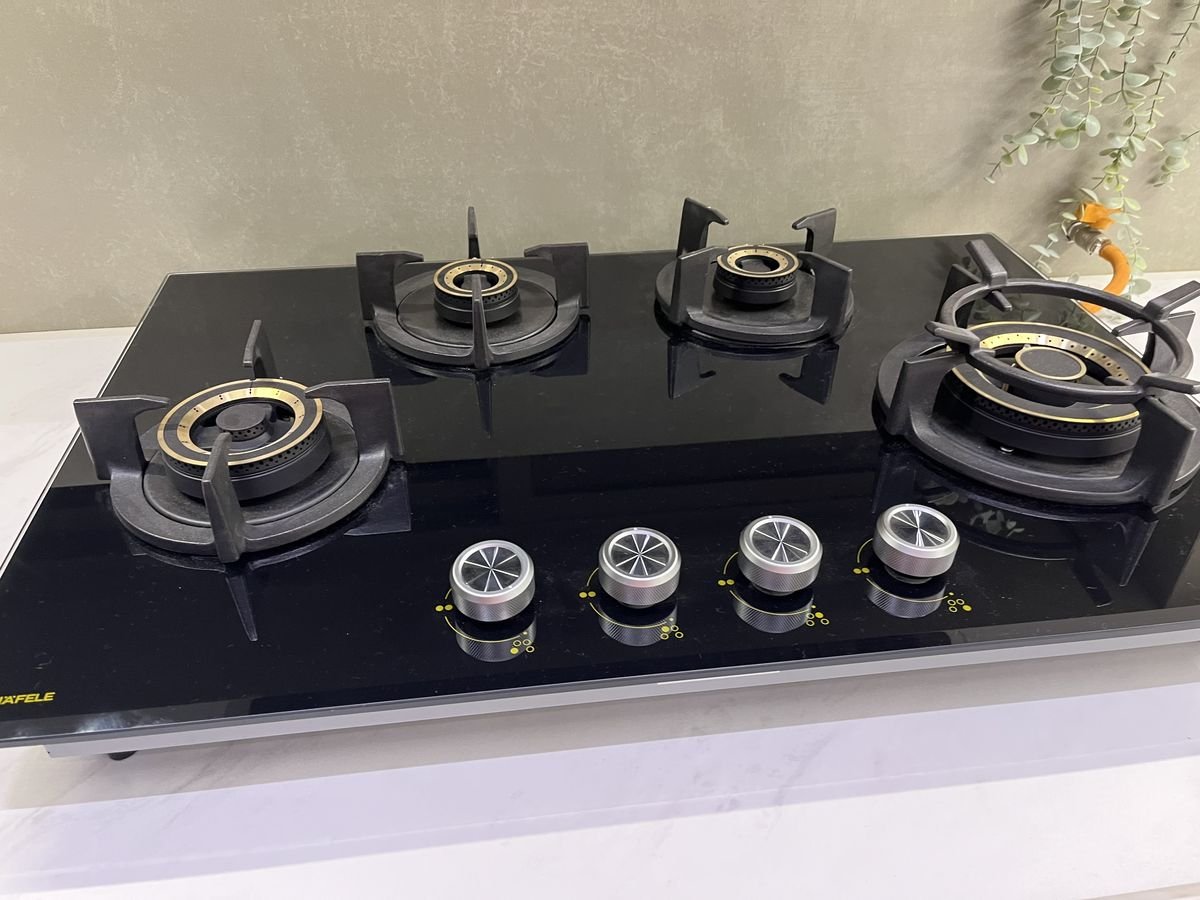
Last Ramadan, right in the middle of frying samosas for twenty guests, my stove decided to throw a tantrum. One burner wouldn’t light, another had a flame so weak it could barely warm water, and the clicking sound from the igniter was driving everyone in the kitchen absolutely crazy. That night, after the guests left, I sat down and properly researched gas stove maintenance for the first time in years. Turns out, I had been ignoring some really basic stuff — and paying for it in frustration and wasted gas.
If you’ve ever dealt with a burner that clicks forever before lighting, or a flame that looks more orange than blue, you’re not alone. Most of us only think about stove maintenance after something goes wrong. But the good news? Keeping your gas stove in great shape is way simpler than you think — and you don’t need a technician for most of it.
Here are nine maintenance secrets I’ve picked up the hard way (and a few I wish someone had told me earlier).
1. Clean the Burner Caps After Every Major Cook
This was my biggest mistake for years. I’d wipe down the stovetop surface but completely ignore the burner caps — those little disc-shaped pieces sitting on top of each burner. Food particles, oil splatters, and spilled sauces slowly clog the tiny gas ports around them. And when those ports are blocked? You get uneven or weak flames.
What to do:
- Remove the burner caps (they just lift right off — no tools needed).
- Soak them in warm, soapy water for 15–20 minutes.
- Use an old toothbrush to scrub around the gas ports gently.
- Dry them completely before putting them back. This is important — moisture in the ports causes that annoying clicking with no ignition.
I now do a quick clean every Friday after heavy cooking. It takes less than 10 minutes and honestly makes such a noticeable difference in how the flame looks and burns.
2. Check the Flame Color — It Tells You Everything
A healthy gas stove flame should be blue with maybe a tiny inner cone of darker blue. If your flame is:
| Flame Color | What It Means |
|---|---|
| Blue | ✅ Perfect — gas is burning efficiently |
| Blue with small yellow tips | ⚠️ Minor issue — ports may need cleaning |
| Mostly yellow or orange | ❌ Clogged ports or air-to-gas ratio problem |
| Very low and weak | ❌ Gas pressure issue or blocked supply line |
| Lifting off the burner | ❌ Too much air — needs adjustment |
Yellow or orange flames don’t just mean poor cooking performance. They can also mean incomplete combustion, which wastes gas and produces more carbon monoxide. If cleaning the burner caps doesn’t fix it, you might need a technician to adjust the air shutter.
For a more detailed look at how to fix weak flames step by step, check out these 8 Essential Gas Stove Repair Basics Steps to Fix Weak Flame.

3. Don’t Ignore the Igniter — It Needs Attention Too
The igniter is that small ceramic tip next to each burner. It’s what creates the spark when you turn the knob. And it’s surprisingly sensitive to moisture and food debris.
Here’s something I didn’t know for the longest time: if your igniter keeps clicking even when the burner is already lit — or when you’re not even touching the stove — it’s almost always because there’s moisture or grease on the igniter tip.
Fix it like this:
- Turn off the stove and let it cool completely.
- Use a dry toothbrush to gently brush off any debris around the igniter.
- For stubborn residue, dip a cotton swab in rubbing alcohol and clean around the tip.
- Let it air dry for at least 30 minutes before using the stove.
I once spilled biryani gravy right onto an igniter and it clicked non-stop for two days until I figured out what was wrong. Alcohol swab + patience = problem solved.
4. Clean Under the Grates — Seriously, Look Under There
Lift your grates right now. Go ahead, I’ll wait.
Chances are, there’s a collection of crumbs, grease, and forgotten spills sitting underneath them, possibly months old. That buildup doesn’t just look bad — it can block airflow to the burners and even create a fire hazard if it gets close to the flame over time.
Quick cleaning routine:
- Remove grates and wash them with hot soapy water or pop them in the dishwasher if they’re dishwasher-safe.
- Wipe down the stovetop surface underneath with a degreaser or a baking soda + water paste.
- For baked-on grease, let the paste sit for 10 minutes before scrubbing.
Pro tip: Line the drip pans under your burners with aluminum foil. When they get dirty, just replace the foil. This single habit has saved me so much scrubbing over the years.
5. Inspect the Gas Hose and Connections Once a Year
This one is less about performance and more about safety — and it matters more than most people realize.
The flexible gas hose that connects your stove to the wall can crack or loosen over time, especially if the stove is moved around for cleaning. A small gas leak is odorless in its natural state (though suppliers add a sulfur-like smell as a safety measure), but you shouldn’t rely on your nose alone.
Annual check-up steps:
- Mix a small amount of dish soap with water.
- Apply it to all connection points and along the hose with a brush.
- Turn on the gas supply (not the burners).
- Watch for bubbles — any bubbling means gas is escaping.
If you see bubbles, turn off the gas immediately and call a professional. Don’t try to fix a gas line yourself.
For a complete list of safety checks to do before any repair or maintenance work, this guide on 8 Smart Gas Stove Repair Basics Safety Checks Before Every Repair is genuinely useful to bookmark.
6. Don’t Use Oversized Pots on Small Burners
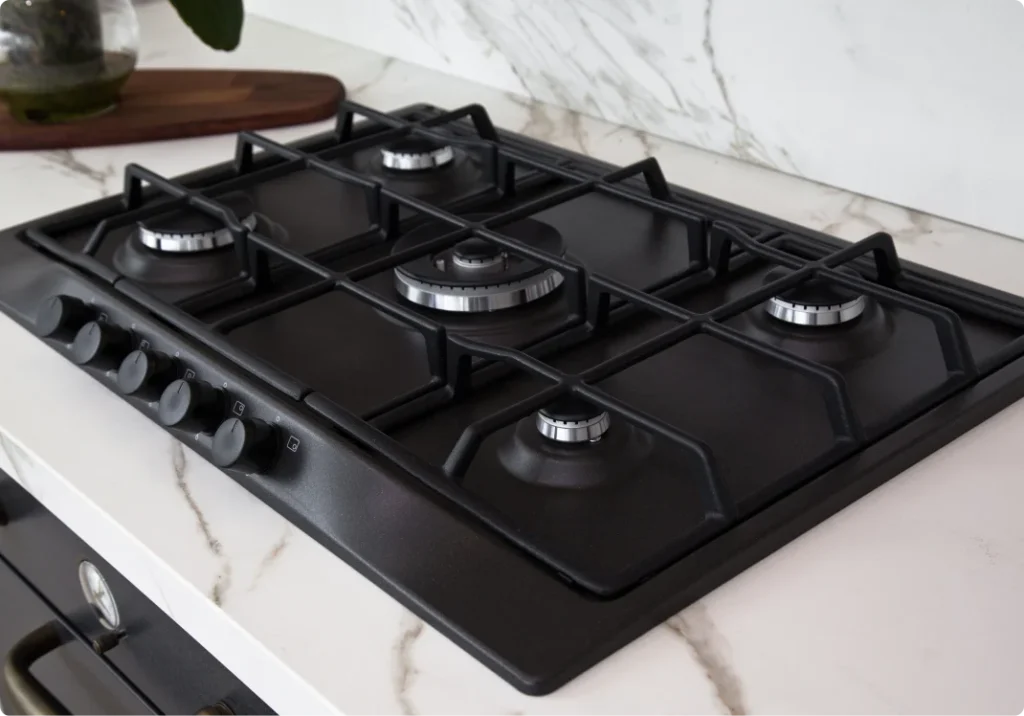
Okay, this one sounds like common sense, but almost everyone does it. Using a large pot on a small burner doesn’t just cook unevenly — it actually forces the flame to redirect outward instead of upward, which burns the sides of the burner cap and slowly damages it.
| Burner Size | Best For |
|---|---|
| Small (1kW–1.5kW) | Tea, sauces, small pots |
| Medium (2kW–2.5kW) | Everyday cooking, medium pots |
| Large/Power (3kW+) | Woks, large pots, high-heat cooking |
Matching your cookware to the right burner also saves gas — you’re not heating up air around the pot, you’re directing all that energy into your food.
7. Keep the Area Around the Stove Ventilated
Here’s something most stove manuals mention but nobody reads: gas stoves need proper ventilation to function efficiently. Poor airflow around the burners affects the air-to-gas mixture, which directly impacts flame quality.
If you’re cooking in a small, closed kitchen and noticing that your flame seems weaker indoors than outdoors (yes, this is a real thing people notice), ventilation might be the issue.
Simple ventilation habits:
- Keep a window slightly open while cooking, especially in small kitchens.
- Use your range hood or exhaust fan every time you cook — not just when things get smoky.
- Don’t store large items directly next to the burners that might block air circulation.
A range hood also removes moisture from the air, which reduces the chances of your igniter getting damp and clicking randomly. Two problems, one habit.
8. Learn to Reset Your Igniter When It Gets Stuck in Clicking Mode
The stuck-clicking igniter is one of the most annoying gas stove problems out there. You’re not doing anything, and the stove is just going click click click like it has a mind of its own.
Here’s a simple reset process that works most of the time:
- Turn off all the burner knobs completely.
- Unplug the stove from the wall outlet (most gas stoves still use electricity for the igniter).
- Wait 60 seconds.
- Plug it back in.
If that doesn’t work, the igniter module may have moisture in it. In that case:
- Leave all burner caps off for a few hours to let moisture evaporate.
- Use a hairdryer on the lowest heat setting to gently dry the igniter area.
- Give it 30 minutes before trying again.
I’ve used this hairdryer trick twice and it worked both times. Saved me a service call each time.
Want to understand ignition problems more deeply? These 7 Powerful Gas Stove Repair Basics Ideas to Fix Ignition Problems cover a range of causes and fixes that are genuinely practical.
9. Set a Maintenance Schedule and Actually Stick to It
I know, I know — everyone says this and nobody does it. But hear me out. Gas stove problems almost never happen suddenly. They build up slowly over weeks and months of missed cleanings and ignored early warning signs.
Here’s a realistic maintenance schedule that doesn’t require much effort:
| Frequency | Task |
|---|---|
| After every heavy cook | Wipe burner caps, clean surface spills |
| Weekly | Remove and wash burner caps, clean under grates |
| Monthly | Deep clean grates, check igniter tips, wipe down knobs |
| Every 6 months | Inspect gas hose, check all connections |
| Annually | Professional inspection if stove is older than 5 years |
The difference between a stove that lasts 10 years and one that starts breaking down at 5 years is almost entirely maintenance. I’ve seen both scenarios in my own family — my mother-in-law’s stove is 12 years old and still running perfectly because she cleans it religiously. My old apartment stove was maybe 6 years old and constantly giving trouble because the previous tenants clearly never cleaned it.
Common Mistakes to Avoid
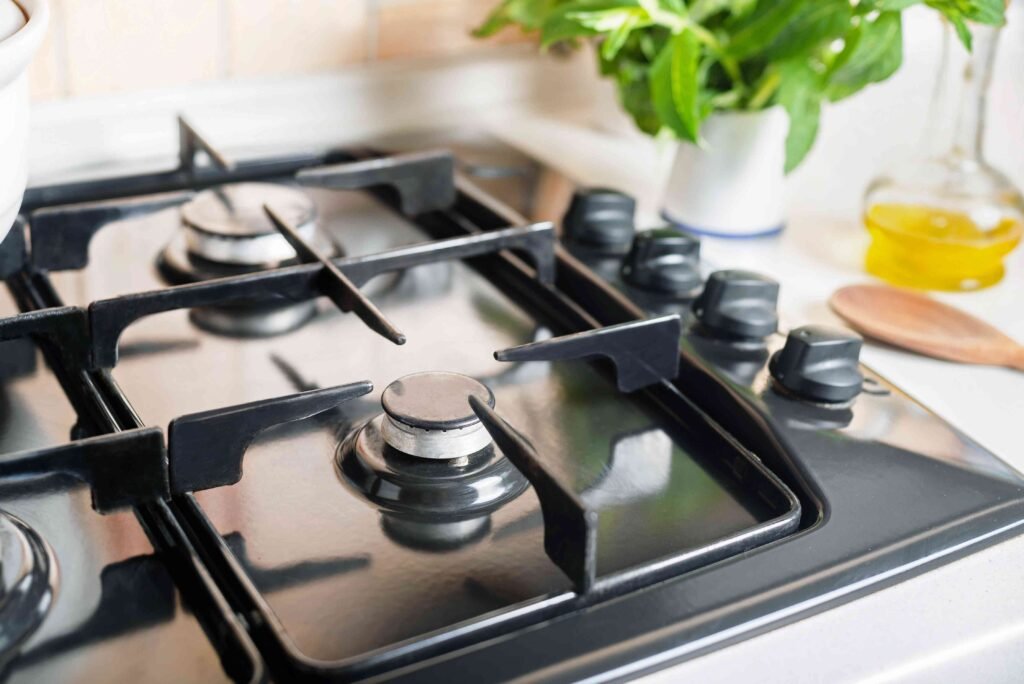
A few things I’ve seen people (including myself) do that quietly damage their stoves over time:
- Using steel wool or abrasive scrubbers on burner caps — it scratches the surface and can widen the gas ports unevenly.
- Putting wet burner caps back on — leads to ignition failure and clicking problems.
- Ignoring small gas smells — even a faint gas smell deserves immediate investigation, not a “I’ll check it later.”
- Spraying cleaning products directly onto the stove surface — always spray onto a cloth first, then wipe. Liquid getting into the igniter or burner areas causes all kinds of trouble.
- Skipping the gas hose check for years — this is how small leaks turn into serious hazards.
Quick Troubleshooting Reference
| Problem | Most Likely Cause | DIY Fix |
|---|---|---|
| Burner won’t light | Wet/dirty igniter or burner cap | Dry and clean both |
| Flame is yellow/orange | Clogged gas ports | Soak and scrub burner caps |
| Igniter keeps clicking | Moisture or food debris on igniter | Dry with hairdryer, clean with alcohol |
| Weak flame on one burner | Partially blocked ports | Clean burner cap ports with toothpick |
| Uneven flame pattern | Misaligned burner cap | Remove and reposition cap properly |
| Gas smell near stove | Loose connection or hose issue | Soap-bubble test, call professional |
Frequently Asked Questions
Q1: How often should I do a deep clean of my gas stove burners? At minimum, once a month if you cook daily. If you do a lot of heavy cooking — frying, making curries, boiling over — bump that up to every two weeks. The more frequently you cook, the faster grease and debris build up in the ports.
Q2: Is it safe to clean gas stove burners with vinegar? Yes, diluted white vinegar works well on light grease and mineral deposits. Mix equal parts vinegar and water, apply with a cloth or soft brush, let it sit for a few minutes, then wipe clean. Avoid getting it near electrical components like the igniter module.
Q3: Why does my gas stove smell like gas right when I light it? A brief whiff of gas just before ignition is completely normal — that’s the gas flowing before the spark catches it. But if the smell lingers for more than a few seconds after the flame is lit, or if you smell gas when the stove is completely off, that’s a problem that needs immediate attention.
Q4: Can I use my gas stove if one burner is not working? Yes, the other burners operate independently. But don’t keep ignoring the broken one — a non-functioning burner usually means there’s an underlying issue (clogged ports, faulty igniter) that could eventually affect the others too. Fix it sooner rather than later.
Q5: How do I know if my gas stove needs a professional service vs. a DIY fix? If the issue is cleaning-related (dirty ports, grimy igniter, clogged caps), you can almost always handle it yourself. If you’re dealing with gas pressure problems, internal valve issues, persistent gas smells, or anything involving the gas line itself — call a certified technician. Don’t take chances with the gas supply side of things.
Taking care of your gas stove really comes down to two things: cleaning consistently and paying attention to early warning signs. Most of the “repair” calls I’ve heard about from neighbours turned out to be things that could have been prevented with a monthly clean and a basic annual check.
If you want to go deeper on one of the most common issues — ignition failure — this article on 6 Powerful Gas Stove Repair Basics Steps to Fix Ignition Failure walks you through the whole process in a straightforward, step-by-step way that’s worth reading even if your igniter is working fine right now.

