

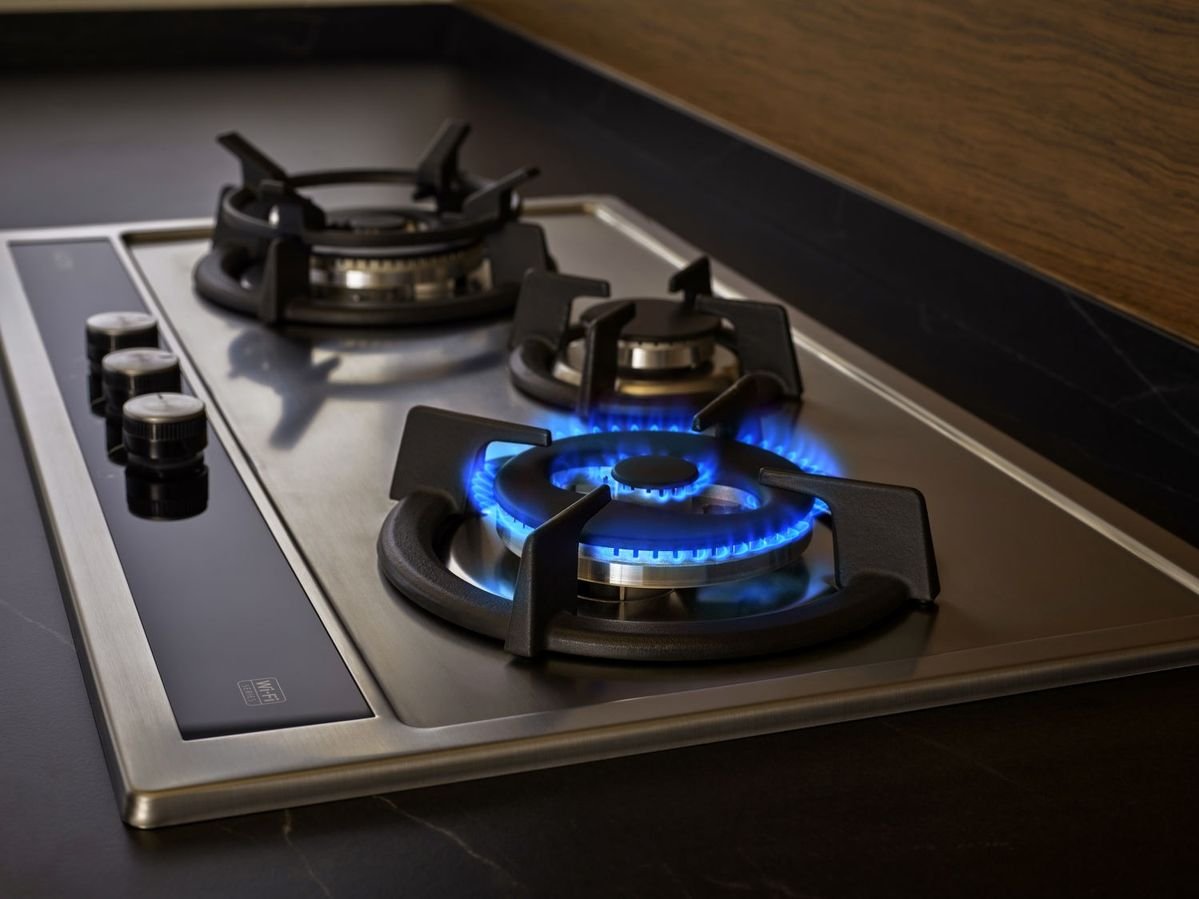
My youngest once pulled a dish towel off the counter while I was cooking. It landed right next to the burner. My heart dropped. Nothing happened that day — but it was the wake-up call I needed to seriously think about gas stove safety in a home with curious, unpredictable kids around.
If you’ve got little ones running through your kitchen, you already know how fast things can go sideways. A gas stove isn’t just a cooking appliance — in a family home, it becomes one of the biggest hazard zones. And yet, most of us don’t think twice about it until something scary almost happens.
So here’s what I’ve learned — sometimes the hard way — about keeping kids safe around a gas stove without turning your kitchen into a prison zone.
1. Teach Kids the “Stove Is Not a Toy” Rule Early
This sounds obvious, but hear me out. Kids don’t automatically understand that a stove is dangerous — they see you use it every single day like it’s totally normal. So to them, it just looks like another interesting thing in the kitchen.
Start early. Even toddlers can understand “hot, don’t touch” if you repeat it consistently. As they get older, explain why — gas stoves use real fire, and fire can hurt very fast.
I made a simple rule in our kitchen: no one stands at the stove unless an adult is right there. No exceptions. It took a few weeks of reinforcing it, but now my kids know the boundary without being reminded.
Tip: Use simple visual cues. A small piece of colored tape on the floor marking a “no-stand zone” near the stove actually worked surprisingly well for my younger kids.
2. Never Leave Burners Unattended — Especially with Kids Nearby
This one seems like common sense, but life happens. You step away to answer the door, grab your phone from the other room, or check on the baby — and suddenly no adult is in the kitchen.
That window of time is all it takes.
I started using a kitchen timer as a mental anchor. If I have to leave the kitchen while something is on the stove, the timer reminds me to get back. Some people use smart plugs or gas stove knob covers that physically prevent kids from turning burners on accidentally — and honestly, those knob covers are one of the best low-cost investments you can make.
Quick reminder: Always turn off burners before walking out — even if it’s “just for a second.”
3. Use Back Burners Whenever Possible
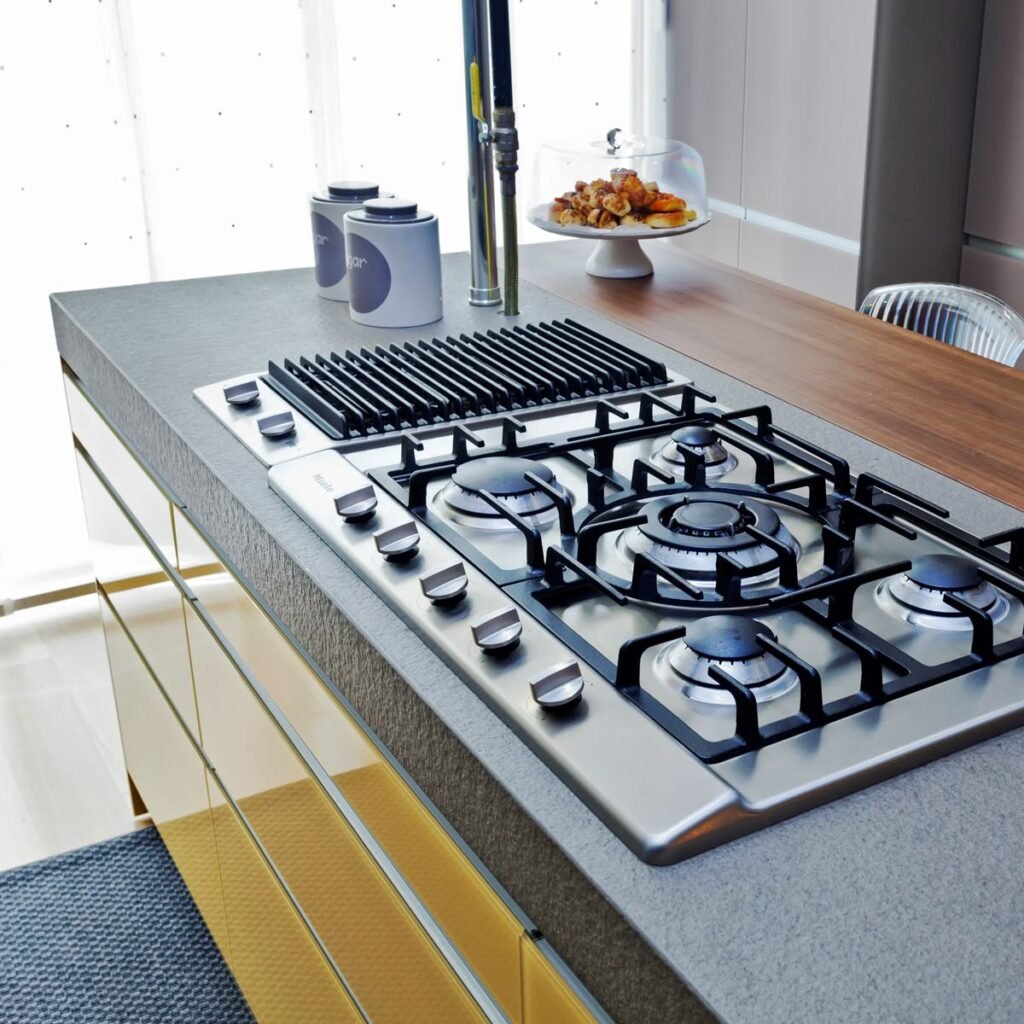
This was a game-changer for me once someone pointed it out. Front burners are within easy reach of small hands. Back burners are not.
When you’re cooking with kids around, make it a habit to use the back burners first. And when using the front ones, always turn pot handles inward — never sticking out to the side where a child could grab the handle and pull a boiling pot down on themselves.
Burns from scalding liquids are actually more common in child kitchen accidents than direct flame contact. It’s the hot stuff falling that gets kids.
| Safety Habit | Risk It Prevents |
|---|---|
| Use back burners first | Keeps flames far from small hands |
| Turn handles inward | Prevents pots from being knocked/pulled |
| Keep kids behind safety line | Reduces splash and heat exposure |
| Stay in kitchen while cooking | Stops unattended flame incidents |
4. Check for Gas Leaks Regularly — Kids Won’t Smell Danger
Here’s something a lot of parents don’t think about: kids are less likely to recognize the smell of a gas leak or know what to do about it. Adults associate that rotten egg smell with danger. Kids? Not so much.
Make it a routine to check your stove connections every few months. You don’t need fancy tools — a simple mixture of dish soap and water brushed onto the gas connections will bubble up if there’s a leak.
Also, install a carbon monoxide and gas detector in your kitchen or nearby. These devices are inexpensive (most run between $25–$50) and can detect leaks before your nose does. Brands like Kidde and First Alert have solid options that are widely available.
If you ever smell gas:
- Don’t turn any lights or switches on or off
- Get everyone out of the house immediately
- Leave the door open as you go
- Call your gas company from outside
For more detailed safety checks, 6 Essential Gas Stove Repair Basics Safety Ideas That Prevent Accidents is worth a read.
5. Keep the Area Around the Stove Clear at All Times
I used to keep a basket of random stuff near the stove — dish towels, paper towels, sometimes even a plastic bag or two. Then one day a dish towel slid too close to the flame. I smelled it before I saw it.
Lesson learned: the area around a gas stove should be treated like a fire hazard zone.
Keep these things away from your stove:
- Dish towels and oven mitts (store them in a drawer or hook away from the stove)
- Paper towels on a roll — especially if they hang close to the burners
- Plastic bags, cereal boxes, or anything flammable
- Kids’ artwork or papers stuck on the fridge next to the stove
This is also a good chance to do a quick stove cleaning routine. Grease buildup around burners isn’t just gross — it’s flammable. 11 Easy Gas Stove Repair Basics Cleaning Habits That Saved My Stove has some really practical cleaning habits that are easy to stick to.
6. Install Stove Knob Covers (Seriously, Just Do It)
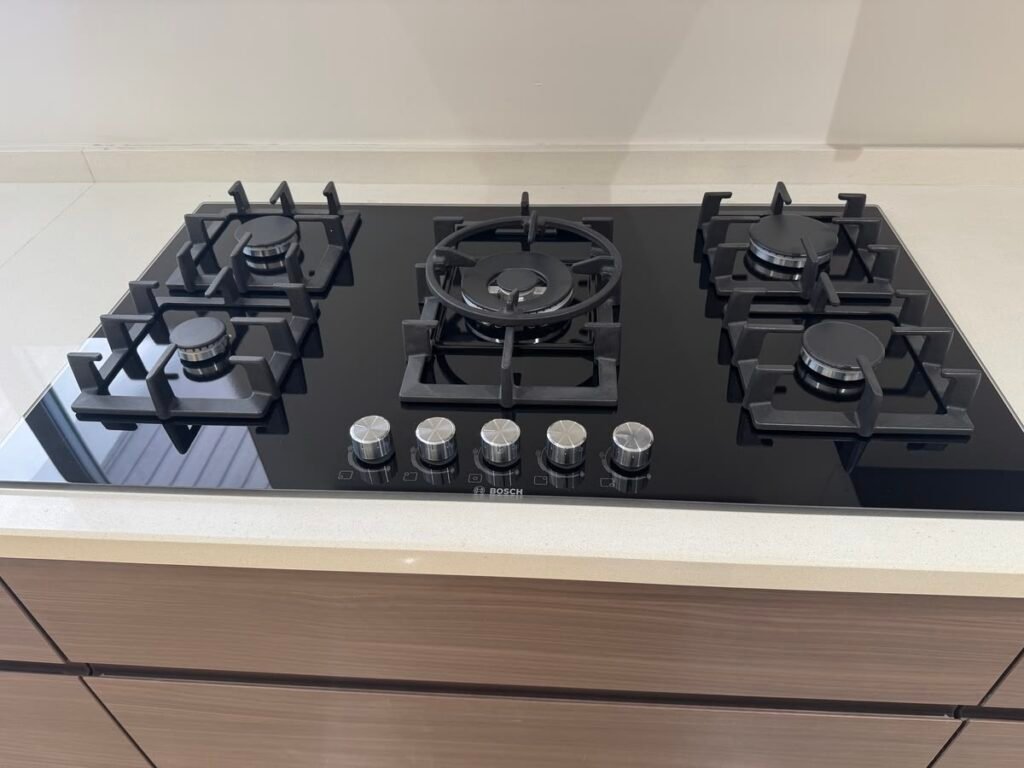
I resisted these for a while because I thought they’d be annoying to deal with every time I cooked. I was wrong. They take about two seconds to remove for an adult, and they make it essentially impossible for a young child to turn a burner on accidentally.
There are multiple styles available online — some are transparent shields that clip over individual knobs, others are full stove knob guard panels. Most are under $20 for a set.
This matters more than people realize. Kids can turn on a gas burner without a flame catching, filling your kitchen with gas without any visible sign. That’s a silent danger.
Best options to look for:
- Individual knob covers (flexible, fit most standard knobs)
- Magnetic stove knob guards
- Slide-lock knob protectors for front panels
7. Establish a “One Adult in the Kitchen” Rule During Cooking
This one is more of a household management tip than a hardware fix, but it makes a real difference. When cooking is happening, limit who’s in the kitchen — especially young children who tend to run, trip, or grab things without thinking.
I know this can feel impossible in a small home or when you’re trying to cook dinner while also keeping an eye on everyone. But even small adjustments help:
- Set up a “cooking activity station” nearby (coloring, a tablet, or simple toys) to keep kids occupied just outside the kitchen
- Use a baby gate or play yard to block kitchen access for toddlers
- Teach older kids that when you say “I’m cooking,” they stay out unless asked
The goal isn’t to stress everyone out — it’s to reduce the chance of a collision, a trip, or an accidental bump near a live flame.
8. Know What to Do If a Burner Ignites Something — Teach Your Kids Too
Even with every precaution, accidents can happen. What matters is whether your family knows how to respond.
If something catches fire near the stove:
- Don’t panic and don’t throw water on a grease fire
- Turn off the burner if it’s safe to reach
- Smother small fires with a pot lid or baking soda
- Use a fire extinguisher if needed (keep one in your kitchen — it’s that simple)
- If it spreads, get everyone out and call 911
Teach your kids the basics too. Even a 7-year-old can learn: if there’s fire, leave the room and get a grown-up. Practice it like a fire drill — not in a scary way, just matter-of-fact.
Fire safety essentials to keep in your kitchen:
| Item | Why You Need It |
|---|---|
| Fire extinguisher (Class K or ABC) | Handles kitchen fires including grease |
| Baking soda | Smothers small stovetop fires |
| Pot lid nearby | Instantly cuts off oxygen to pan fires |
| Smoke detector | Early warning before fire spreads |
9. Do Regular Safety Walkthroughs with Your Kids
This one changed things more than I expected. Once every few months, I do a casual walkthrough of the kitchen with my kids — not lecturing them, just walking through and pointing things out conversationally.
“See this knob? This turns on the gas. That’s why we never touch it.” “See this? This is what the flame looks like. Hot enough to burn skin in under a second.”
Kids respond to real information more than vague warnings. When they understand the why, they’re more likely to follow the rules — not out of fear, but out of actual awareness.
You can also use this time to check your safety setup:
- Are knob covers still in place?
- Is the fire extinguisher accessible and charged?
- Are there any new items near the stove that shouldn’t be there?
- Does the gas detector still have working batteries?
Safety Walkthrough Checklist:
| Checkpoint | Frequency |
|---|---|
| Knob covers in place | Weekly |
| Area around stove clear | Daily |
| Gas detector battery check | Monthly |
| Soap test on gas connections | Every 3–6 months |
| Fire extinguisher inspection | Annually |
| Burner cleaning | Monthly |
For troubleshooting related issues like weak flames or ignition clicks that are common in family-used stoves, check out 9 Easy Gas Stove Repair Basics Troubleshooting Steps Anyone Can Try.
Common Mistakes Families Make (And How to Avoid Them)
Let me be honest about some mistakes I’ve either made myself or seen happen in other households:
Mistake 1: Thinking older kids “get it” automatically A 10-year-old isn’t automatically safe around a gas stove. Age-appropriate education still matters.
Mistake 2: Relying only on telling kids not to touch Verbal rules need to be backed by physical barriers — knob covers, gates, cleared zones.
Mistake 3: Forgetting about the oven door The oven door gets very hot too. Kids can burn their hands on it just as easily as on a burner.
Mistake 4: Skipping stove maintenance A clogged burner or faulty igniter increases risk. Keep the stove in good working order — it directly impacts safety.
Mistake 5: Not having a fire extinguisher Seriously, if you have a gas stove and kids, this is non-negotiable. Get one, mount it somewhere accessible, and make sure everyone over age 10 knows where it is.
Final Thoughts
You don’t need to be paranoid about your kitchen — you just need to be intentional. Most gas stove accidents in family homes are preventable with a combination of good habits, simple physical barriers, and some honest conversations with your kids.
The goal is to cook in peace, not anxiety. Once you’ve got the right systems in place — knob covers, cleared counters, a fire extinguisher, a gas detector, clear rules — you can actually relax a bit. You’ve done the prep work.
And honestly, teaching your kids real respect for the stove now sets them up to be safer, more capable people later. That’s a win beyond the kitchen.
Also read: 8 Smart Gas Stove Repair Basics Safety Tips That Protect Your Family
Frequently Asked Questions
Q1: At what age can kids start learning to cook on a gas stove safely?
Most child safety experts suggest introducing supervised gas stove use around age 10–12, depending on the child’s maturity. Start with back burners, low heat, and always stay right next to them. Never leave a child under 14 alone at a gas stove.
Q2: Are stove knob covers really effective, or do kids figure them out quickly?
Younger children (under 5) generally can’t get past quality knob covers. Older kids might figure them out with time, but the point is that it adds a deliberate step — which usually breaks the habit of accidentally turning knobs. For toddlers especially, they’re very effective.
Q3: How do I know if my gas stove has a slow leak?
The most common sign is a faint rotten egg smell. You can also do a soapy water test on connections — if bubbles form, you have a leak. Install a gas detector for continuous monitoring. If you suspect a leak, don’t try to diagnose it yourself — call your gas company.
Q4: My child touched the stove grate and got a minor burn — what should I do?
Run cool (not cold) water over the burn for 10–20 minutes immediately. Don’t use ice, butter, or toothpaste. Cover loosely with a clean bandage. If the burn is larger than a 50-cent coin, blistering badly, or on the face/hands/joints, see a doctor or go to urgent care.
Q5: What type of fire extinguisher is best for a home kitchen?
Look for an ABC-rated dry chemical extinguisher or a Class K extinguisher specifically designed for kitchen fires (including grease and oil fires). Keep it mounted within reach of the exit — not directly next to the stove — so you can grab it without reaching over a flame.

